A vanity is one of the few pieces of furniture you touch every single day, twice at minimum. Get the layout, storage, and finish right, and the whole bathroom feels calmer. Get it wrong, and you’re fighting clutter before you’ve even had coffee. Below are fifteen approaches worth considering, organized around how you actually use the space rather than just how it photographs.
Estimated word count target: ~1,750 words Primary keywords/entities: bathroom vanity, floating vanity, double-sink vanity, vanity storage, vanity countertop materials, vanity lighting, small bathroom vanity, vanity hardware finishes Search intent: Informational, with commercial undertones (readers are likely mid-renovation and comparison-shopping)
1. Wall-Mounted Vanities for Visual Breathing Room
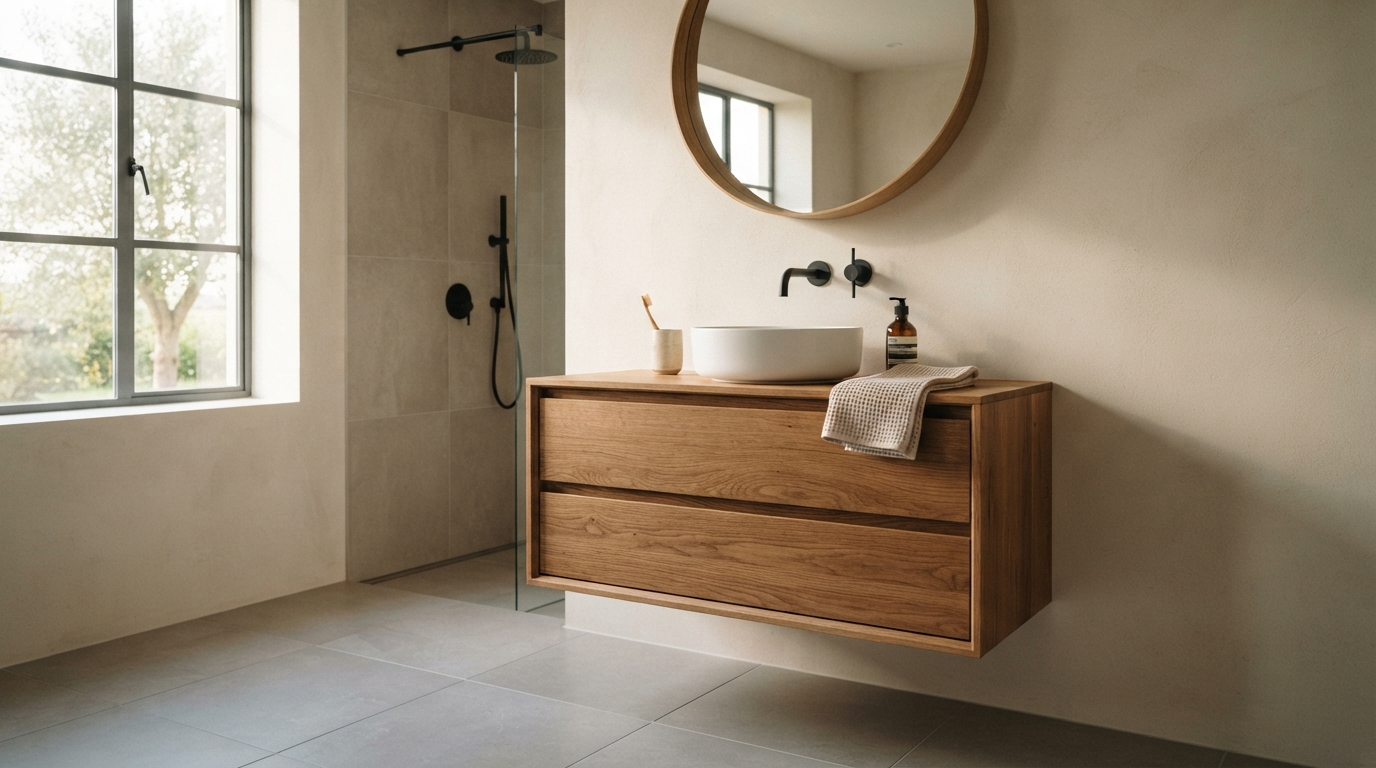
Lifting the cabinet off the floor does two things at once: it exposes more visible floor tile, which tricks the eye into reading the room as larger, and it makes mopping underneath genuinely painless instead of a wrestling match with cabinet legs. Look for concealed mounting brackets rated for the combined weight of the cabinet, sink, and stone top — cheap brackets are the most common failure point in this style. Matching the cabinet’s wood tone to your flooring (rather than your mirror) tends to read more cohesive in narrow bathrooms.
2. Twin-Basin Setups for Shared Bathrooms
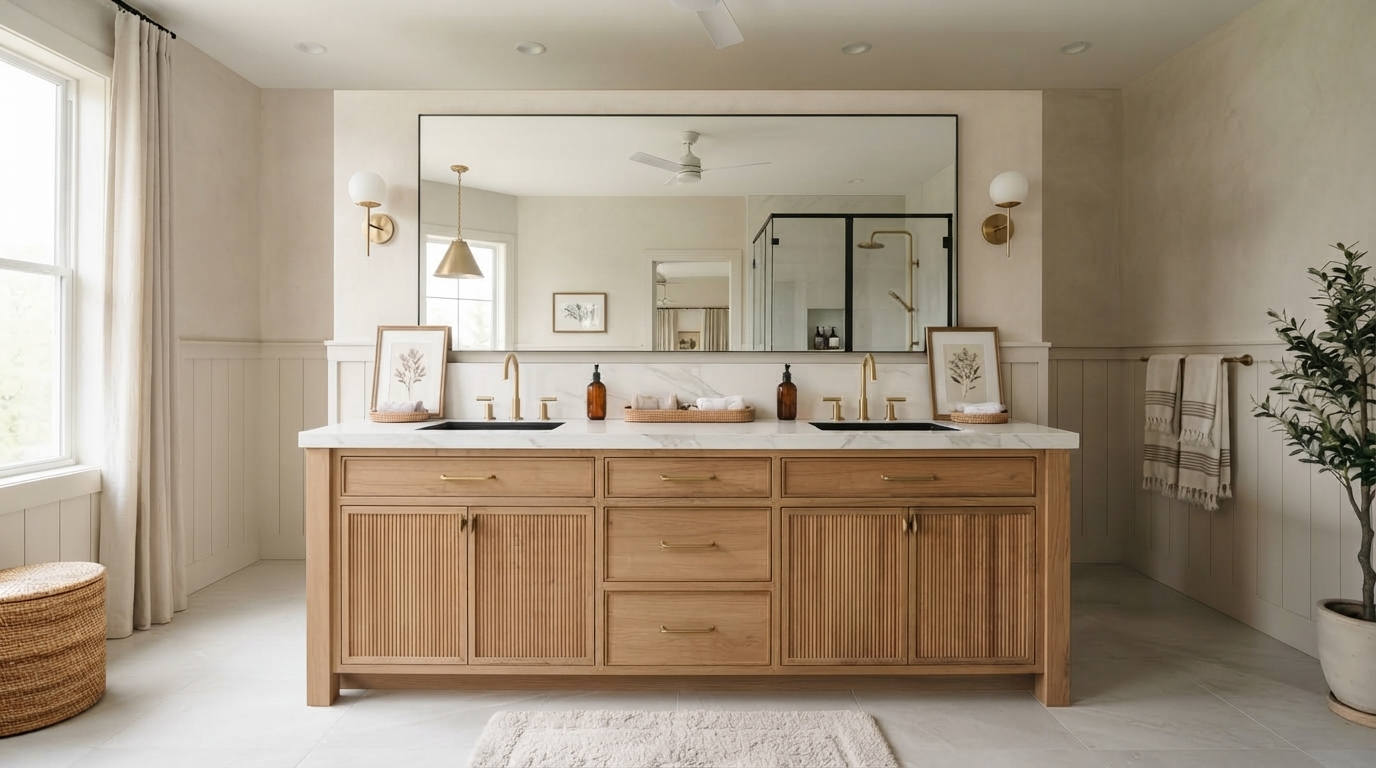
If two people share a bathroom on a tight morning schedule, a single basin is a bottleneck. A double-sink layout removes that friction, but the real design work happens in the details: assign each side its own drawer for daily items (contacts, hair ties, razors) so nothing migrates to the “wrong” side. In bathrooms under about 60 inches wide, a compact double-basin unit with narrower individual sinks can still deliver the convenience without eating the whole wall.
3. Farmhouse-Style Cabinetry With Worn-In Charm
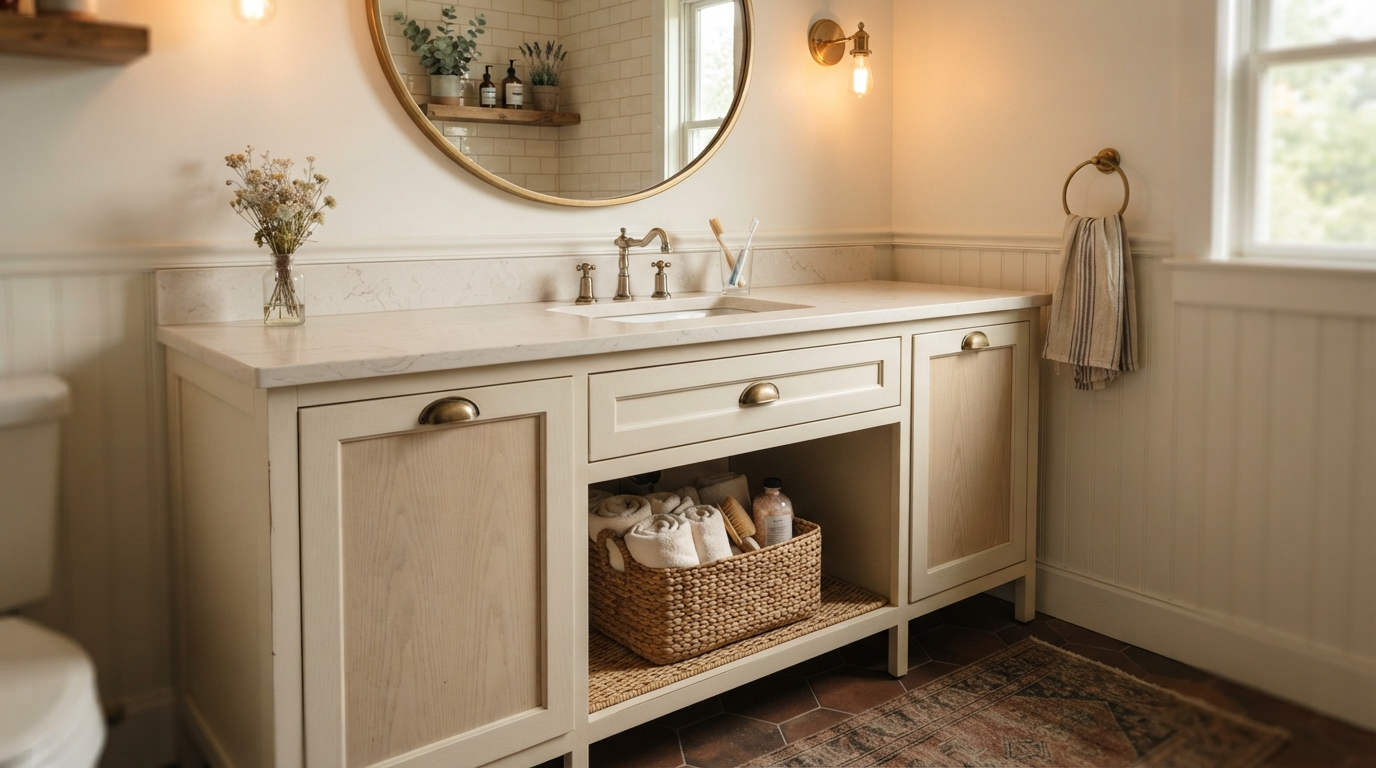
Shaker-panel doors, slightly distressed finishes, and iron or brass hardware give a vanity a sense of history even when it’s brand new. This look pairs naturally with woven baskets tucked into open lower shelving and a plain porcelain or fireclay basin. Because the aesthetic leans imperfect, it’s forgiving of small dings — which makes refinishing a secondhand cabinet a realistic budget option rather than buying new.
4. Matte Black for a Grounded, Modern Look
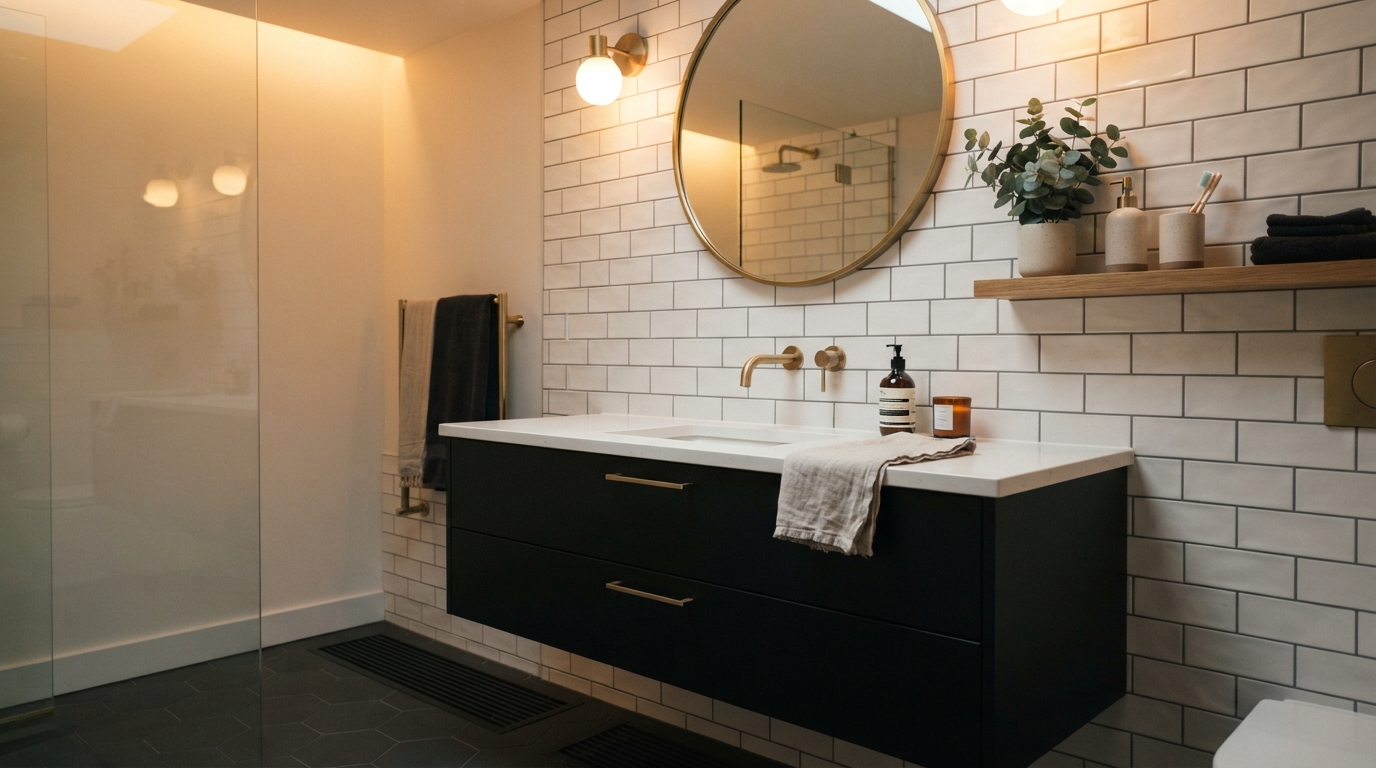
Matte black cabinetry reads modern without feeling cold, especially against white tile or a pale stone top. Practically speaking, matte finishes hide fingerprints and water spots far better than gloss lacquer, which matters on cabinets people touch constantly. Warm-toned lighting (2700K–3000K bulbs) keeps an all-black vanity from feeling stark; cool white light tends to make it look almost industrial.
5. Built-In Charging and Device Storage
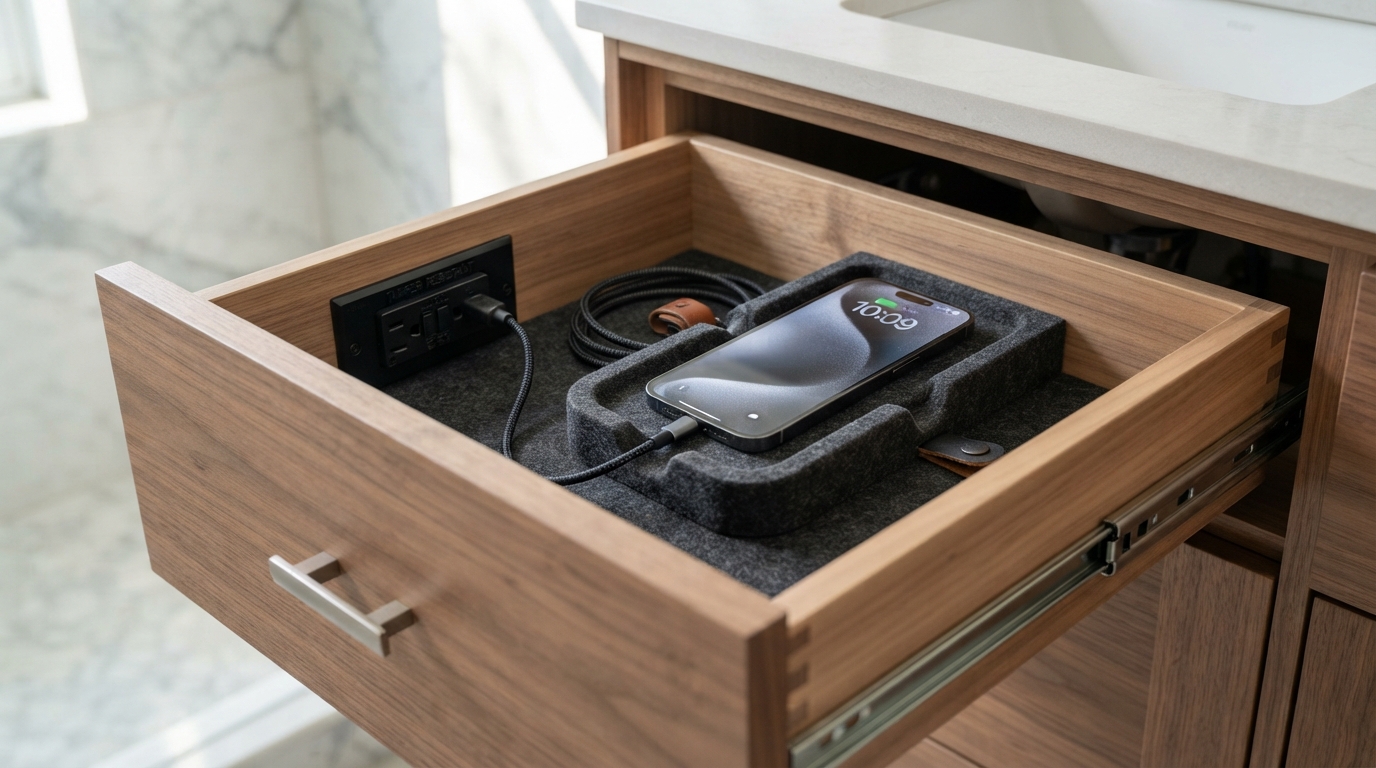
A concealed outlet inside a drawer — sometimes paired with a small wireless charging pad — keeps phones off the counter and cords out of sight. This is one of the pricier upgrades to add after the fact, since it usually means running new wiring, so it’s worth specifying at the framing stage of a renovation if you want it. A simpler DIY version: a drop-in drawer organizer with a cutout for a standard charging brick.
6. A Tall Cabinet Tower for Overflow Storage
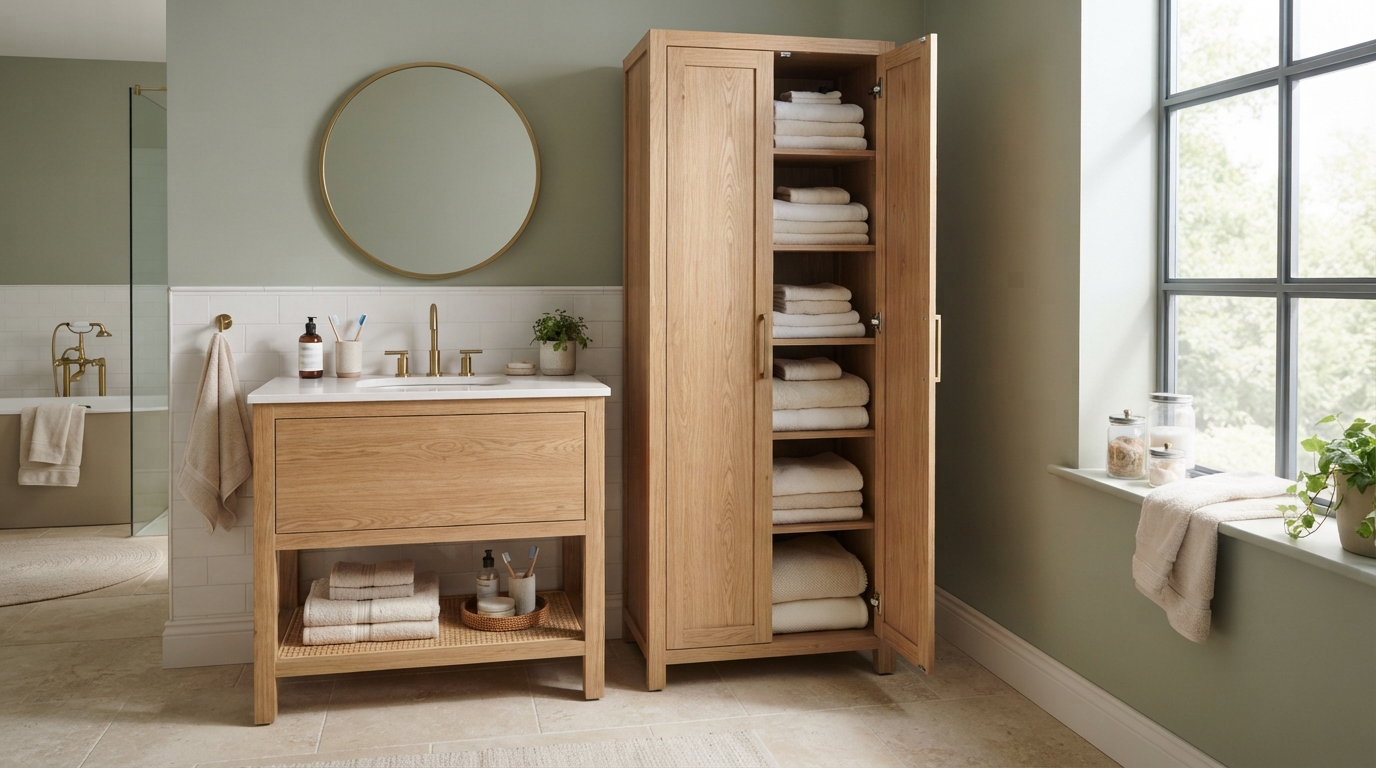
Pairing the vanity with a floor-to-ceiling storage tower gives bulky items — spare towels, extra toilet paper, cleaning supplies — a dedicated home instead of colonizing the vanity countertop. Adjustable interior shelving matters more than it sounds like it would; fixed shelves rarely match the actual height of the bottles and boxes people store. Matching the door style and hardware to the vanity keeps the pairing from looking like an afterthought.
7. Curved-Leg Vanities With a Furniture-Like Feel
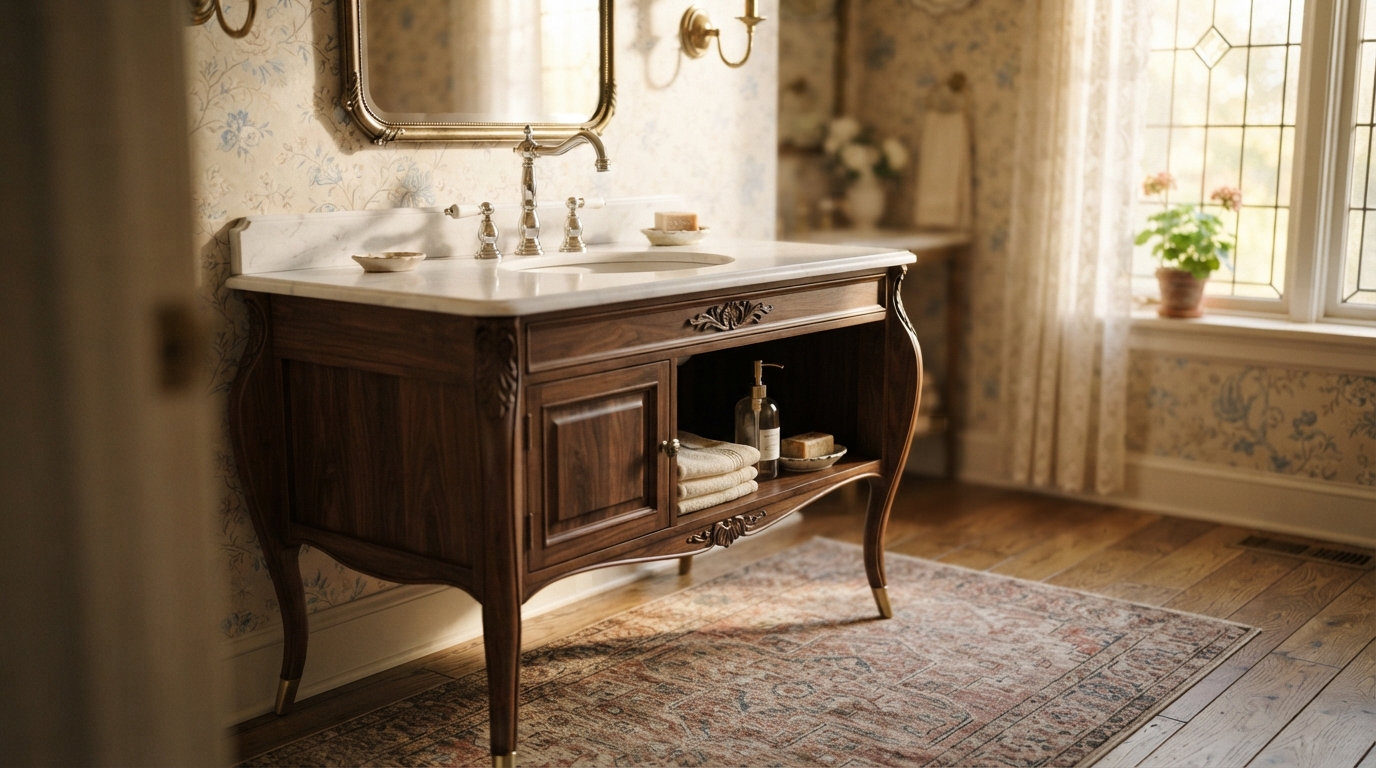
Some vanities are designed to look less like fixed cabinetry and more like a freestanding piece of furniture, with tapered or curved legs and exposed floor space underneath. That open base keeps the room feeling less boxed-in and makes floor cleaning easier. Inside, small fabric-lined baskets in the drawers keep the vintage look from sliding into visual clutter.
8. Backlit Mirrors Paired With a Slim Counter
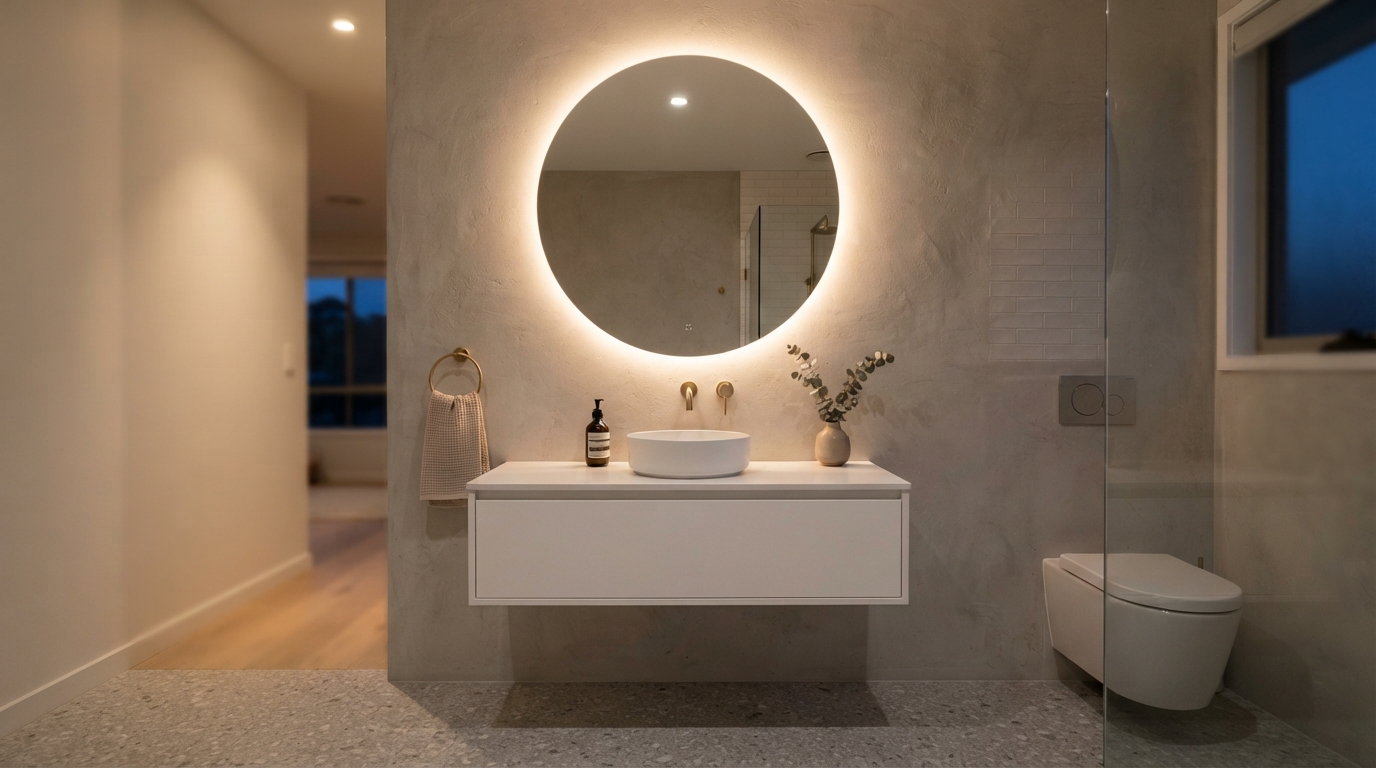
An LED-edge mirror does double duty as ambient light and task lighting, which is genuinely useful at a sink where you’re shaving, applying makeup, or checking a skin concern up close. Mirrors with an adjustable color temperature are worth the small upcharge — a warmer setting for evenings, a cooler, more neutral setting for grooming tasks that need true color accuracy.
9. A Muted Color Statement — Sage, Slate, or Dusty Blue
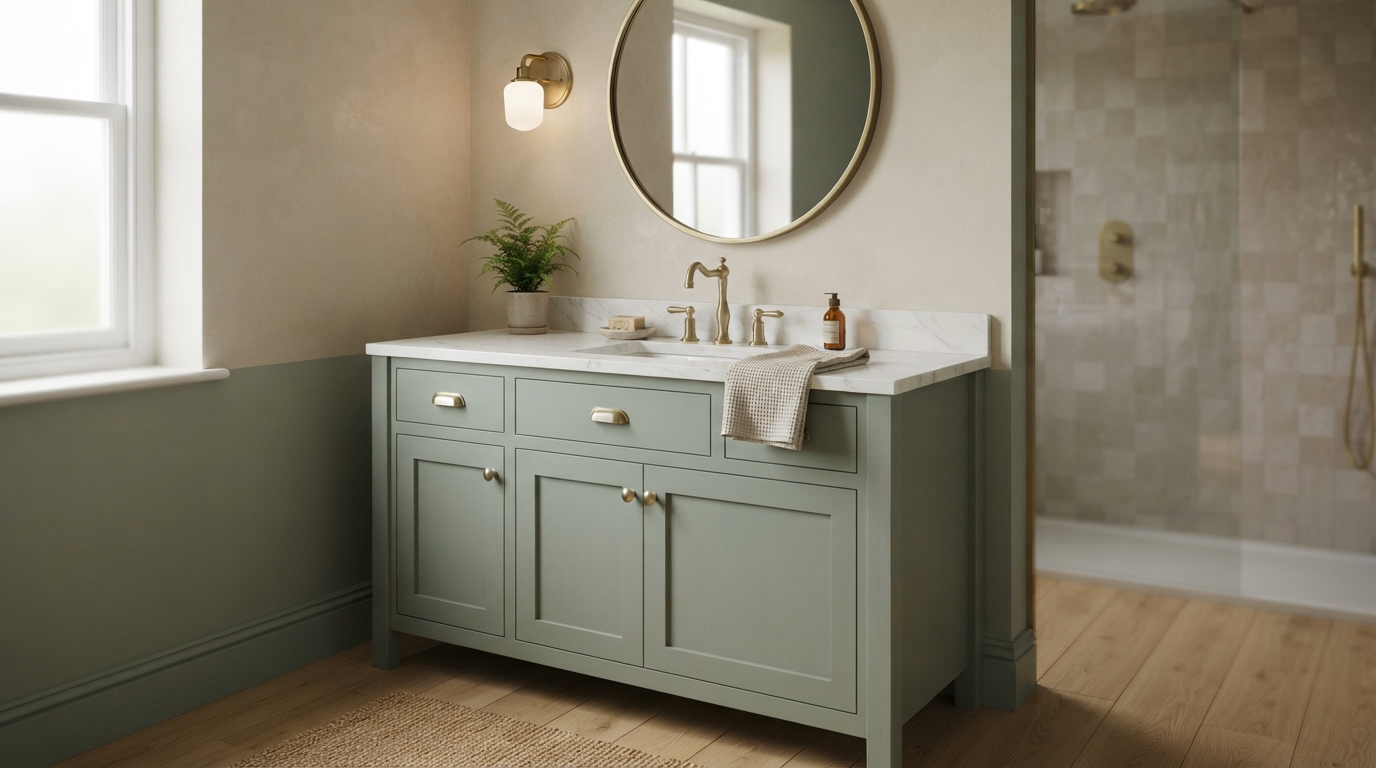
Painting or ordering a vanity in a soft, muted hue is one of the lowest-risk ways to add personality to a bathroom without committing to a bold accent wall. Sage, slate blue, and warm greige all tend to age well rather than reading as trendy in five years. Keep the countertop neutral (white or light gray) so the cabinet color stays the focal point, and a satin or matte paint finish will show fewer wipe marks over time than a high-gloss one.
10. Stone-Look Countertops Without the Stone Price Tag
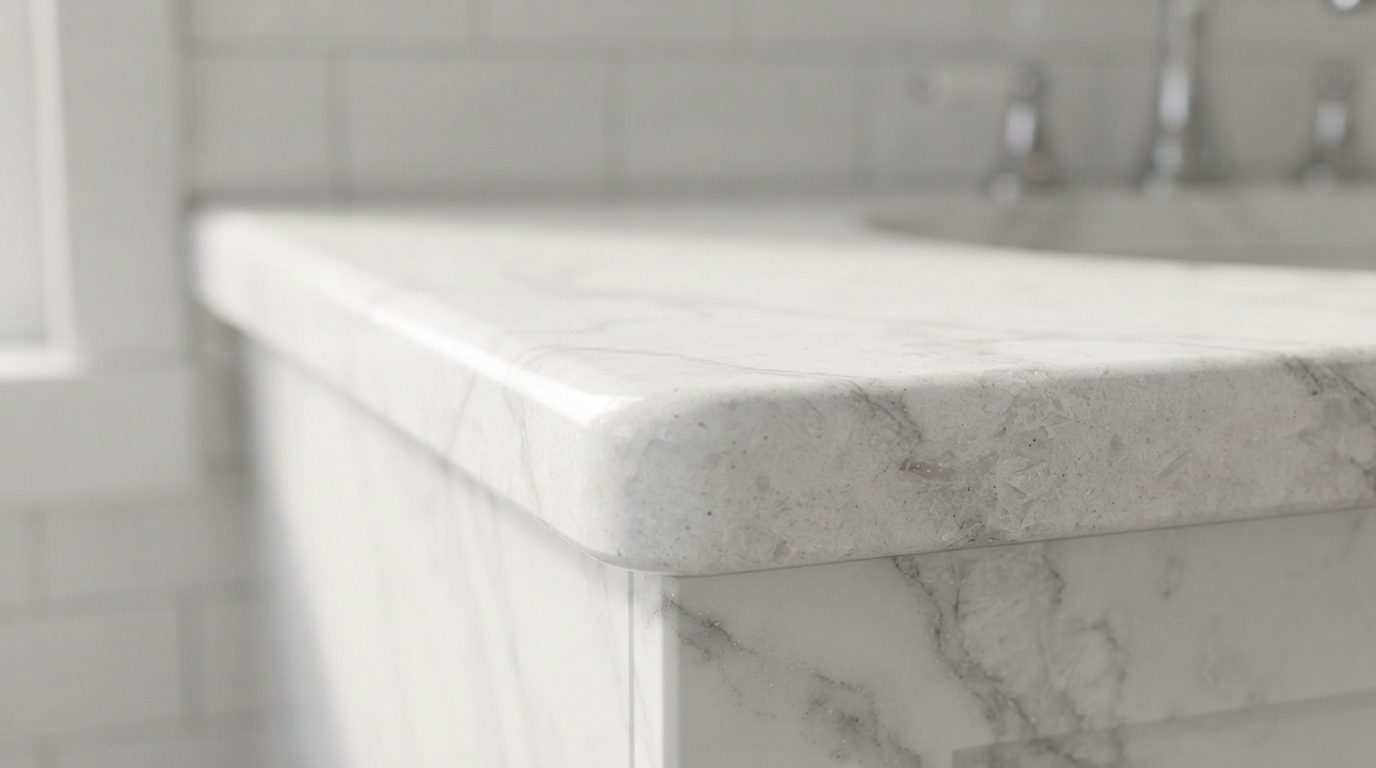
Engineered quartz and high-pressure laminate now mimic marble veining convincingly enough that most guests won’t know the difference — and both resist etching and staining far better than natural marble does in a humid bathroom. When comparing options, ask about slab thickness and edge profile before finish color; a thin, poorly finished edge undercuts an otherwise good countertop. Lining up the veining pattern with the mirror or backsplash grout lines is a small detail that makes the whole wall look intentional.
11. Softened, Rounded Edges for Family Bathrooms
A vanity with rounded front corners and edges is a quiet safety upgrade in a bathroom shared with kids, and it also just reads softer and less clinical. Pair rounded cabinetry with an oval or soft-corner mirror rather than a sharp rectangle to carry the theme through, and check that drawer glides close smoothly — a rounded cabinet with sticky drawers undoes the calm feeling fast.
12. Glass-Front Doors for “Display” Storage
Swapping solid cabinet doors for clear or reeded glass turns storage into part of the decor — folded towels, glass apothecary jars, and matching bottles all read as styled rather than hidden. The trade-off is that it demands more discipline about what goes behind the glass; mismatched product packaging undercuts the effect quickly. Reeded or frosted glass is a good middle ground if you want the openness without full visibility.
13. Mid-Century Lines With Tapered Wood Legs
Mid-century vanity styling — slim tapered legs, walnut or oak-toned wood, simple geometric hardware — brings warmth to a bathroom without tipping into full retro pastiche. It pairs naturally with brushed brass fixtures and a round or capsule-shaped mirror. Because the style relies on visible wood grain, a quality veneer over solid engineered core will often outperform cheaper solid wood in humid bathrooms, where solid wood is more prone to warping.
14. A Recessed Wall Niche for Everyday Products
Building a shallow niche into the wall beside or above the vanity gives daily-use items — soap, lotion, a toothbrush holder — a fixed spot that never ends up as counter clutter. This is easiest to plan during a full renovation, when the wall is already open, and tiling the niche interior to match the backsplash keeps it from looking like an afterthought. It’s a small addition that meaningfully cuts down on daily counter mess.
15. Integrated Sinks for a Seamless Countertop
An integrated sink — where the basin is molded from the same material as the countertop, with no separate rim or seam — is one of the easiest surfaces to keep genuinely clean, since there’s no lip for grime or standing water to collect in. Composite and solid-surface materials handle this well at a lower price point than natural stone. Before choosing one, check the manufacturer’s heat tolerance if the household regularly uses very hot water at that sink.