A bare shelf is just a board on a wall. A styled one becomes the heart of a kitchen — the first thing guests notice and the detail that makes a house feel like home. Shelving does double duty: it holds what you use every day while quietly setting the mood of the whole room. Get the styling right, and even a small, plain kitchen can feel curated, warm, and welcoming. Below are sixteen approaches worth trying, from budget-friendly swaps to full seasonal refreshes.

1. Lean Into All-White Dishware
Nothing reads as “clean kitchen” quite like a stack of plain white plates and bowls on an open shelf. The pale, uniform color keeps the eye moving smoothly across the wall instead of snagging on clutter, which is exactly why this approach shines in tight or narrow kitchens — it visually opens the space rather than boxing it in.
To keep an all-white shelf from feeling sterile, break it up with one warm-toned object: a wooden serving bowl, a woven placemat, or a single amber glass jar. White dinnerware sets are also widely available at low price points, making this one of the most affordable styling refreshes on this list.
2. Let Natural Wood Set the Tone

Timber shelving brings warmth that painted or metal shelves rarely match. The visible grain and honey tones soften a kitchen instantly, whether the rest of the room leans traditional or sleek and contemporary.
Style wood shelves with ceramics and cutting boards in tones that echo the wood itself — think caramel, cream, and soft brown. Because this look tolerates imperfection so well, unfinished boards or a secondhand shelf unit work just as nicely as an expensive custom build. Finish with a trailing plant or a simple stoneware vase, and resist the urge to fill every inch; negative space is part of what makes the wood feel intentional rather than crowded.
3. Turn Pantry Staples Into Display Pieces
Glass canisters filled with pasta, grains, beans, or snacks transform a shelf from storage into decor without sacrificing function. The transparency does two jobs at once — it looks polished, and it means nobody has to guess what’s inside before dinner.
This is especially handy in a busy household, where grabbing the right jar quickly matters more than most other styling choices. A full matching set can be pricier upfront, so many people build the collection gradually or simply repurpose jars they already own. A row of clean, hand-lettered labels adds a boutique-pantry feel for very little extra effort.
4. Add Art Instead of Only Objects
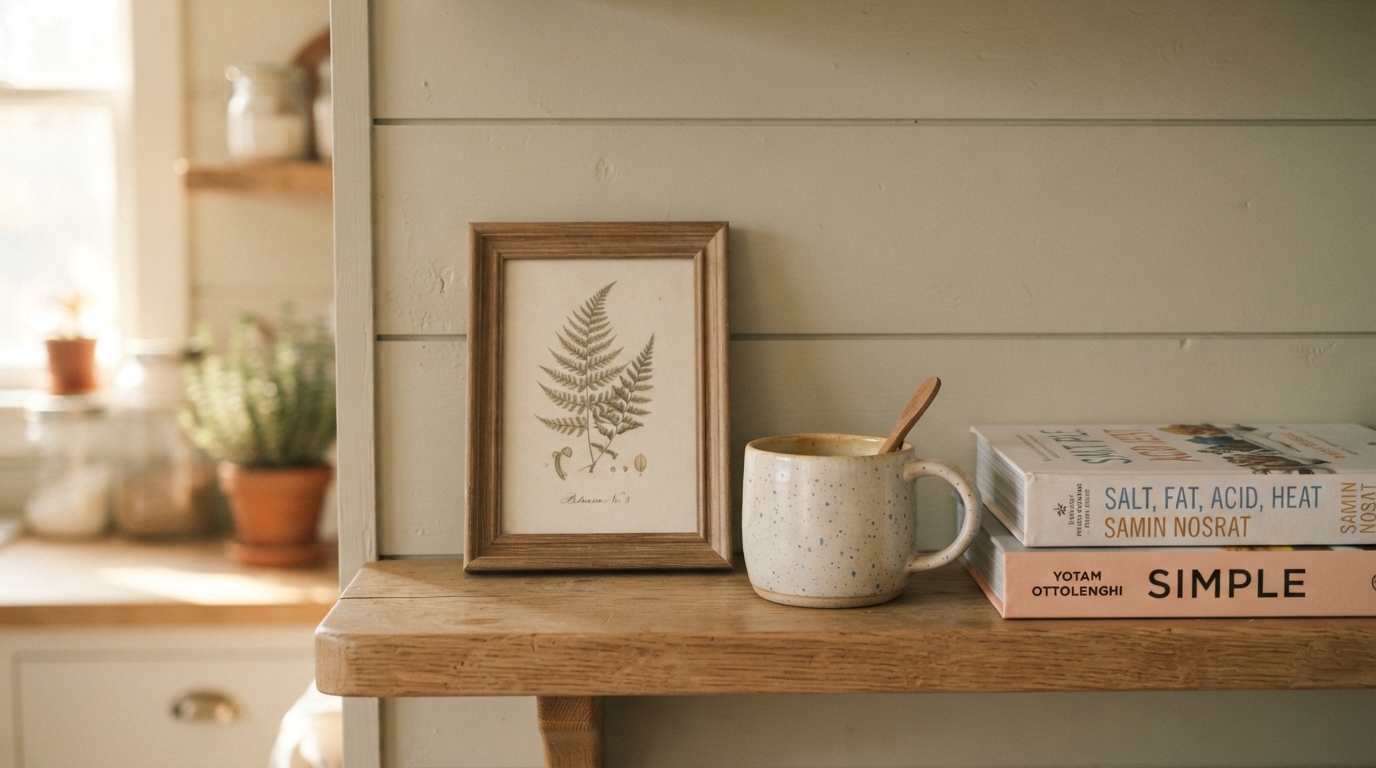
Floating shelves already feel airy because they lack visible brackets or bulk — adding a small framed print or postcard leans into that lightness while giving the wall real personality. A piece of art suggests the room is lived in, not just worked in.
The art doesn’t need a gallery price tag. Thrifted frames, a child’s drawing, or a printed photo all work. The only rule worth following closely: keep artwork well clear of the stovetop and sink, where heat and moisture can damage paper or wood over time. Pair each print with one practical item, like a mug or small dish, so the shelf still earns its keep.
5. Bring the Outdoors In With Herbs and Plants
Greenery does more for a kitchen shelf than almost anything else — it adds color, movement, and a sense of freshness the moment it’s placed. A pot of basil or mint contributes both visual charm and something you can actually cook with.
This is a low-cost, low-effort upgrade: small terracotta pots, repurposed jars, or a single hanging planter are all it takes to get the look started. Match your plant choices to how much natural light the shelf actually gets, since a beautiful herb pot that wilts within a week defeats the purpose. Combining a couple of real plants with one or two realistic faux stems is a practical way to maintain a full, green look with less upkeep.
6. Group Pieces by Color

Sorting dishware by color turns a shelf into a small, deliberate art piece. Clustering blue mugs together, or lining up a row of green bowls, creates a sense of rhythm that feels far more considered than a random mix ever could.
Because this method works with pieces you likely already own, it’s one of the most budget-conscious options here. Choose one dominant color and a single soft accent color to keep the arrangement from tipping into visual noise — even a handful of matching pieces is enough to make the whole shelf read as styled rather than accidental.
7. Balance Open Display With Hidden Storage
Open shelves look beautiful, but not everything in a kitchen is meant to be seen. Pairing open shelving with a few closed baskets or lidded boxes lets you show off your favorite pieces while tucking away the mismatched, everyday clutter.
This hybrid setup is genuinely practical — it means the shelf can flex between “styled” and “functional” without either side suffering. It’s also inexpensive to set up, since a couple of baskets is usually all it takes to hide the less photogenic items. Keep your best dishes and glassware front and center, and let the closed containers absorb everything else.
8. Add Texture With Woven Baskets
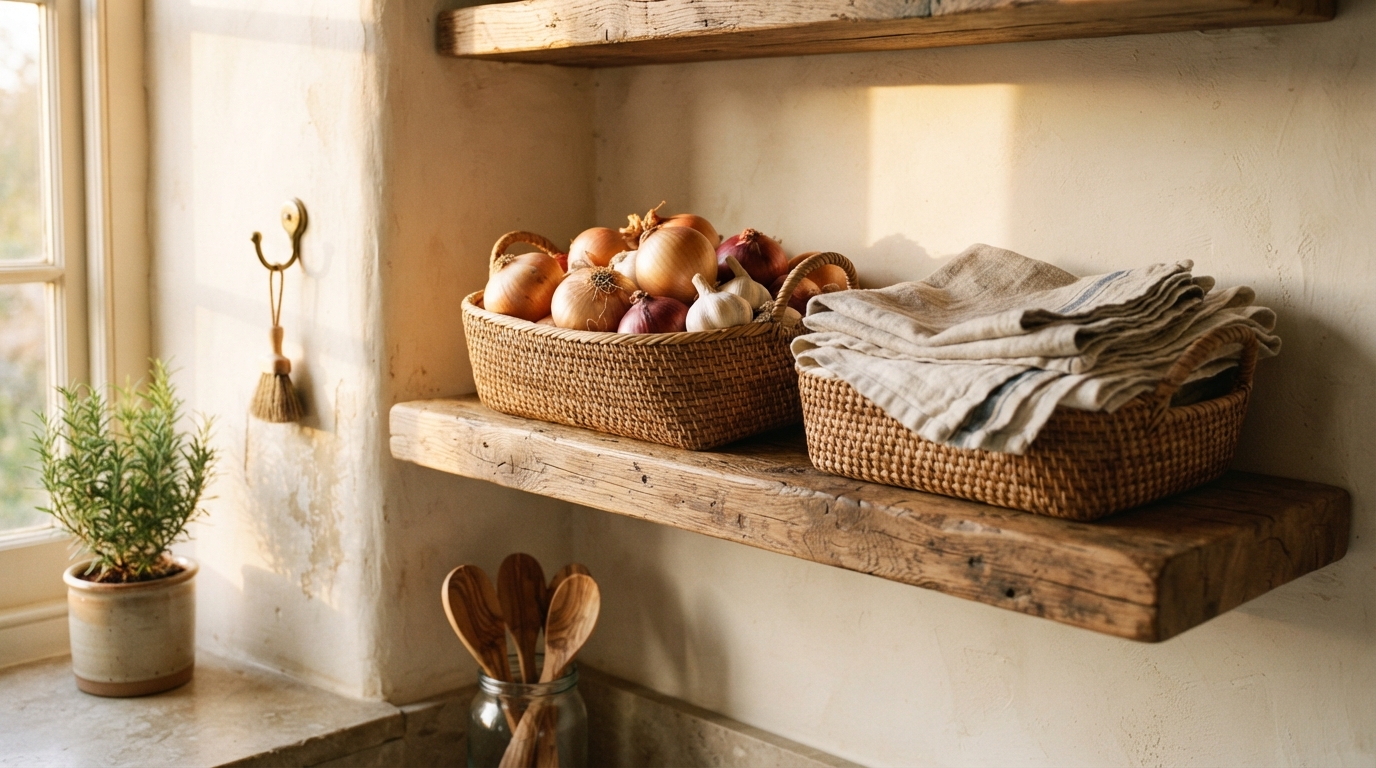
Woven baskets introduce texture that flat dishware simply can’t provide. They’re a natural home for items like onions, folded linens, or snacks you want within reach but don’t necessarily want on full display.
The layered, tactile look baskets bring makes a shelf feel richer without adding much cost — simple market baskets or secondhand finds do the job well. To keep the shelf from feeling too soft or shapeless, mix baskets with a few hard-edged items like jars or stacked plates. This combination is an easy shortcut to a farmhouse feel without committing to a full kitchen overhaul.
9. Let Cookbooks Do the Decorating
A row of cookbooks brings color and a lived-in charm that few other objects can match. The uneven spines create a natural, patchwork rhythm that feels collected over time rather than staged in an afternoon.
This idea rewards people who already cook from physical books, since the shelf becomes genuinely useful rather than purely decorative — and it costs nothing if you’re simply relocating books you already own. Stand most of them upright, but lay one flat to break the visual monotony, and set a small bowl or plant beside the stack to round things out. A handwritten recipe card tucked between the pages adds a personal touch that a flawless display never could.
10. Mix In Vintage Finds

Older pieces — chipped pitchers, mismatched mixing bowls, antique glass — carry a kind of character that new items rarely replicate. Because no two people collect the same vintage pieces, this approach guarantees a shelf that looks unmistakably yours.
Vintage styling is also one of the most naturally budget-friendly options, since the collection tends to build slowly, piece by piece, rather than all at once. To keep the shelf feeling functional rather than like a display case, mix older finds with a handful of newer, everyday items. The contrast between worn and fresh is what keeps the look balanced.
11. Go Uniform With Matching Containers
A shelf lined with matching canisters — clear glass, cream ceramic, or brushed metal — reads as sharp and deliberate almost instantly. The unbroken line of color and material cuts visual clutter dramatically.
It’s a look that pays off in daily use too, since a uniform system makes it easier to find ingredients without searching through mismatched packaging. Buying a full matching set can mean a higher upfront cost, but the payoff is a shelf that looks finished the moment it’s filled. Stick to one shape or color family, vary the container sizes for interest, and add simple labels if you’re storing dry goods. Few approaches get you to a clean, modern look with this little effort.
12. Layer Frames Behind Plates
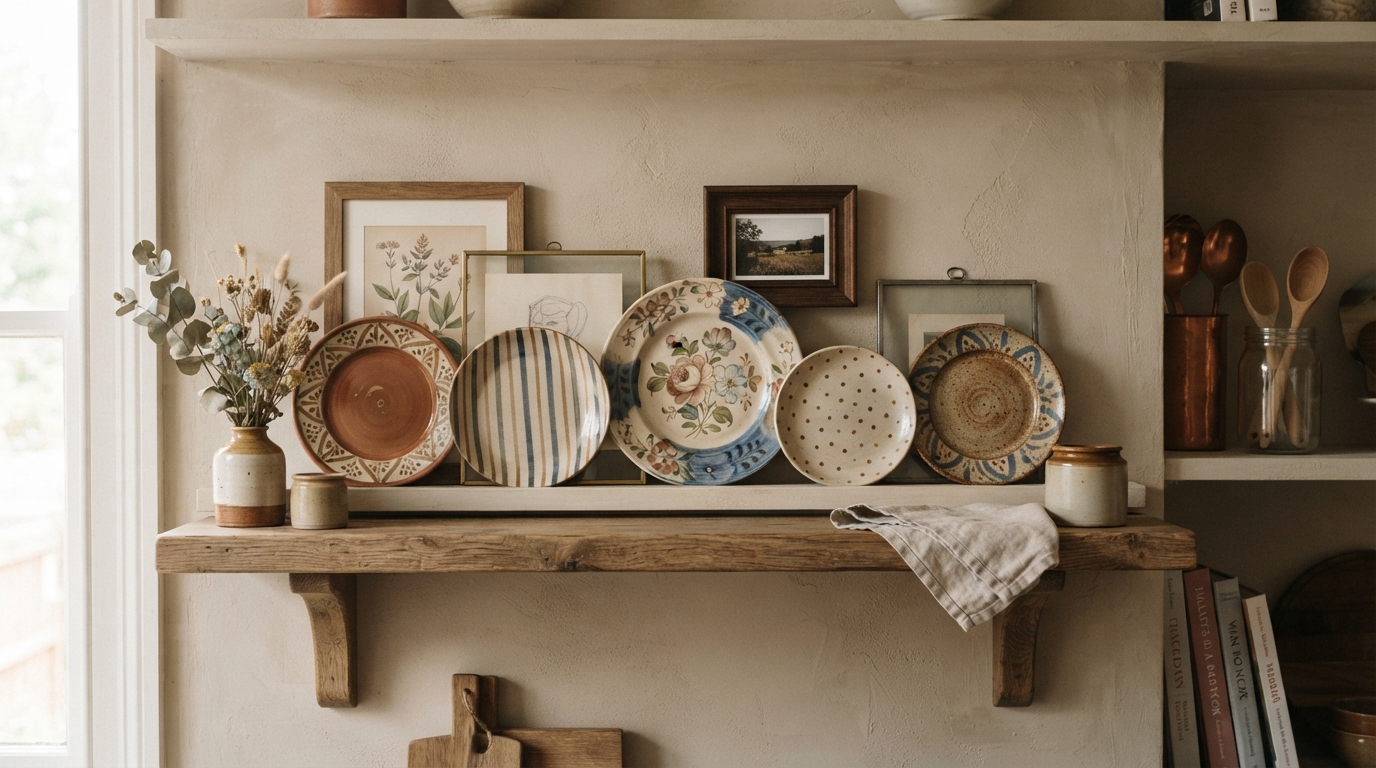
Leaning plates in front of small frames creates depth that a flat row of dishes can’t achieve — the effect feels closer to a miniature gallery wall than ordinary storage. The plates add height up front, while the frames fill the visual space behind.
This layered style suits kitchens that want a touch of elegance without losing everyday warmth. Family photos, old prints, or inexpensive art all keep the cost down while adding personality. Because everything simply leans rather than hangs, the whole arrangement can be swapped or rearranged in minutes — a nice option for anyone who likes refreshing their space by season or mood.
13. Use Bold Color as an Accent
A single bright object — a red vase, a sunshine-yellow bowl, a bold mug — can wake up a shelf that otherwise feels flat. Against plain walls and neutral shelving, that one pop of color does a disproportionate amount of visual work.
This is an especially cheap fix for a kitchen that feels dull: one or two colorful pieces is genuinely enough. Keep everything else on the shelf simple and muted so the accent piece has room to stand out, rather than competing with five other bold items. A well-placed accent color can make routine moments — morning coffee, evening dishes — feel a little more energized.
14. Style With Tools You Actually Use

Everyday cooking tools — wooden spoons, whisks, folded tea towels, measuring cups — can look intentional when arranged with a little care instead of shoved in a drawer. Letting these items double as decor means your most-used tools stay within arm’s reach.
This is a practical pick for anyone who’d rather not spend money on separate decorative objects, since the shelf styles itself using what already lives in the kitchen. Favor tools with clean lines or natural materials like wood and stainless steel, and group them in a small tray or crock so they read as a set rather than scattered clutter. For people who cook often, this setup saves real time while keeping the shelf looking purposeful.
15. Try a Soft, Minimal Approach
Minimal shelf styling relies on just a few well-chosen pieces, each given plenty of breathing room. Light, muted colors and simple shapes keep the whole wall feeling calm rather than empty.
The style has stayed popular because it manages to feel clean without feeling cold or unfinished. Costs stay low too, since a plain vase, a couple of sturdy bowls, and one or two jars are usually enough. Leaving visible space between each object is what separates “minimal” from “bare” — that gap is doing real design work. One personal item, like a travel mug or an inherited dish, keeps the look from feeling impersonal.
16. Rotate the Display With the Seasons

A shelf that changes with the calendar keeps a kitchen feeling fresh year-round. Light florals in spring, a bowl of citrus or stone fruit in summer, warm-toned gourds in fall, and candles in winter each shift the mood without requiring a full redesign.
This approach suits anyone who enjoys small, regular refreshes rather than one big overhaul, and it can be nearly free if you’re rotating items you already own or pulling from your own backyard. Swap only a few pieces at a time so the update feels effortless rather than like a chore. A recurring personal touch — a favorite color, a family heirloom — ties every seasonal version of the shelf back to the same underlying style.

Final Thoughts
The best kitchen shelves rarely follow just one rule from this list — most real kitchens borrow two or three ideas and adjust them over time. Start with what you already own, add texture and color gradually, and leave room to change your mind. A shelf, unlike a full renovation, is meant to evolve.