A bedroom is supposed to feel like an exhale — the one room in the house where your shoulders drop the second you walk in. But somewhere between laundry day and “I’ll deal with it later,” most bedrooms fill up with things that were never meant to live there long-term. The result isn’t just a messier room; it’s a room that feels smaller than its actual square footage, no matter how big it really is.
The good news: you don’t need a renovation, a bigger house, or a trip to the furniture store to fix this. In most cases, the fastest way to make a bedroom feel bigger is to take things out of it, not add things to it. Below are 26 common bedroom items that quietly eat up space, visual and physical, and simple swaps that give the room room to breathe.
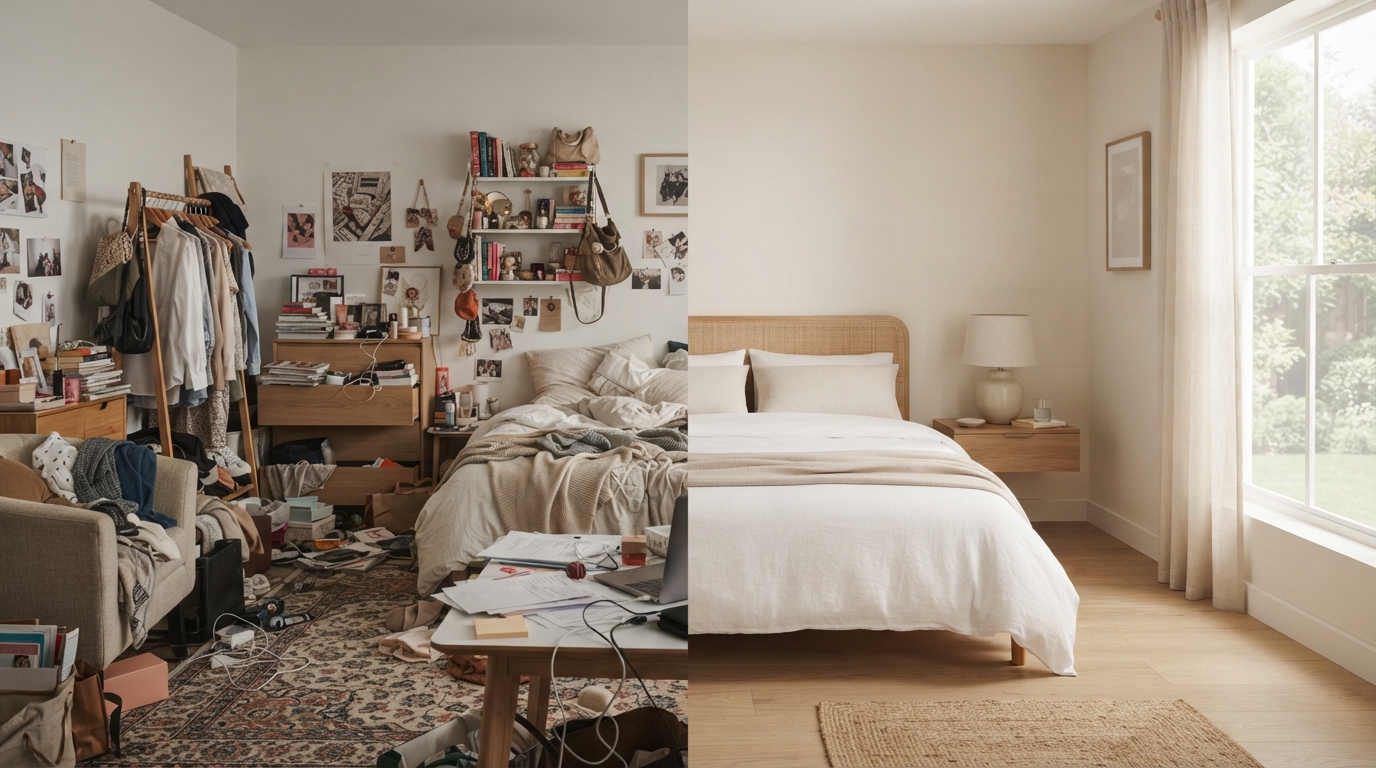
1. Furniture You Don’t Actually Use
That accent chair draped in “someday” clothes, or the decorative bench at the foot of the bed that no one ever sits on, is quietly working against you. Extra furniture pieces interrupt the natural walking path through a room, forcing your eye — and your body — to navigate around obstacles instead of moving freely.
Stick to the essentials: a bed, a dresser, and a single nightstand if you have the room for it. Every piece beyond that should earn its spot by being genuinely useful, not just visually pleasing in a catalog photo.
2. A Mountain of Throw Pillows
A few well-chosen pillows can add warmth and texture to a bed. A dozen of them turn your bed into an obstacle course you have to clear every single night. And most of the time, they don’t end up neatly stacked somewhere — they get tossed on the floor, onto a chair, or into a corner, adding to the clutter rather than the calm.
Two or three accent pillows is plenty. You’ll still get the decorative payoff without the nightly pillow-shuffle or the daytime pile-up.
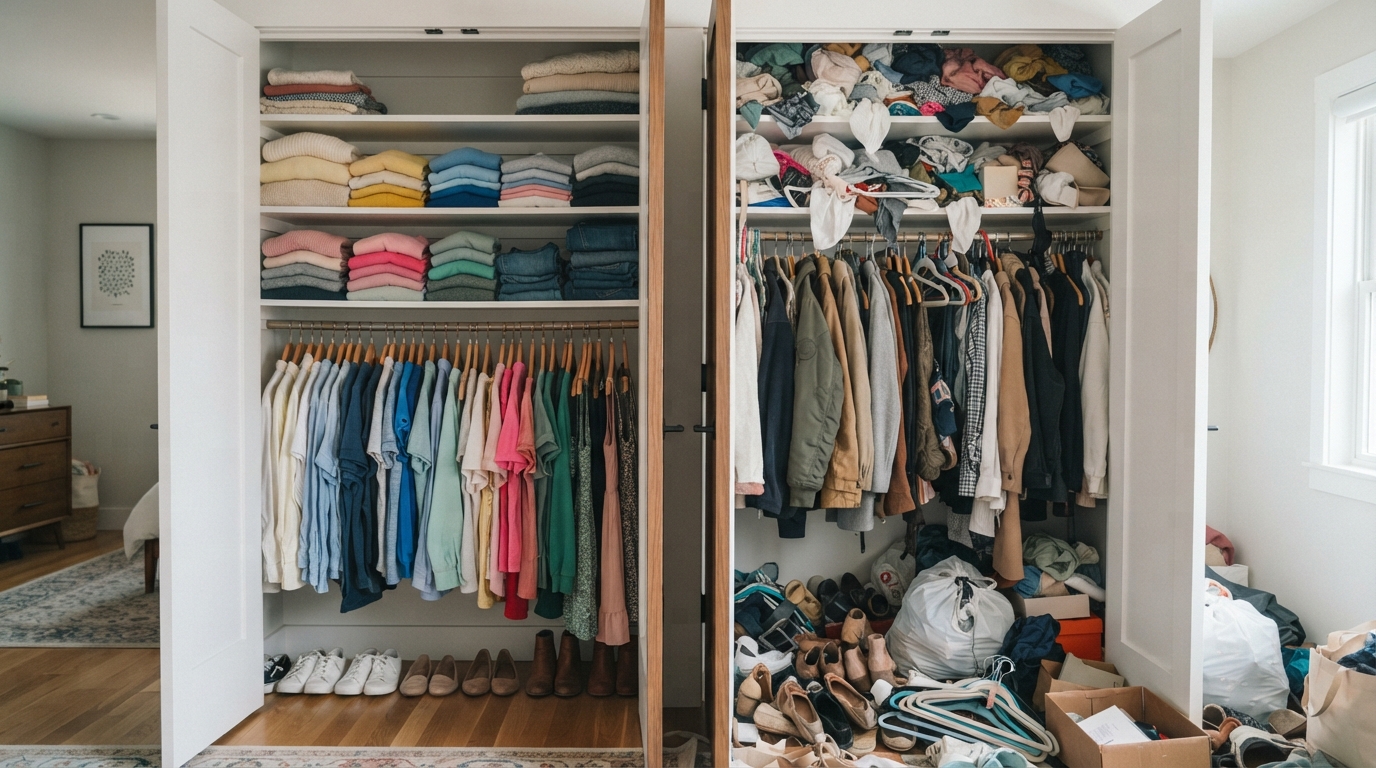
3. Clothes That Don’t Fit in Your Closet
When drawers and closets are packed past capacity, clothing has nowhere left to go but out — draped over a chair, piled on the floor, hung on the doorknob. Even a spacious bedroom starts to look chaotic once clothing spills into the open living area of the room.
Go through your wardrobe and let go of anything you haven’t worn in the last year. A tighter, more intentional closet means everything actually has a home, and nothing ends up living on your floor.
4. A Growing Stack of Books and Magazines
Nightstand reading piles have a way of multiplying. What starts as one book becomes a leaning tower of novels, magazines, and unopened mail, quietly narrowing your surface space and pulling the eye toward clutter every time you glance over.
Keep just the book you’re currently reading within reach. Switch to digital subscriptions for magazines, and pass along books you’ve already finished unless they’re true keepers.
5. Home Gym Equipment
A treadmill folded in the corner or a rack of dumbbells by the closet can turn a restful bedroom into something that reads more like a gym annex. These are large, visually heavy objects, and their presence changes the entire mood of the room — even when they’re not in use.
If you can, relocate exercise equipment to a spare room, garage, or living area. If space is tight everywhere, look for compact, foldable equipment that tucks completely out of sight between workouts.
6. An Oversized Laundry Hamper
A bulky hamper parked in the open takes up more floor space than most people realize, and it rarely stays tidy — overflowing laundry has a way of becoming its own clutter zone right where you can see it.
Swap it for a slim hamper that fits inside a closet, tucks into a corner, or hangs over a door. Collapsible versions are especially useful since they can shrink down completely on laundry day.
7. A Rug That’s Too Heavy for the Room
It seems counterintuitive, but a thick, dark, or oversized rug can actually make a bedroom feel more closed-in, not cozier. Bold patterns and heavy textures visually shrink the floor rather than expanding it.
Choose a low-pile rug in a light or neutral tone, sized so there’s visible flooring around its edges. That visible border reads as breathing room to the eye, even in a genuinely small space.
8. Storage Boxes You Can See
Bins and boxes stacked in the corner or peeking out from under the bed send an unconscious signal that your belongings have outgrown your space, even if that’s not actually true.
Tuck necessary storage inside closets or fully under furniture where it’s out of sight. Better yet, use the moment to ask whether you need everything inside those boxes at all — fewer things stored means fewer containers needed.

9. Two Nightstands When You Only Need One
Matching nightstands on either side of the bed look symmetrical in photos, but in a smaller room, that second nightstand — plus its lamp, books, and knickknacks — adds real bulk around your sleeping space.
Consider a single, streamlined nightstand, or a wall-mounted shelf on the other side that offers a landing spot without eating into floor space. Your walking path around the bed will open up immediately.
10. Table Lamps That Are Too Big for the Job
An oversized lamp with a dramatic shade might photograph beautifully, but on a small nightstand or dresser, it can dominate the entire surface and make everything around it look cramped by comparison.
Trade bulky lamps for slim, modern designs, or move lighting off the surface entirely with a wall-mounted sconce. You’ll free up real usable space and soften the visual weight of the room.
11. A Television
A TV doesn’t just take up physical space on a dresser or wall — it becomes a focal point that pulls energy and attention into a room meant for winding down. Sleep experts have long pointed to bedroom screens as a disruptor of both rest and, indirectly, the sense of calm a bedroom should have.
Consider moving the TV to a living space altogether. Beyond the potential sleep benefits, you’ll reclaim a meaningful chunk of wall or surface real estate.
12. A Desk and Work Supplies
Working from the same room you sleep in blurs a boundary that’s hard to unblur — psychologically and physically. A desk, chair, monitor, and the inevitable pile of papers and cords take up significant square footage and constantly remind your brain of your to-do list.
If at all possible, move your workspace elsewhere in the home, even a corner of another room. Separating “where I work” from “where I rest” does double duty: more square footage, and a bedroom that actually feels restful.
13. Electronics You No Longer Use
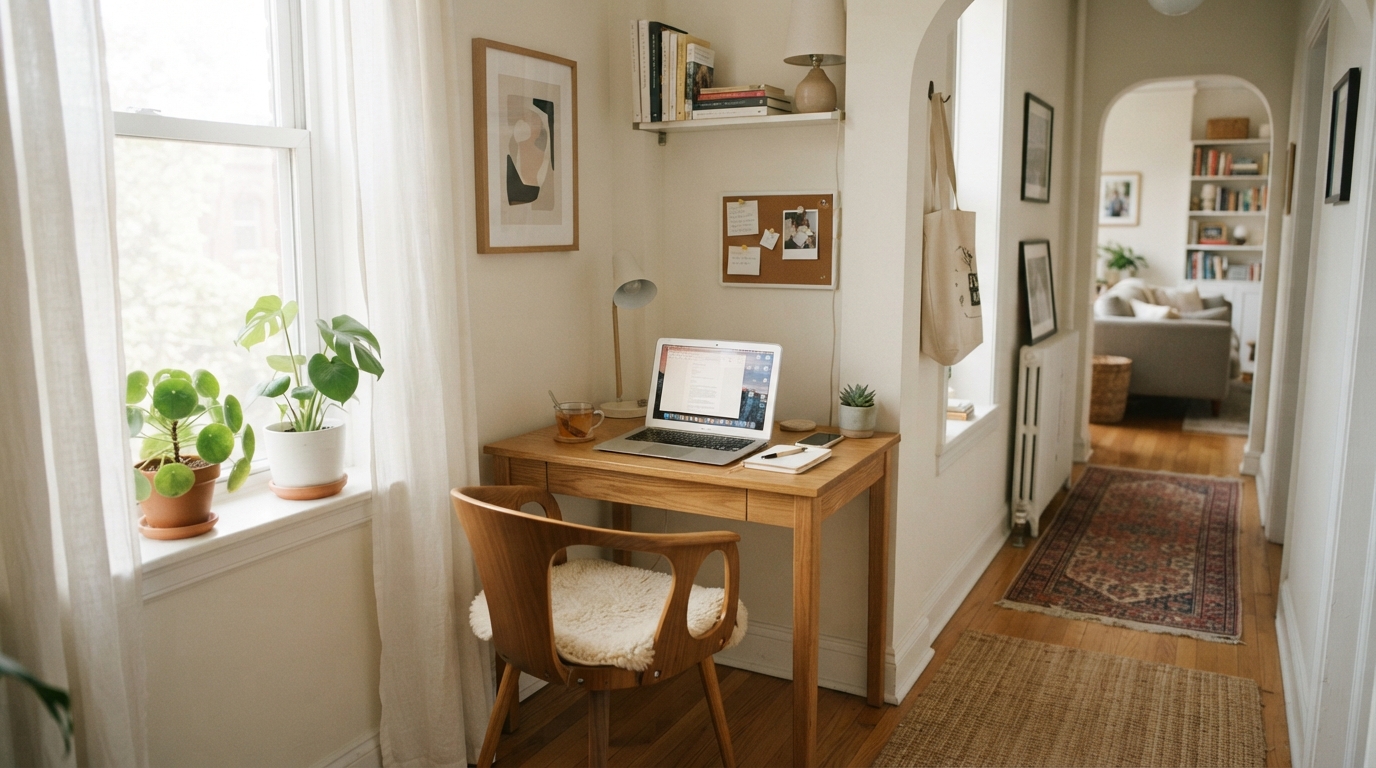
Old phones, tangled chargers, outdated alarm clocks — these small items accumulate quietly on dressers and nightstands until there’s a small landfill of forgotten gadgets collecting dust.
Do a sweep: recycle, donate, or store elsewhere anything you’re not actively using. Keep only what you truly need in the room, like your current phone charger.
14. Oversized Decorative Objects
A dramatic vase, a large sculpture, or an eye-catching decorative piece can look stunning in isolation, but in a compact bedroom, big statement objects tend to visually crowd the space and disrupt the flow of the eye across the room.
Opt for a smaller number of more delicate accent pieces. A little restraint here goes a long way toward keeping the room feeling light rather than heavy.
15. Bedding Piled Too High
A thick comforter layered under a second blanket, topped with a throw and a dozen pillows, might look luxurious in photos, but in person it can make the bed — and by extension the whole room — feel bulky and closed-in.
Choose one high-quality duvet or comforter instead of stacking layers. Simpler, streamlined bedding reads as calm and intentional rather than piled-on.
16. Anything Sitting on the Floor
Shoes kicked off by the door, a bag dropped after work, a stack of books beside the bed — floor clutter is one of the fastest ways to make any room, regardless of its actual size, feel like it’s shrinking around you.
Set a simple household rule: nothing but furniture touches the floor. It sounds strict, but it’s one of the single most effective ways to instantly open up a room.
17. Too Much Wall Decor
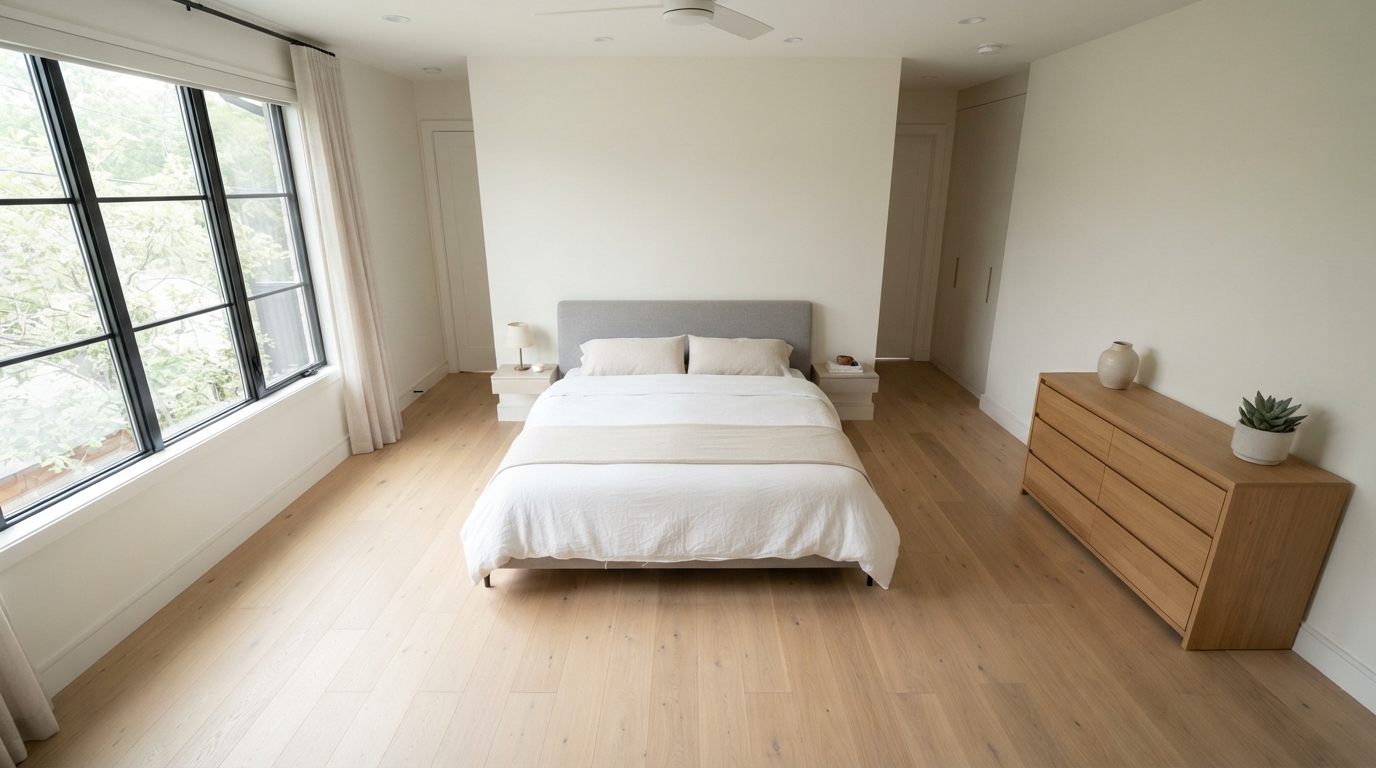
A wall covered edge-to-edge in frames, art, and hangings can create visual noise that closes the room in, even when the walls themselves are empty of physical objects. The eye doesn’t know where to land, and that busyness reads as smallness.
Edit your wall decor down to a few intentional pieces, or one larger statement piece instead of many small ones. Leaving visible empty wall space is doing more design work than you might think.
18. Clothing for the Wrong Season
That heavy winter coat hanging in your closet in July, or the swimsuits taking up drawer space in January, are quietly eating into storage you need for what you’re actually wearing right now.
Rotate out-of-season items into under-bed containers, vacuum-sealed bags, or a closet elsewhere in the home. Your everyday closet stays lean, and your bedroom stops absorbing the overflow.
19. Hobby Supplies With No Dedicated Home
Craft bins, an old guitar, sports gear from a season you haven’t played in years — hobby items tend to drift into bedroom corners simply because there’s nowhere else obvious to put them.
Give these items a real home elsewhere in the house, or be honest about which hobbies you’re still actively pursuing. A bedroom doesn’t need to double as storage for every interest you’ve ever had.
20. Heavy Curtains and Drapes
Thick, dark window treatments do more than block light — they visually weigh down the walls and can make an entire room feel smaller and dimmer than it is. Natural light is one of the single biggest factors in whether a room reads as open or closed-in.
Swap heavy drapery for sheer curtains or simple light-filtering shades. More light bouncing around the room translates almost instantly into a feeling of extra space.

21. A Headboard That’s Too Big for the Room
An elaborately padded or oversized headboard can look plush in a showroom, but in a modestly sized bedroom, it often visually swallows the wall behind the bed, making everything around it feel more compressed.
A slim-profile headboard, a wall-mounted version, or even no headboard at all can let the wall itself feel taller and airier, and the bed feel lighter within the room.
22. Too Many Candles and Fragrance Diffusers
A candle here, a diffuser there, a few fragrance sprays on the dresser — individually harmless, collectively they turn every flat surface into a display shelf, and displayed items are exactly what reads as clutter to the eye.
Pick one or two favorite scent sources and give them a consistent spot. Clearer surfaces immediately register as a calmer, more spacious room.
23. An Oversized Bedside Clock
A big decorative alarm clock might have made sense before smartphones took over that job, but today it’s often just extra bulk on a nightstand that’s already working hard to hold a lamp, a book, and a glass of water.
Downsize to something small and simple, or skip a standalone clock altogether if your phone already covers it. Less on the nightstand means more visual breathing room.
24. Open Shelving That’s Doing Too Much
Open shelves can be a great storage solution, but only when they’re not packed edge-to-edge with baskets, books, and knickknacks. Overloaded open shelving reads as visual clutter even when everything on it is technically organized.

Either thin out what’s displayed or swap to closed storage that keeps the contents out of view. A lightly styled shelf does far more for the sense of space than a full one.
25. Furniture That Doesn’t Match
A dresser from one era, a nightstand from another, and a bed frame that doesn’t relate to either — mismatched furniture styles and finishes can make a bedroom feel visually chaotic, even when each individual piece is perfectly nice on its own.
You don’t need to buy all new furniture to fix this. Unifying pieces through a shared paint color, matching hardware, or coordinated wood tones creates a sense of cohesion that immediately reads as calmer and more spacious.

26. Anything You’re Keeping “Just in Case”
Beyond any single category, most cluttered bedrooms share one root cause: items kept not because they’re used or loved, but because getting rid of them feels like a hassle. Old gift-wrap, broken electronics waiting to be “fixed someday,” or extra hangers that multiply on their own — these low-value items add up to real square footage.
Do a quick sweep of anything that falls into the “just in case” category and ask honestly whether it’s earning its place. Most of the time, it isn’t, and letting it go opens up more space than any single big-ticket item ever could.

Your Bedroom, Restored to Its Actual Size
None of these fixes require a renovation, a bigger budget, or a trip to the furniture showroom. In almost every case, the fastest route to a bedroom that feels bigger, calmer, and more restful is simply removing what doesn’t belong, rather than adding something new.
Your bedroom’s real job is to help you rest and recharge. Every item you clear out — whether it’s a stray box, a second nightstand, or a drawer of clothes you never wear — gives that purpose a little more room to actually happen.
