Side tables are some of the most underrated real estate in a home. They sit quietly next to sofas, armchairs, and beds, and most of the time they either stay completely bare or get treated like a landing pad for mail, remotes, and phone chargers.
But a well-styled side table does something bigger than hold a lamp. It pulls a seating area together, adds a layer of visual interest at a lower eye level, and gives a room the finished, “someone lives here on purpose” feeling that’s hard to fake.
The good news is that styling one doesn’t require a big budget or a background in interior design. It comes down to a handful of repeatable principles — varying height, mixing textures, leaving a little negative space, and choosing objects that actually mean something to you — applied a little differently depending on the table, the room, and the mood you’re going for.
Below are 30 approaches to side table styling, from the effortless to the slightly more considered, so you can find the version that actually fits how you live.
1. The Height Triangle
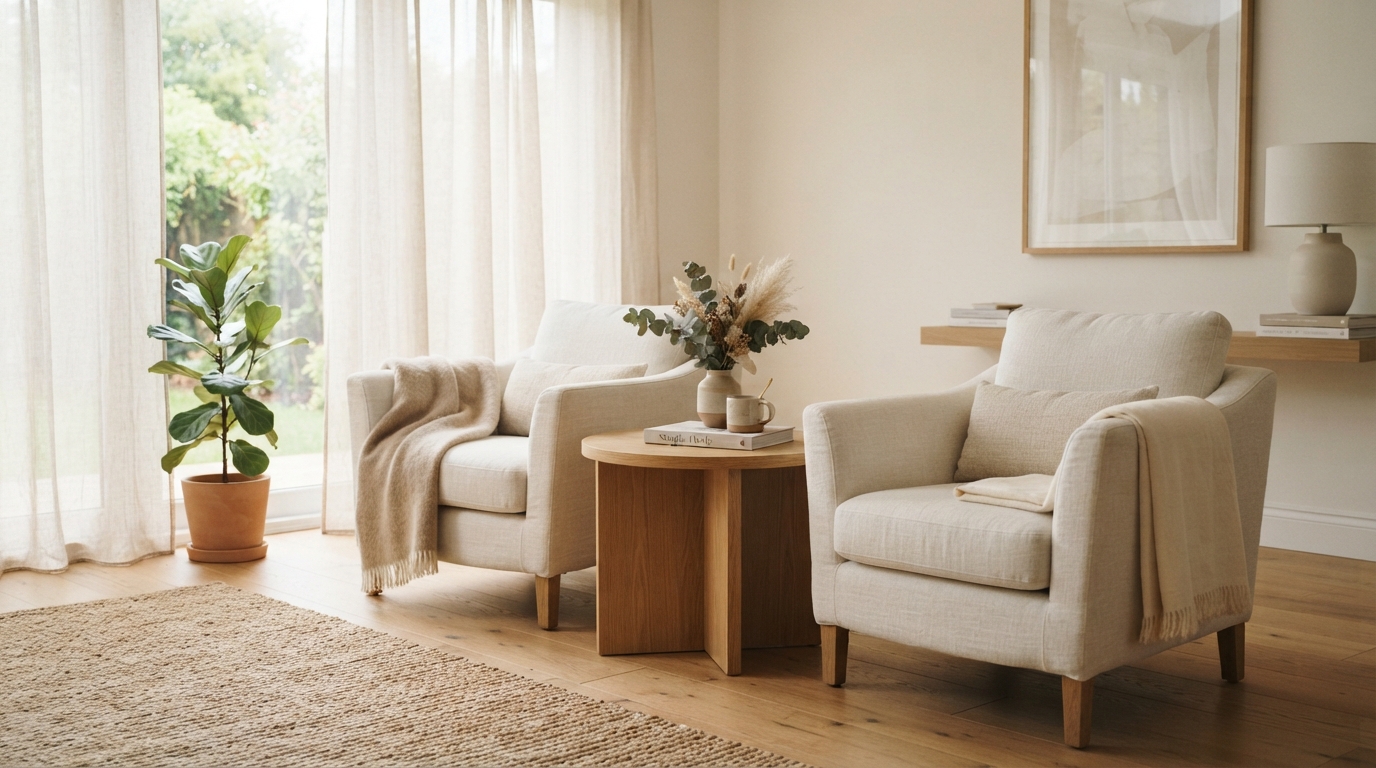
Interior stylists lean on this trick constantly: group three objects of different heights — a tall lamp, a medium stack of books, a low dish or candle — so the eye moves naturally across the table instead of landing flat. It’s the single fastest way to make an empty table look composed.
2. One Statement, Nothing Else
Sometimes the most confident move is restraint. Pick one striking object — an oversized ceramic vase, a sculptural bowl, a single dramatic stem — and let it be the whole story. This works especially well on smaller tables where clutter reads as chaos rather than charm.
3. The Working Lamp Base
Every side table earns its keep with good task lighting, so start there. Choose a lamp with a warm, low-wattage bulb and build the rest of the styling around its scale — a slim brass lamp calls for delicate accents, while a chunky ceramic base can handle a bigger stack of books beside it.
4. Stacked Books as a Pedestal
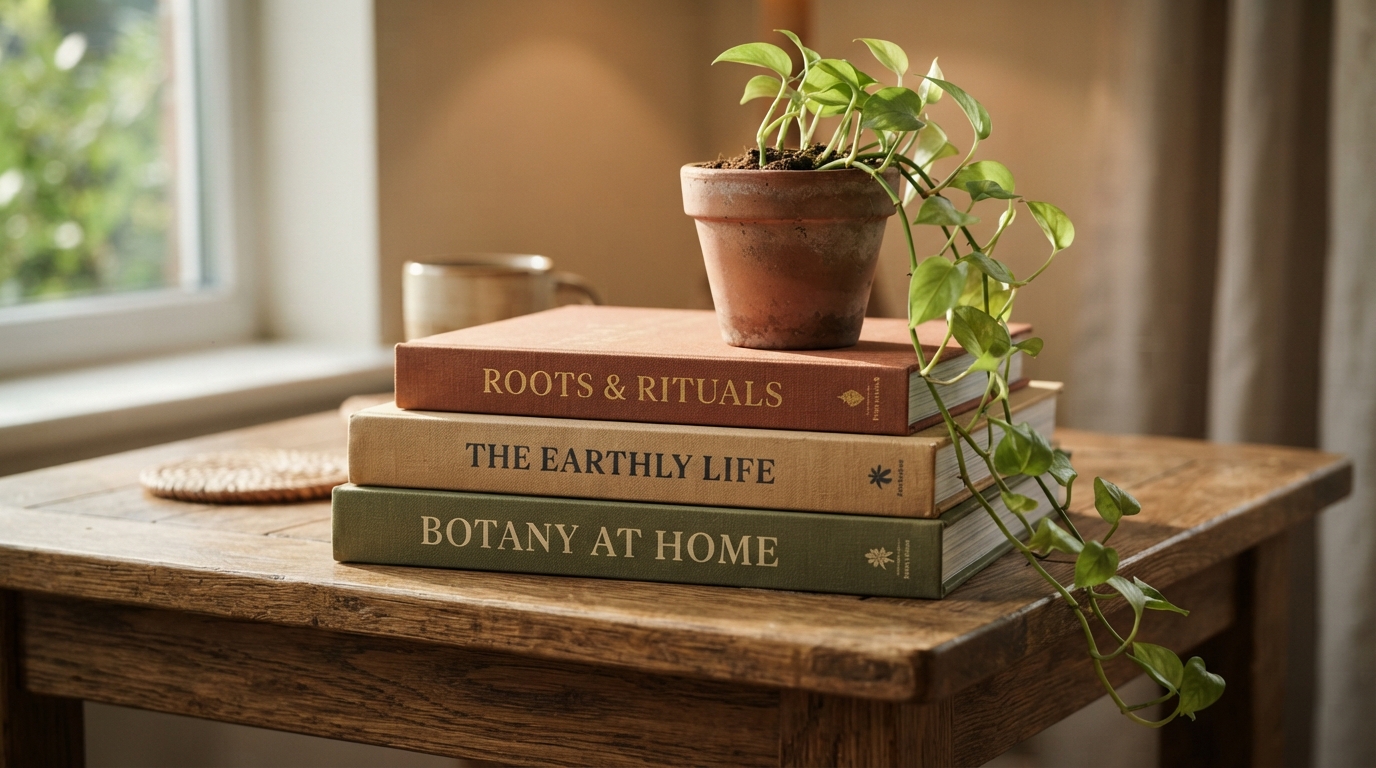
A stack of two or three hardcovers isn’t just reading material — it’s a plinth. Set a small plant, candle, or trinket on top of the stack to instantly add height and make the object look intentionally displayed rather than just placed there.
5. Bring In a Living Plant
Greenery softens every material it sits near — wood, metal, glass, stone. Even a single small potted plant or a loose stem in a bud vase keeps a tabletop from feeling sterile, and it’s one of the lowest-effort upgrades available.
6. Anchor With a Tray
A tray creates a defined “zone” on the table, which paradoxically makes everything inside it look tidier even if the objects themselves are random. Corral a candle, a small dish, and a stem together on a tray and the whole grouping suddenly reads as styled.
7. Mix Three Materials, Minimum
Aim for at least three different textures on any table — think wood, ceramic, and metal, or glass, linen, and stone. Repetition of a single finish can look flat under lamplight, while a mix of materials catches the light differently and adds depth even in a neutral palette.
8. Let a Basket Do the Heavy Lifting
A woven basket tucked beside or underneath the table hides blankets, magazines, or charging cables while adding warm, textural contrast to a smooth tabletop. It’s a practical fix that also happens to look intentional.
9. The Candle-and-Match Ritual
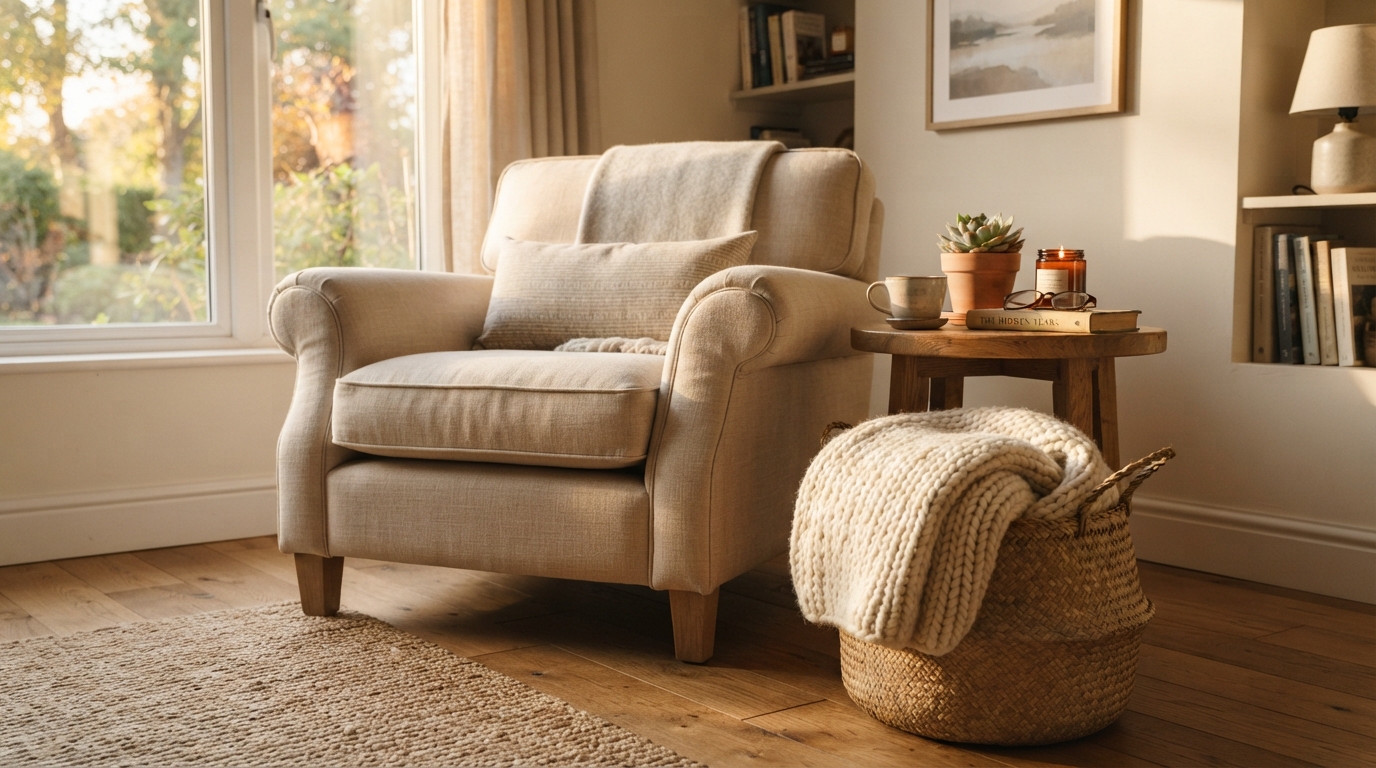
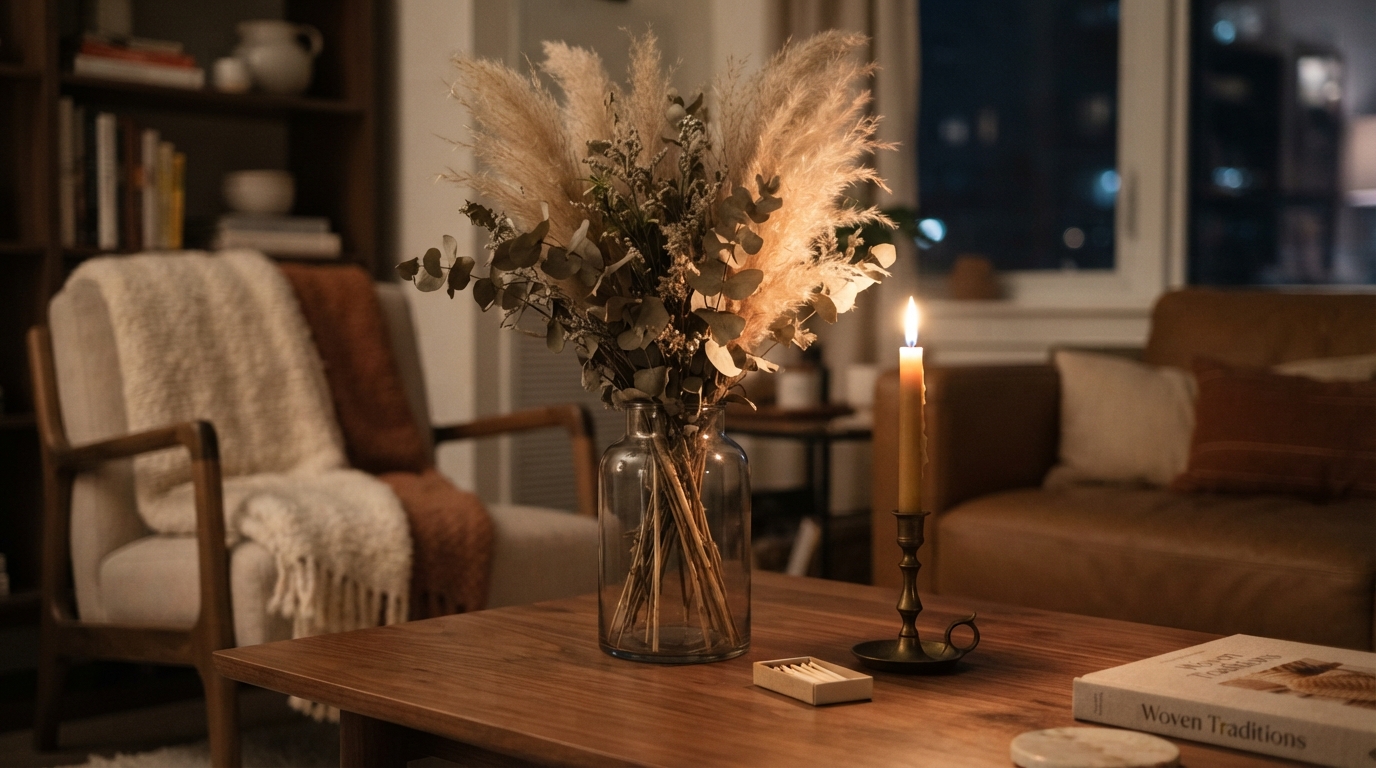
A single pillar or taper candle with a small dish of matches nearby signals “lived-in comfort” more than almost any other object. Light it in the evening and the table becomes a small ritual, not just a surface.
10. Use a Two-Tier Table for Layering
Tables with a lower shelf solve the eternal styling problem of “too many things, not enough surface.” Keep the top minimal — a lamp and one small object — and use the lower shelf for books, a basket, or an extra plant.
11. Go Monochrome on Purpose
Pick one color family — sandy neutrals, deep greens, soft blush — and stick to it across every object on the table. A monochrome palette forces you to lean on texture and shape for interest, which almost always looks more expensive than a mix of bright, competing colors.
12. Introduce a Photo Frame
A single framed photo — of a person, a place, a pet — is what turns a “showroom” table into a genuinely personal one. Keep it to one frame so it reads as a considered detail rather than a cluttered gallery.
13. Play With Asymmetry
Instead of centering everything, push your grouping slightly to one side of the table and leave the rest empty. Asymmetrical arrangements feel more natural and less “staged” than perfectly centered ones, and the negative space gives the eye somewhere to rest.
14. Dried or Preserved Florals for Longevity
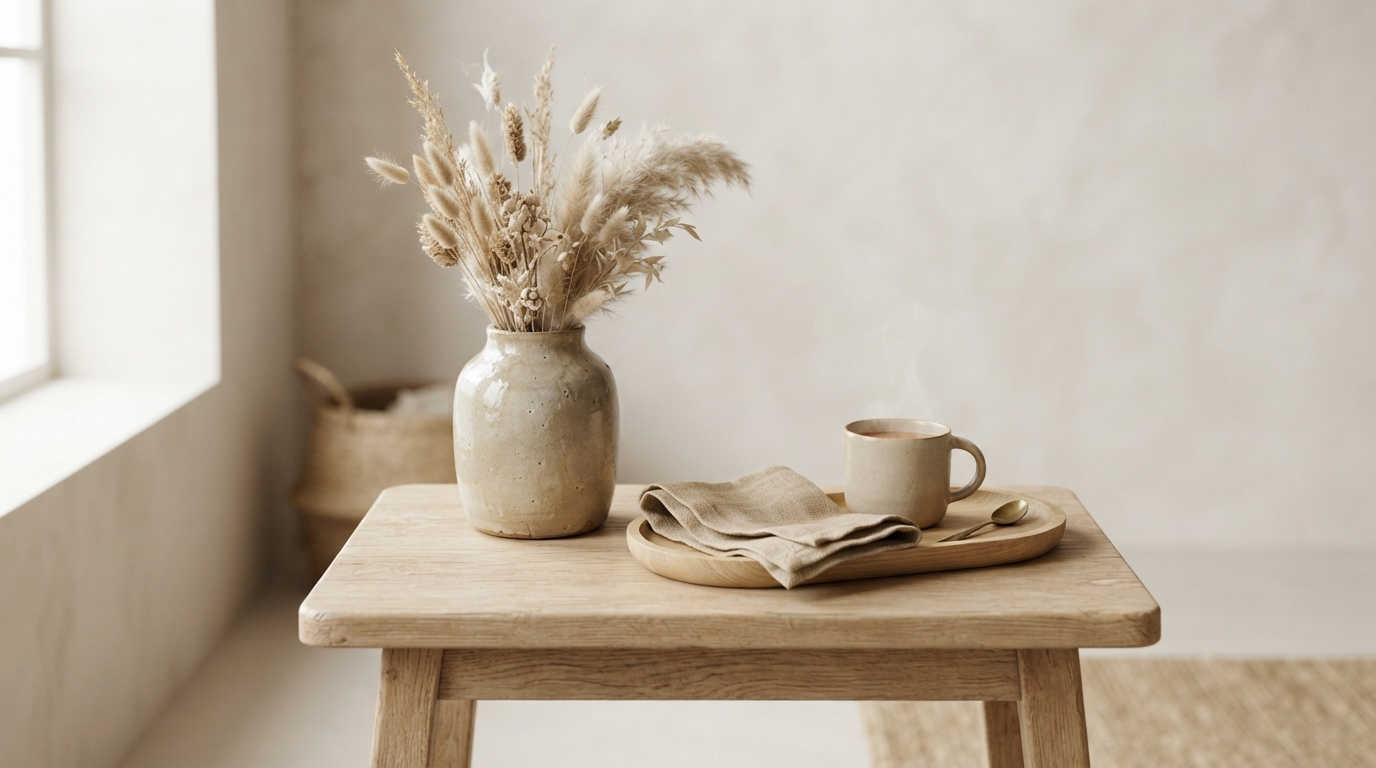
If fresh flowers aren’t realistic for your routine, dried stems — pampas grass, eucalyptus, wheat — offer the same softening effect without the weekly upkeep. They also lean into a warm, seasonless palette that works from autumn through spring.
15. Let the Table’s Wood Tone Lead
Before adding any decor, look at the table itself. A rich walnut or dark oak table can carry lighter, airier accessories on top, while a pale or bleached wood table often looks best paired with equally soft, muted objects so nothing fights for attention.
16. The Coaster-and-Cup Detail
Leaving a single coaster — even an empty one — on the table signals that this surface actually gets used. It’s a small, almost invisible styling choice that makes a space feel functional rather than purely decorative.
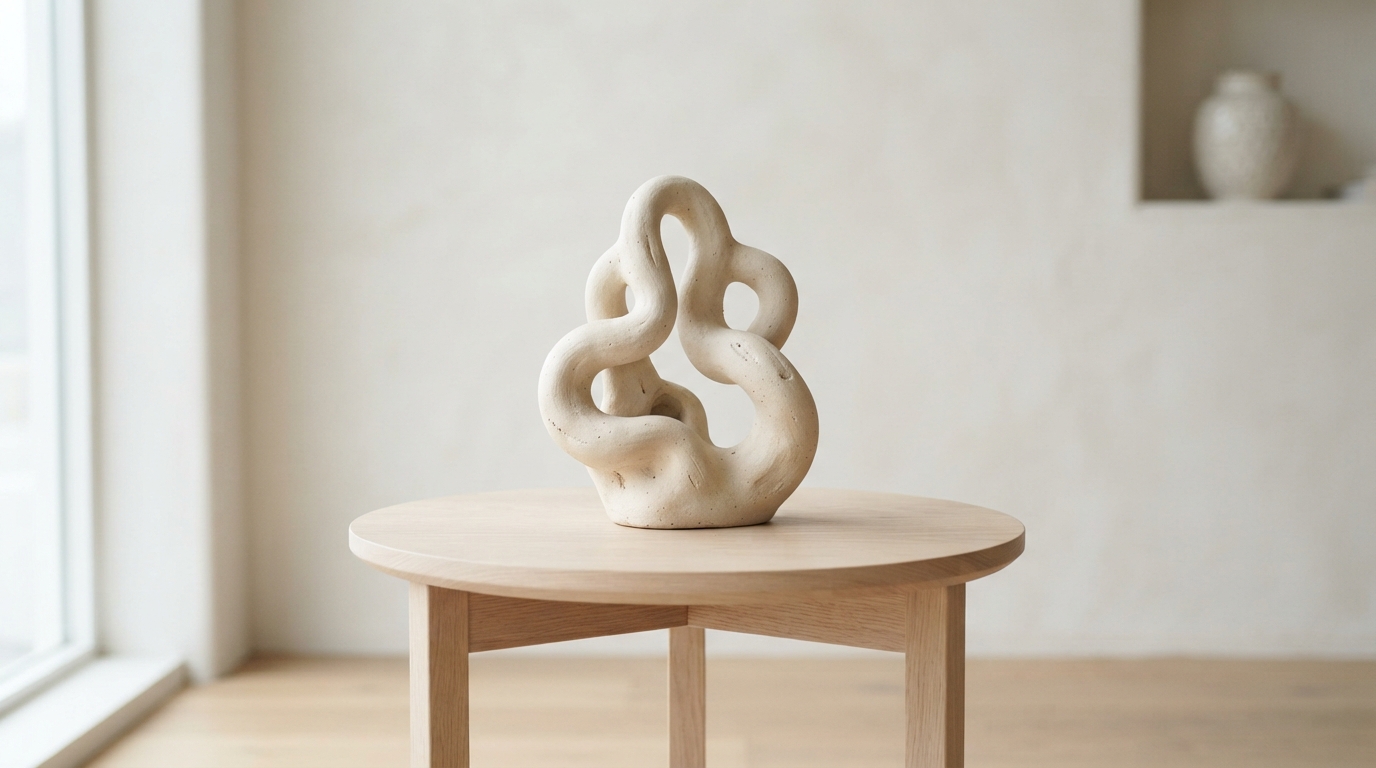
17. Sculptural Objects With Negative Space
A single abstract sculpture, a carved wood form, or an organically shaped bowl introduces visual interest through its silhouette alone. These pieces work best with breathing room around them — resist the urge to surround a sculptural object with clutter.
18. Seasonal Micro-Swaps
Rather than restyling the whole table, keep a consistent “base” — the lamp, the tray, the books — and swap just one or two small elements with the seasons: a pinecone in winter, a citrus branch in summer, a pumpkin in autumn. It keeps the space feeling current with almost no effort.
19. Pair Glass With Something Matte
Glass objects catch and bounce light beautifully, but a table full of only glass can feel cold and slippery to the eye. Balance a glass vase or candle holder with something matte and grounding, like an unglazed ceramic dish or a linen coaster.
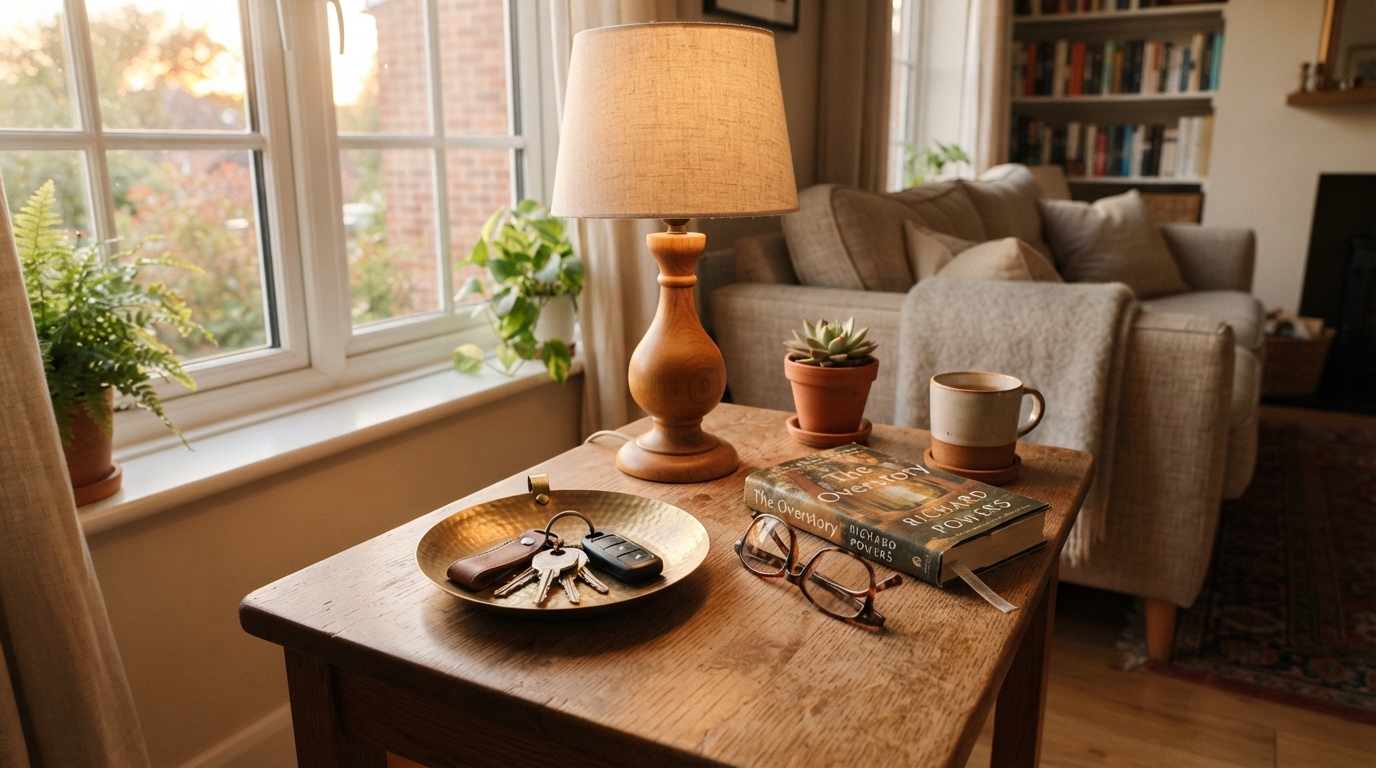
20. The “Just Came Home” Vignette
Leave a stack of mail, a set of keys in a small dish, or reading glasses resting beside the lamp. This candid, slightly imperfect styling can look more inviting than a picture-perfect arrangement because it suggests real life is happening in the room.
21. Nest a Small Table Underneath
A petite nesting table slid partly beneath the main side table adds functional surface area for a coffee cup or laptop without permanently taking up floor space. Pulled out, it doubles as a mini display shelf of its own.
22. Odd Numbers Read as Intentional
Grouping objects in threes or fives, rather than twos or fours, is a classic styling rule for a reason — odd numbers avoid the rigid, matched-set look and instead feel like a curated collection that came together over time.
23. A Bowl for Catch-All Items
A wide, shallow bowl gives loose items — a spare hair tie, a watch, a set of coasters — a defined home instead of letting them scatter across the surface. It keeps the table functional while still looking deliberate.

24. Consider the View From the Seat
Style the table with the sofa or chair in mind, not just how it looks walking past. Objects should look balanced and appealing from a seated angle, since that’s the vantage point the table will actually be seen from most often.
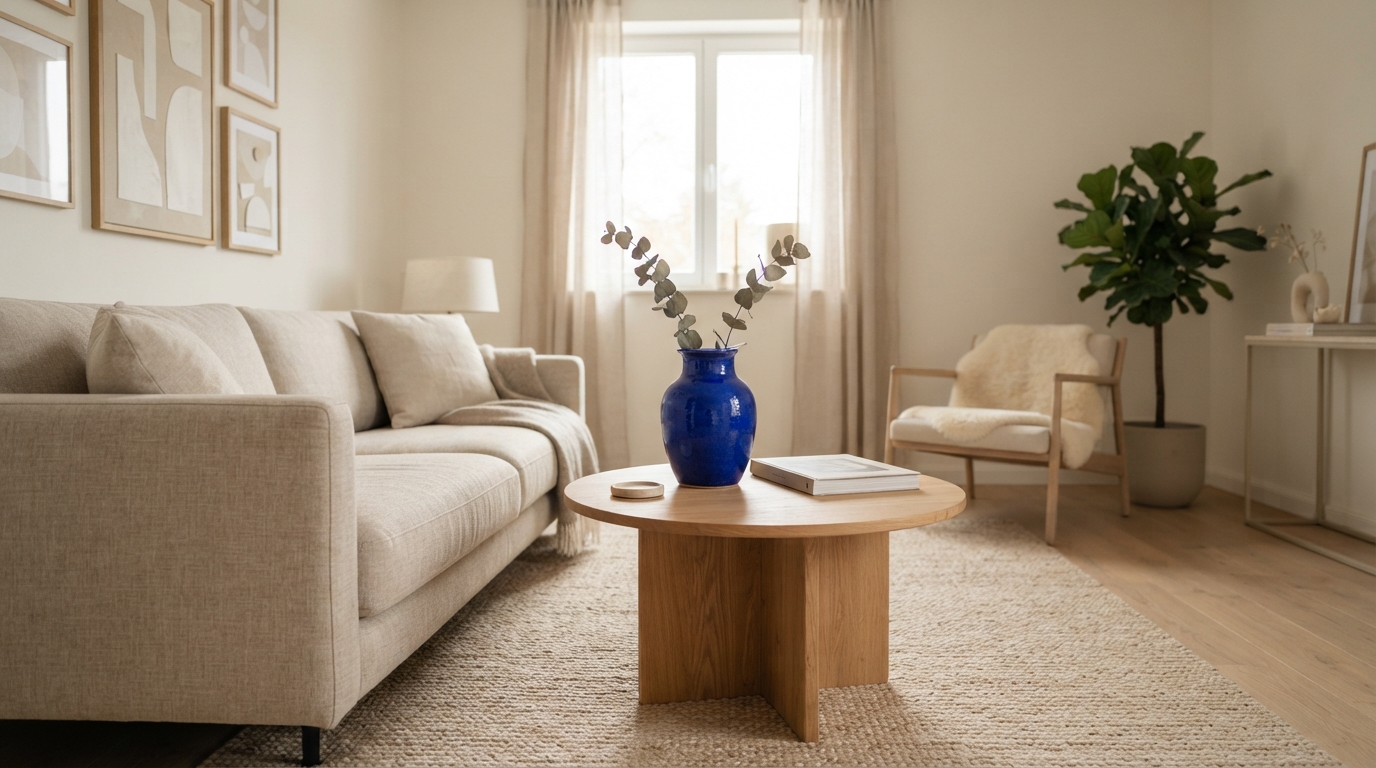
25. A Single Bold Color Pop
In an otherwise neutral room, one saturated object on the side table — a cobalt vase, a rust-colored candle, an emerald bud vase — draws the eye and gives the whole space a focal point without requiring a full color overhaul.
26. Layer a Textile Underneath
A small woven mat, a folded linen runner, or even a scrap of vintage fabric placed beneath a lamp or vase adds a soft textural base layer that keeps the tabletop from feeling like bare, uninterrupted wood or glass.
27. Use Bookends as Sculpture
A pair of interesting bookends — stone, brass, carved wood — can double as a decorative object even when they’re only holding two or three books. Choose a shape or material that complements the room rather than a purely functional plastic set.
28. Match the Table to Its Neighbor, Loosely
If a side table sits near a coffee table or console, echo one material or finish between them — the same wood tone, a similar metal accent — without matching every piece exactly. This creates a subtle sense of cohesion across the room.
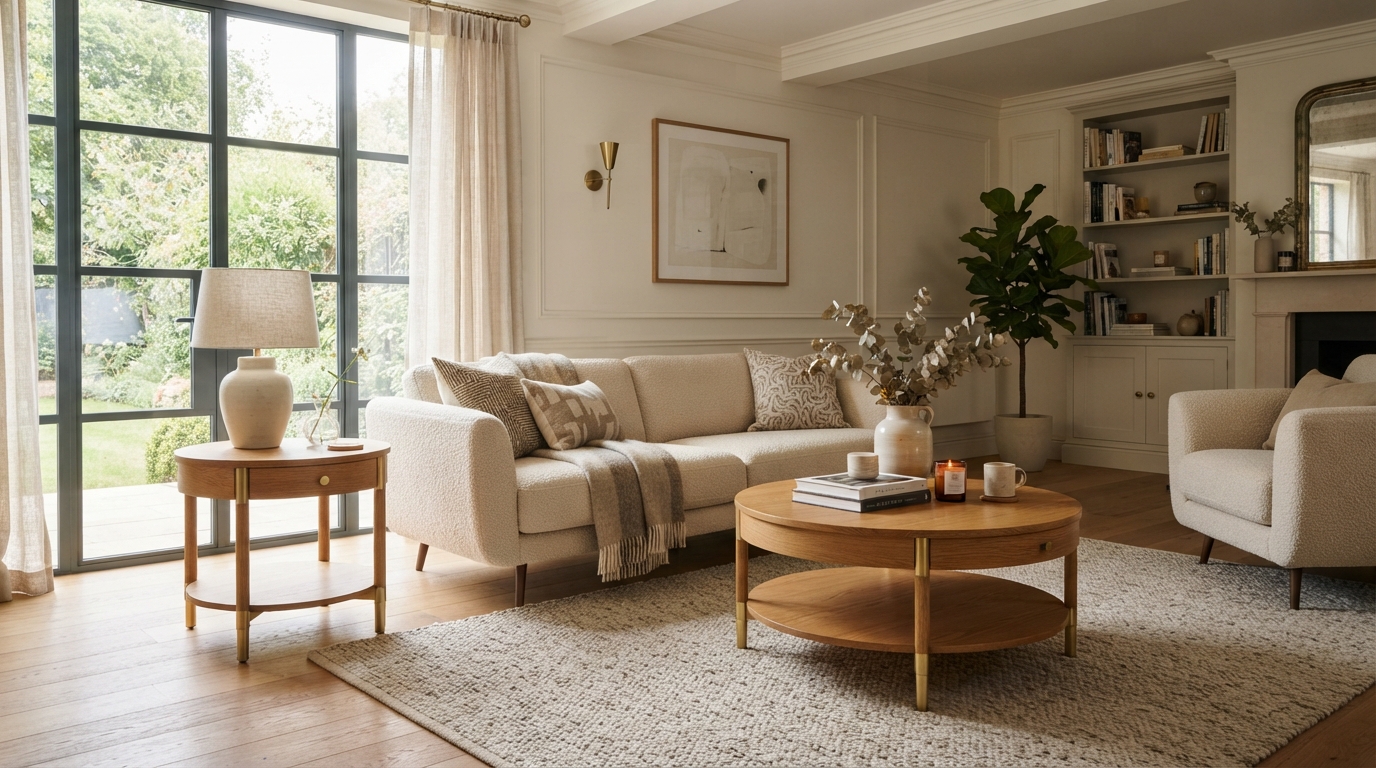
29. Keep One Corner Completely Empty
Not every inch of the table needs an object. Leaving roughly a third of the surface empty gives the eye a place to land and keeps a grouped display from feeling crowded, even when the rest of the table has several pieces on it.
30. Rotate What You Already Own
Before buying new decor, walk through the rest of your home and pull a few objects you already love — a small dish from the kitchen, a candle from the bathroom, a vase from another room. Rotating existing pieces onto the side table is often the fastest way to refresh a space for free.
The Takeaway
None of these ideas require a full redesign. Most side tables only need two or three of these principles applied at once — a bit of height variation, one grounding textile or tray, and a single object with personal meaning — to go from an afterthought to one of the most-noticed spots in the room. Start with whichever idea matches what you already have on hand, and build from there.