Rework ing a beloved piece of furniture is never simple — a designer has to honor what made the original resonate while giving it enough of a new identity to feel current. That balancing act is exactly what Spanish designer Patricia Urquiola has pulled off with Loveland, her updated take on the Lowland sofa she first created for Italian upholstery house Moroso back in 2000.
From Lowland to Loveland: A Quarter-Century Evolution

Urquiola has built a career around designing furniture and spaces that respond to how people actually move through and use them, rather than treating objects as isolated sculptural statements. The original Lowland sofa was already a distinctive piece when it launched, and rather than retiring the design or leaving it untouched, Moroso brought Urquiola back to refresh it for a new generation of interiors.
The result, Loveland, now sits within Moroso’s broader Rows Collection, a furniture family that also includes coordinating chairs, storage pieces, and tables designed to work together as a cohesive room system.
What’s New in the Loveland Redesign

The most visible shift is structural. The original Lowland sofa rested on a tubular steel frame; Loveland trades that industrial base for a broad wooden foundation, offered in three finishes — Honey, Tropical Wood, and Coffee — so the piece can be matched more easily to different interior palettes.
Above that base, the sofa keeps its signature bulbous, low-slung silhouette, but the seating itself has been softened. The backrest is rounder and more enveloping, giving the piece a more relaxed, inviting posture than a typical structured sofa.
Flexible Seating Configuration
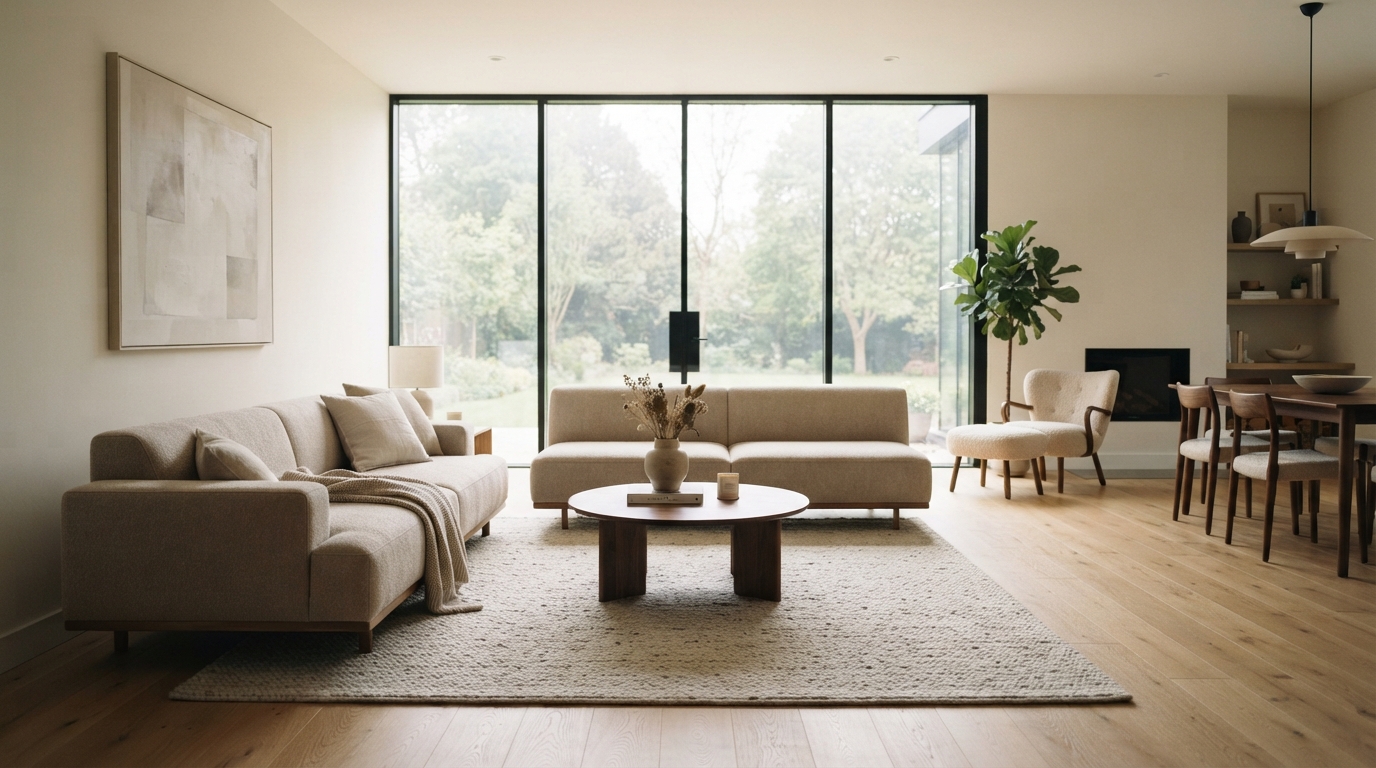
Loveland is built as a three-seater, and it’s designed with adaptability in mind:
- Available with or without armrests, allowing for tighter or more expansive seating arrangements
- Upholstered in either fabric or leather, depending on the desired look and feel
- Offered across a range of subtle, striking color options
This modularity means Loveland can function as a single, freestanding statement piece or be arranged alongside other Rows Collection furniture for a more unified layout.
Materials and Sustainability Considerations

Swapping the steel frame for a wooden base isn’t just an aesthetic decision — it also nods toward a more sustainable approach to furniture-making, favoring a renewable material over metal fabrication. Combined with the fact that Loveland is a revision of an existing design rather than an entirely new product cycle, the piece reflects a broader industry shift toward extending the life of successful designs instead of constantly replacing them.
Design Philosophy Behind the Update
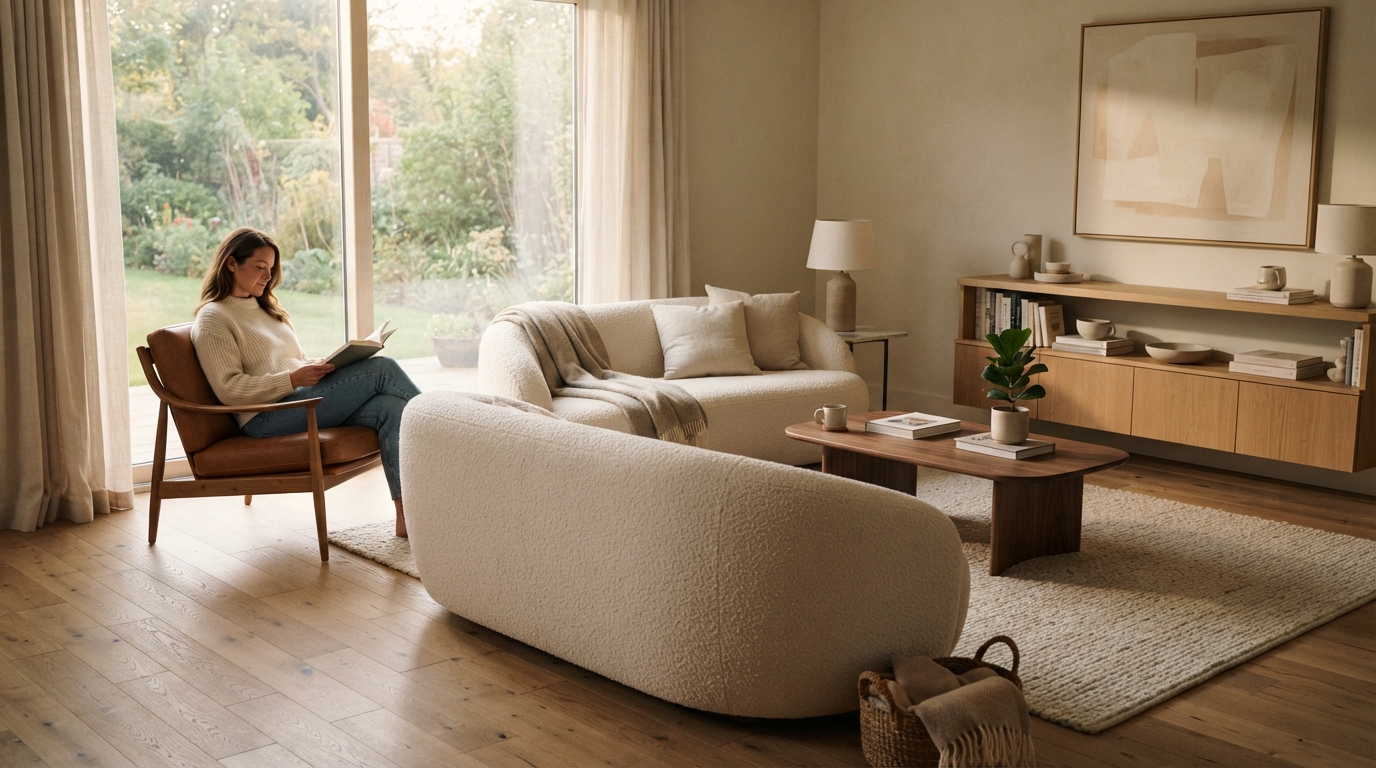
Urquiola’s design language has long centered on the relationship between furniture, space, and the people using it. That philosophy carries through in Loveland: the wooden base grounds the piece visually, the softened seating prioritizes comfort, and the configurable armrests let the sofa adapt to different room layouts rather than dictating a single arrangement.
Where Loveland Fits in the Rows Collection

As part of the Rows Collection, Loveland isn’t intended to be viewed in isolation. Moroso has positioned the collection as a coordinated system — chairs, tables, and storage pieces that share a visual language — which gives designers and homeowners the option to build out an entire seating area with pieces that were conceived together.
Lowland vs. Loveland: What Changed

| Feature | Original Lowland (2000) | Updated Loveland |
|---|---|---|
| Base material | Tubular steel | Wood (Honey, Tropical Wood, Coffee) |
| Seating feel | Structured | Softer, rounder backrest |
| Armrests | Fixed configuration | Optional — with or without |
| Collection context | Standalone piece | Part of the Rows Collection |
| Upholstery | Fabric | Fabric or leather |
Key Takeaways for Design-Conscious Buyers

For anyone considering Loveland for a living space, a few practical points stand out:
- The wooden base finishes (Honey, Tropical Wood, Coffee) make it easier to coordinate with existing wood tones in a room
- The optional armrests are worth considering carefully based on available floor space and how many people the sofa needs to seat comfortably
- As part of the Rows Collection, it pairs naturally with matching chairs and tables if a fuller room refresh is planned
Final Thoughts: A Classic Made for Today

Loveland is a good example of how a strong original design can be evolved rather than shelved. By updating the base material, softening the seating, and building in more configuration options, Patricia Urquiola and Moroso have kept the spirit of the 2000 Lowland sofa intact while making it feel relevant to contemporary interiors. For more details on availability and specifications, the designer’s official website is the best source.
FAQ Section (Schema-Ready)
Q1: What is the Loveland sofa? Loveland is Patricia Urquiola’s updated redesign of her original Lowland sofa, first created for Moroso in 2000. It features a new wooden base and softer seating, and is now part of Moroso’s Rows Collection.
Q2: What materials is the Loveland sofa made from? Loveland has a wooden base — available in Honey, Tropical Wood, or Coffee finishes — paired with fabric or leather upholstery.
Q3: Does the Loveland sofa come with armrests? Yes, but they’re optional. Loveland is available with or without armrests, which lets buyers choose a more compact or a more expansive seating arrangement.
Q4: How many people does the Loveland sofa seat? Loveland is designed as a three-seater sofa.
Q5: Is the Loveland sofa part of a larger furniture collection? Yes. Loveland belongs to Moroso’s Rows Collection, which also includes coordinating chairs, storage furniture, and tables.