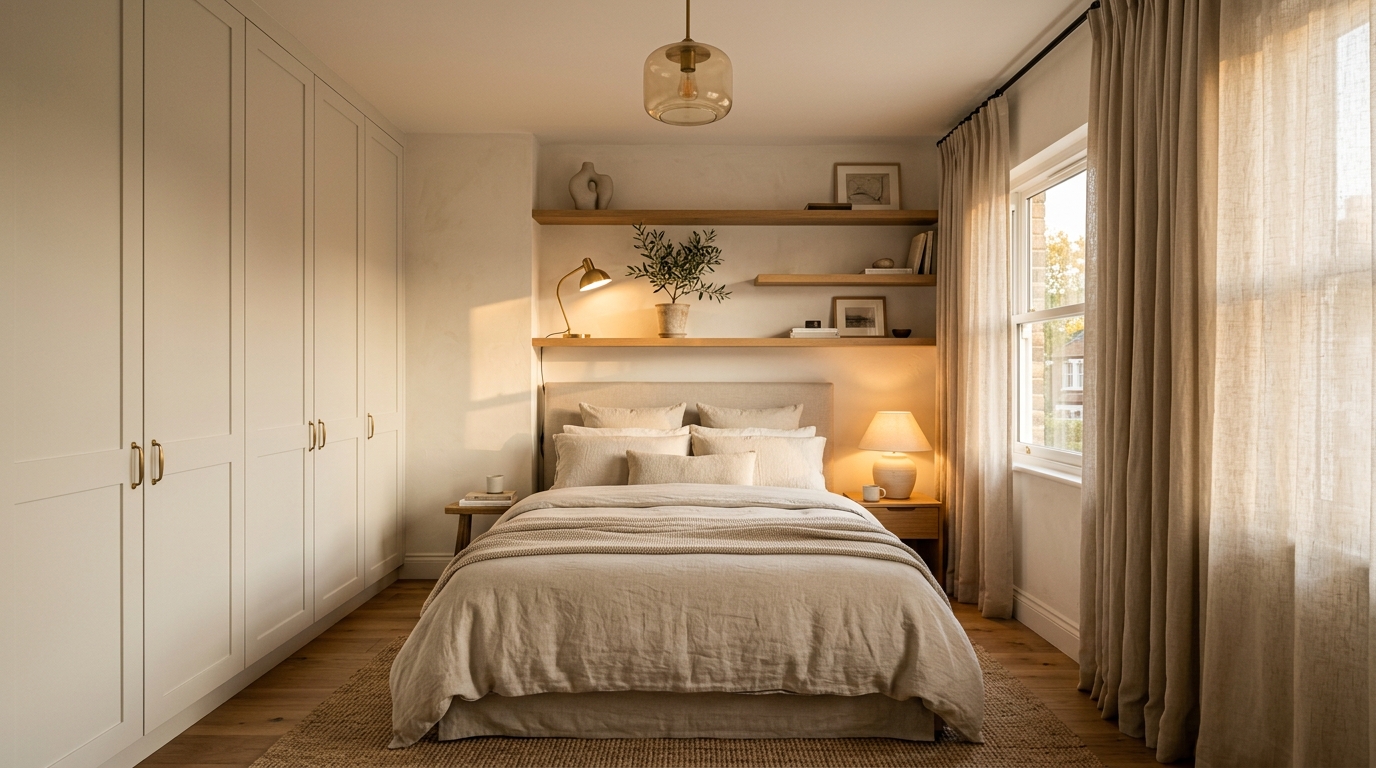
A cramped bedroom doesn’t have to look or feel that way. Most of what makes a small room feel genuinely small isn’t the square footage — it’s a handful of habits: furniture that sits low and heavy on the floor, a bed shoved dead-center on the main wall, shelving that stops at eye level, and a reflex to paint everything white “because that’s what you’re supposed to do in a small space.”
None of that is a rule. It’s just the default, and defaults are exactly what you should question when you’re working with limited square meters.
The good news is that almost none of the fixes below require a renovation. Most are furniture choices, paint decisions, or five minutes with a tape measure. Whether you’re in a rental with a strict no-drilling policy or you own the place and are ready to commit to a fitted wardrobe, there’s something here you can actually use.
Furniture Choices That Change the Whole Room
1. Pick a Bed Frame That Doubles as Storage
Your bed is the single biggest object in the room, which makes it the single biggest missed storage opportunity if you ignore it. An ottoman base that lifts on gas struts, or a frame with deep drawers built into the sides, can absorb an entire off-season wardrobe, spare linens, and the boxes you’d otherwise be tripping over.
If you’re shopping, look for ottoman or drawer-storage frames from mainstream retailers — most furniture brands now carry at least one option in this category, so it’s worth comparing lift mechanisms and interior depth rather than just the finish.
2. Let the Bed Float on Legs
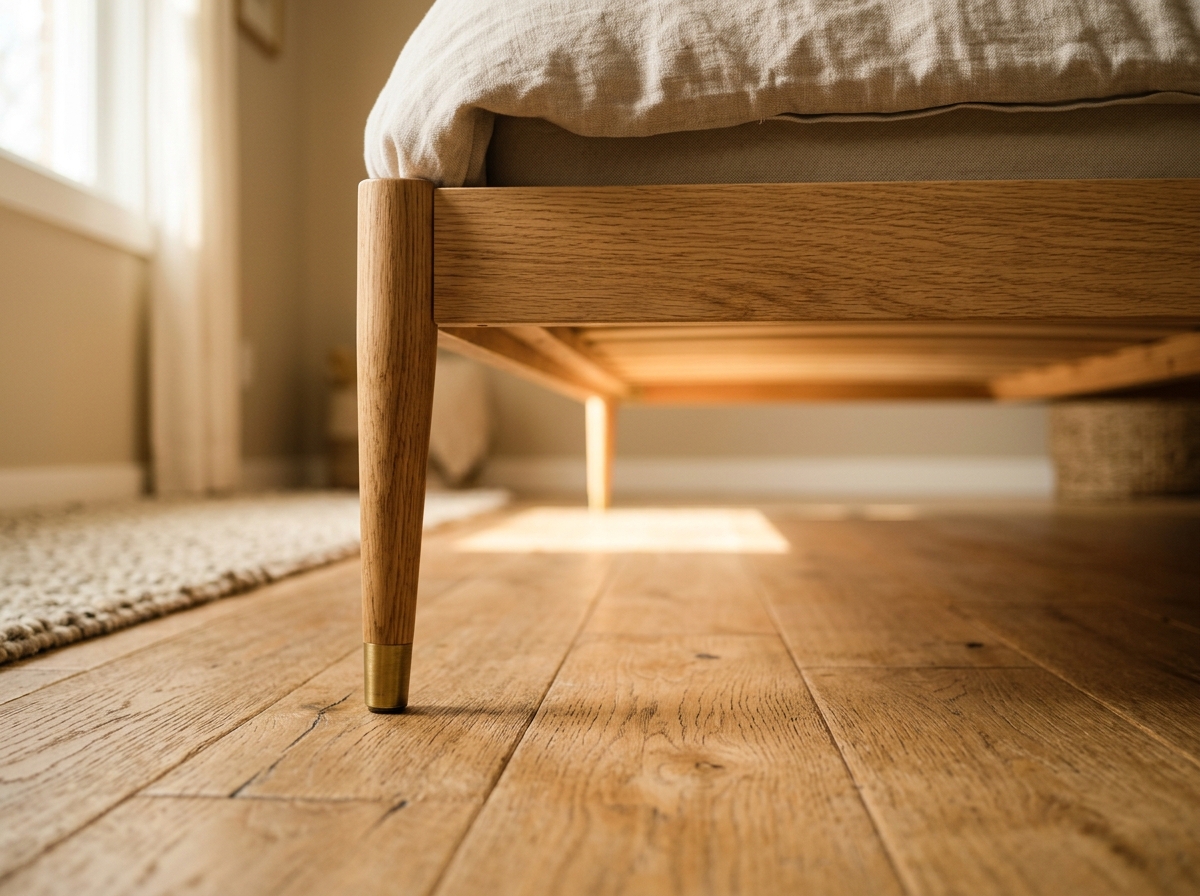
It sounds like a tiny detail, but a bed raised on slim legs — even just three or four inches — reads completely differently than a divan sitting flush on the carpet. Light and sightline pass underneath, and the floor visually continues instead of stopping dead at the base of the mattress. A solid divan, by contrast, splits the room into an “above” and “below,” which quietly shrinks the perceived space.
If storage is non-negotiable, choose a frame with legs and drawers rather than a flush divan — you don’t have to choose between the two.
3. Swap the Freestanding Wardrobe for a Fitted One
A standalone wardrobe juts into the room and creates a visual seam — a box competing with the wall it’s sitting against. A wardrobe built flush from floor to ceiling removes that seam entirely, so the eye reads one continuous surface instead of a room full of separate objects.
A full built-in isn’t always realistic on a budget or in a rental, but modular flat-pack wardrobe systems get you most of the way there for a fraction of the cost. The detail that actually matters is closing the gap at the top: take the unit as close to the ceiling as you can, even with a simple filler panel, because that leftover strip above a wardrobe is where a room loses its sense of height.
4. Stop Centering the Bed
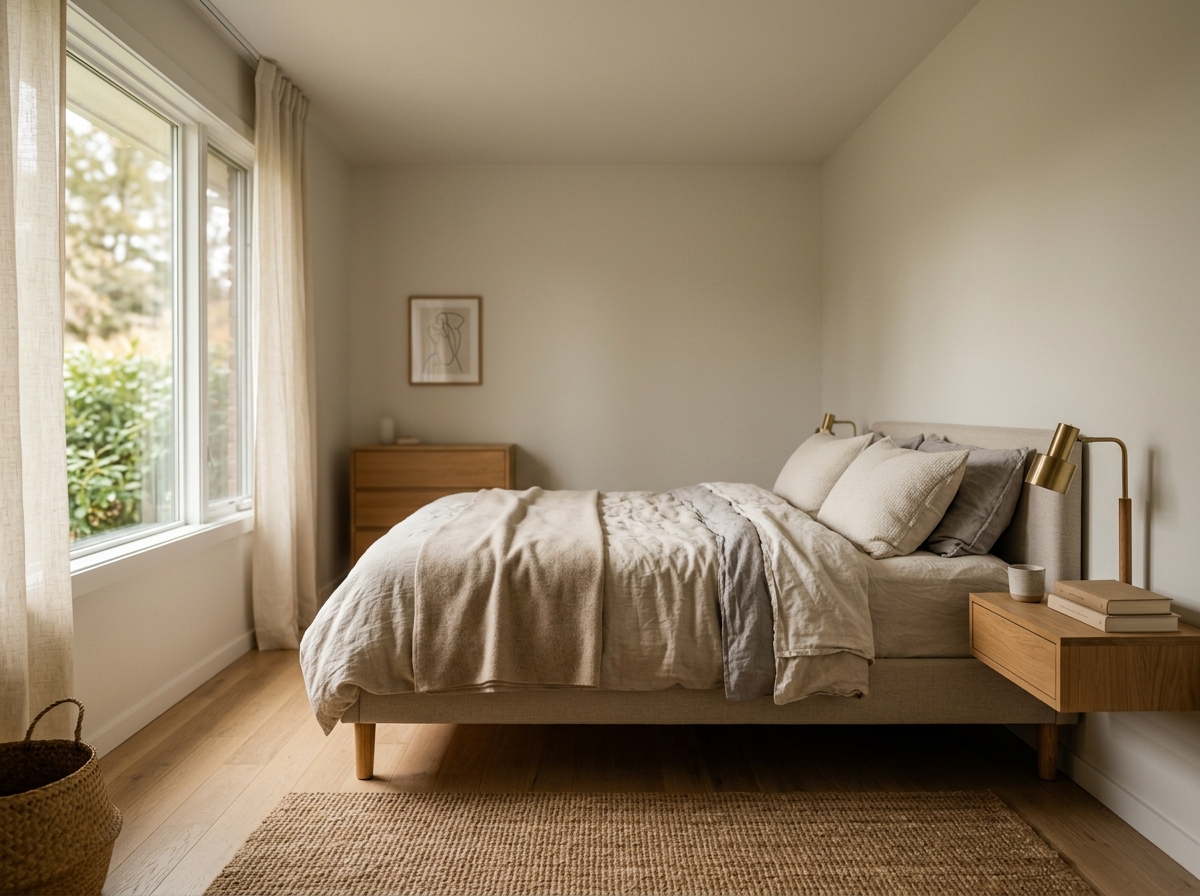
Centering a bed on the main wall in a small room means sacrificing floor space on both sides purely to preserve a walking gap that often doesn’t need to exist. Pushing the bed into a corner, or against the longest available wall, frees up a meaningful chunk of floor — enough for a chair, a small desk, or simply nothing at all.
The trade-off is real: one side of the bed becomes harder to reach, which matters for a couple sharing the room. But for a single sleeper, a kid’s room, or an occasional guest room, this single layout change often does more for the feel of the space than anything else on this list.
5. Mount a Bedside Shelf Instead of a Bedside Table
A traditional nightstand — four legs, a drawer, sitting on the floor — is usually the wrong shape for a tight room. It eats floor area, often doesn’t hold much, and rarely fits the available gap perfectly anyway.
A wall-mounted shelf at bed height does the same job — lamp, book, glass of water within reach — while leaving the floor underneath completely clear. If you genuinely need a drawer, a slim wall-hung unit with a single drawer gives you storage without the footprint.
Color and Light Do More Than Furniture
6. Paint the Ceiling to Match the Walls
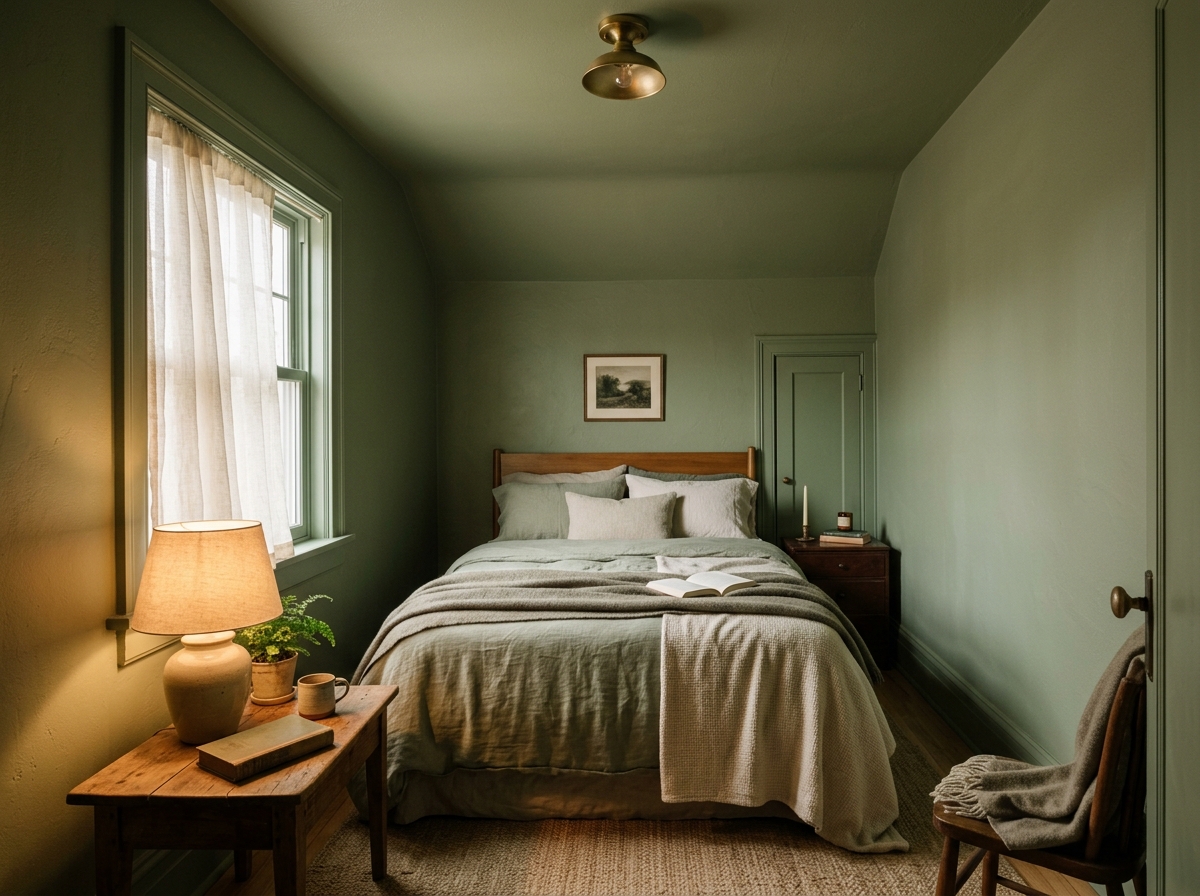
A stark white ceiling in a small room acts like a lid — it draws a hard, visible line right above your head. Carry the wall color up and across the ceiling (or go one shade deeper) and that line disappears. The room stops reading as a box and starts reading as one continuous, enveloping space.
This works especially well with mid-tone and deeper colors — a warm greige, a soft sage, a muted terracotta — applied wall-to-ceiling with no cutting-in at the cornice.
7. Don’t Default to White
White reflects light and photographs well, but it also has a downside in a small room: it shows every scuff, every uneven angle, every flaw the room already has. A confidently chosen darker color does the opposite — it leans into coziness instead of fighting it, and it tends to hide the room’s imperfections rather than spotlight them.
The trick to making a dark small bedroom work is keeping everything else light: pale linens, natural wood tones, minimal clutter. The walls provide depth; everything else stays quiet.
8. Try a Monochromatic Palette
A single-color-family scheme — different tones, textures, and finishes that all sit within one palette — is one of the more underused tricks in small-space design. Every time your eye hits a new color, it registers a boundary, and boundaries make a room feel more fragmented and smaller. Remove the color-switching and the whole space reads as one continuous zone.
This doesn’t mean flat or boring — it means doing the visual interest through texture instead of color: an oatmeal linen duvet, a cream boucle throw, a jute rug, a rattan pendant, all within the same tonal family but distinct to the touch.
9. Maximize Every Bit of Natural Light — Then Layer Artificial Light on Top
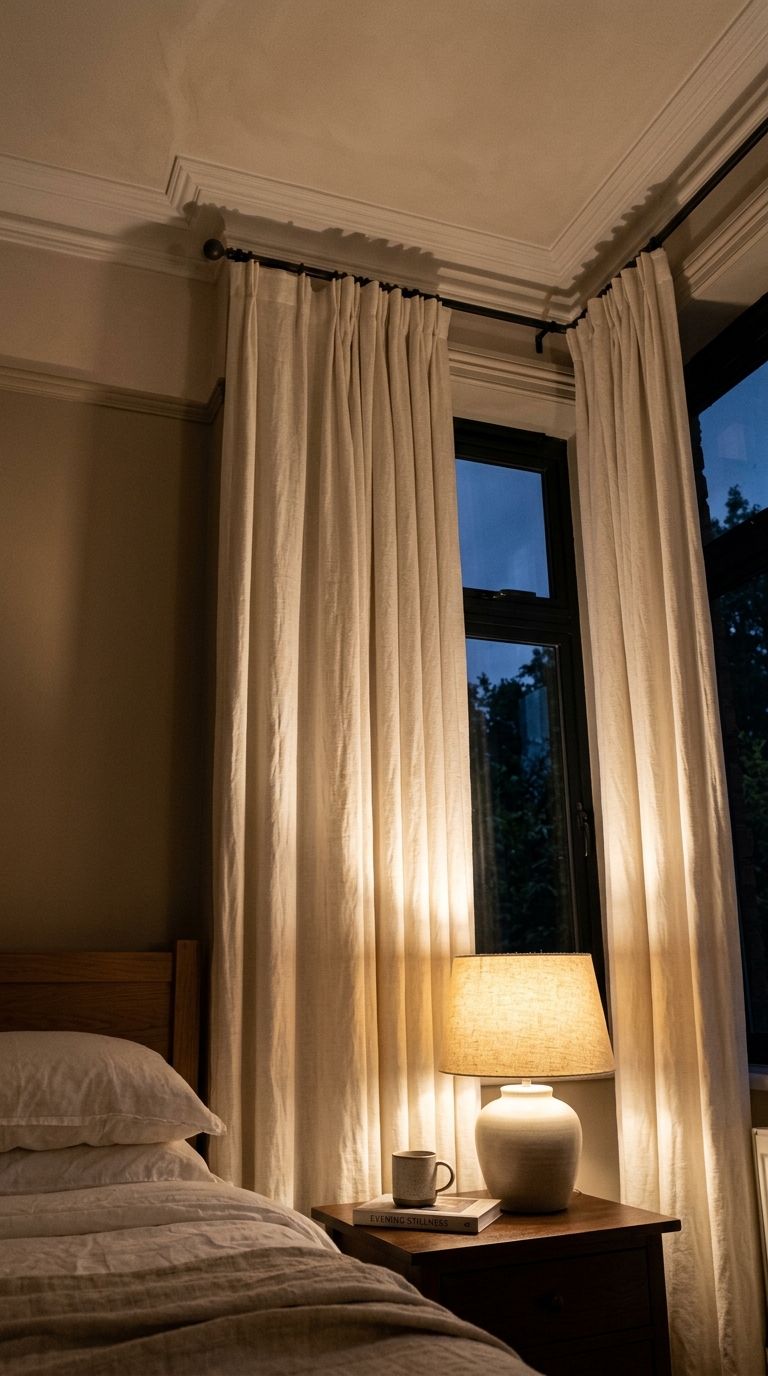
Hang the curtain rail as close to the ceiling as possible, regardless of where the window frame actually sits, and use curtains that reach the floor — the long vertical line tricks the eye into reading the ceiling as taller. Choose a sheer or lightweight fabric that still lets light through when open, and keep the window recess itself completely clear of blind hardware or bunched fabric.
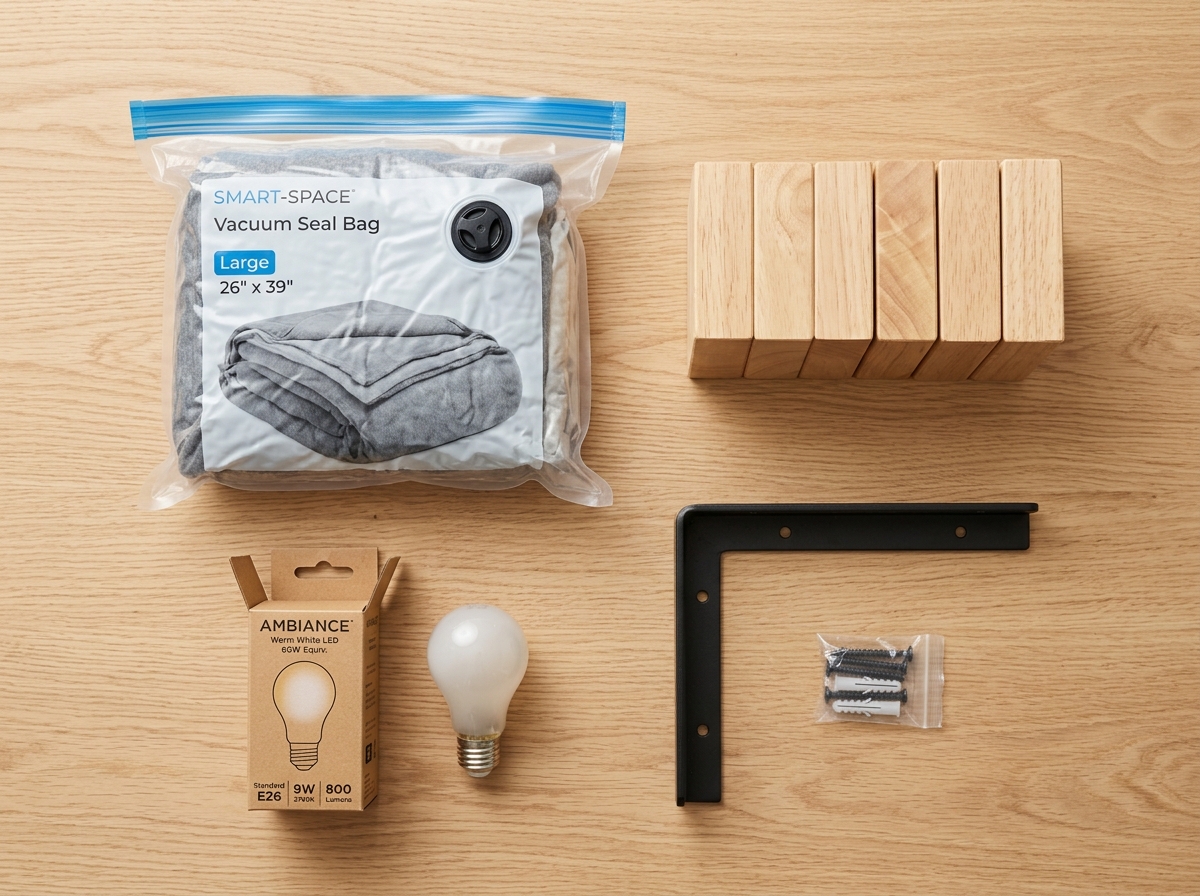
For rooms that don’t get much daylight, layered lamps matter more than one central fixture. A single overhead bulb flattens a small room and makes it feel institutional. Instead, use a warm lamp on each side of the bed, an LED strip tucked behind a headboard or shelf, and a dimmer wherever you can install one. Stick to warm-white bulbs (around 2700K) — the goal is a room that feels like candlelight in the evening, not an exam room.
10. Use a Well-Placed Mirror
A large mirror isn’t just decorative in a small bedroom — it’s functional. Leaning, wall-mounted, or built into a wardrobe door, a mirror sized generously enough can blur the edge of the room so it’s genuinely hard to tell where the space actually stops.
Position matters: a mirror facing a cluttered wall just doubles the clutter, and a mirror directly opposite the bed can feel unsettling rather than expansive. The better placement is angled to catch a window (adding a second light source) or hung along a narrow wall to visually widen it.
Storage You’re Probably Not Using Yet
11. Organize Under-Bed Storage Properly
Under-bed space is the most obvious storage zone in the room, and also the most commonly wasted — usually because it’s filled with mismatched bags and boxes instead of anything actually organized. Flat, lidded storage bins that slide in and out cleanly work far better than loose bags of varying heights.
Vacuum-seal bags are worth the small investment for bulky items — spare duvets, winter coats, extra pillows — since they compress down to a fraction of their size. If your bed sits low, inexpensive bed risers can buy you several extra inches of usable storage height underneath.
12. Take Shelving All the Way to the Ceiling
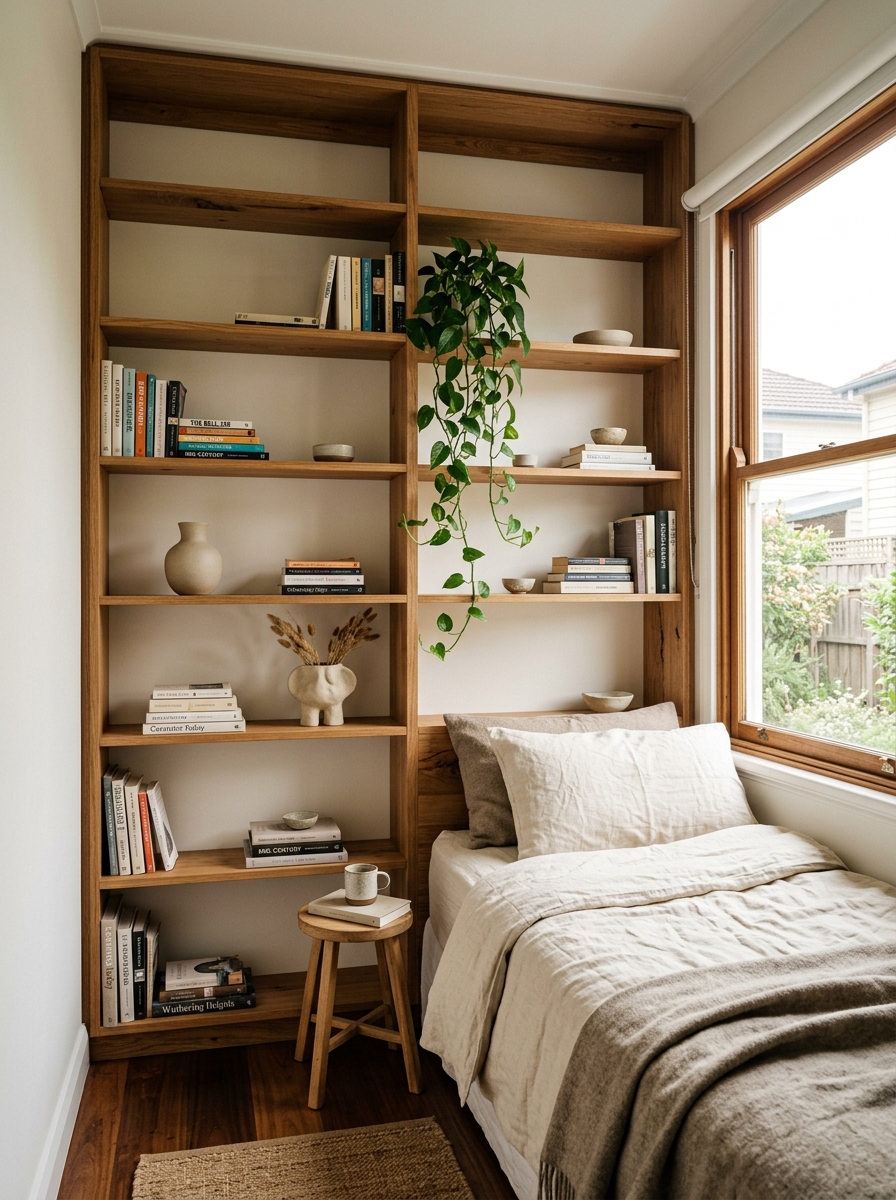
Most shelving stops at eye level out of habit, which leaves a huge amount of vertical storage completely unused in a small room. Shelving that runs floor-to-ceiling does two jobs at once: it multiplies your storage without eating floor space, and it pulls the eye upward, which makes the ceiling feel higher.
Styling matters more here than in a bigger room, simply because the shelves sit closer to eye level and are harder to ignore. Aim for shelves that look roughly 70% full rather than packed edge to edge — a fully loaded shelf reads as overcrowded, while a curated one reads as intentional. Budget modular bookcases with add-on extension units are an easy way to reach ceiling height without a custom build.
13. Use the Back of the Door
The back of a bedroom door is one of the most overlooked storage surfaces in the entire room. An over-door organizer can hold shoes, accessories, and everyday items that would otherwise pile up on flat surfaces. A few hooks can handle tomorrow’s outfit or a robe. A slim door-mounted mirror gives you a full-length view without using any wall space elsewhere.
The one caveat: an over-door organizer crammed with forty random items just relocates the clutter rather than solving it. Ten well-chosen items stored neatly beats forty items stuffed into every pocket.
14. Rethink Where the Rug Goes — or Whether It Goes at All
An unbroken, visible floor reads as more spacious than a floor interrupted by furniture legs and small rugs. Where possible, swap floor lamps for wall sconces and remove any chair that’s only functioning as a clothes pile.
If you do want a rug, size up rather than down. A small rug floating in the middle of the room looks misplaced and actually fragments the floor further. A larger rug that extends under the bottom of the bed frame anchors the room and reads as a deliberate choice rather than an accessory that landed in the wrong spot.
Finishing Touches That Add Personality Without Adding Clutter
15. Reach for Texture Instead of More Objects
When a small bedroom feels flat or a little cold, the fix is almost never “add more stuff” — it’s texture. A boucle cushion, a linen duvet with a subtle stripe, a woven pendant shade, a chunky throw at the foot of the bed, a jute rug underfoot: none of these add visual noise, but together they add real depth.
A useful gut-check: if you can feel a difference running your hand across two objects, they can sit together without competing. If two things look different but feel the same — smooth ceramic next to smooth glass — the room can start to feel busy even if it’s technically not cluttered.

16. Design the Lighting for Evening, Not Just Morning
How a bedroom feels at 9 p.m. matters as much as how it functions at 7 a.m. — arguably more, since the bedroom’s whole job is to help you wind down. Layer your light sources: an overhead fixture with a dimmer for getting dressed, a warm lamp on each side of the bed positioned so light pools at reading height rather than glaring upward, and — if you have a shelf or alcove — a strip of warm LED tucked behind it for ambient glow.
Stick to warm-white bulbs at or below 2700K. Cool white light in a bedroom reads as clinical rather than restful, and it’s a genuinely low-cost fix — the bulb costs the same either way.
17. Edit Your Wall Art and Objects Down to a Few Deliberate Pieces
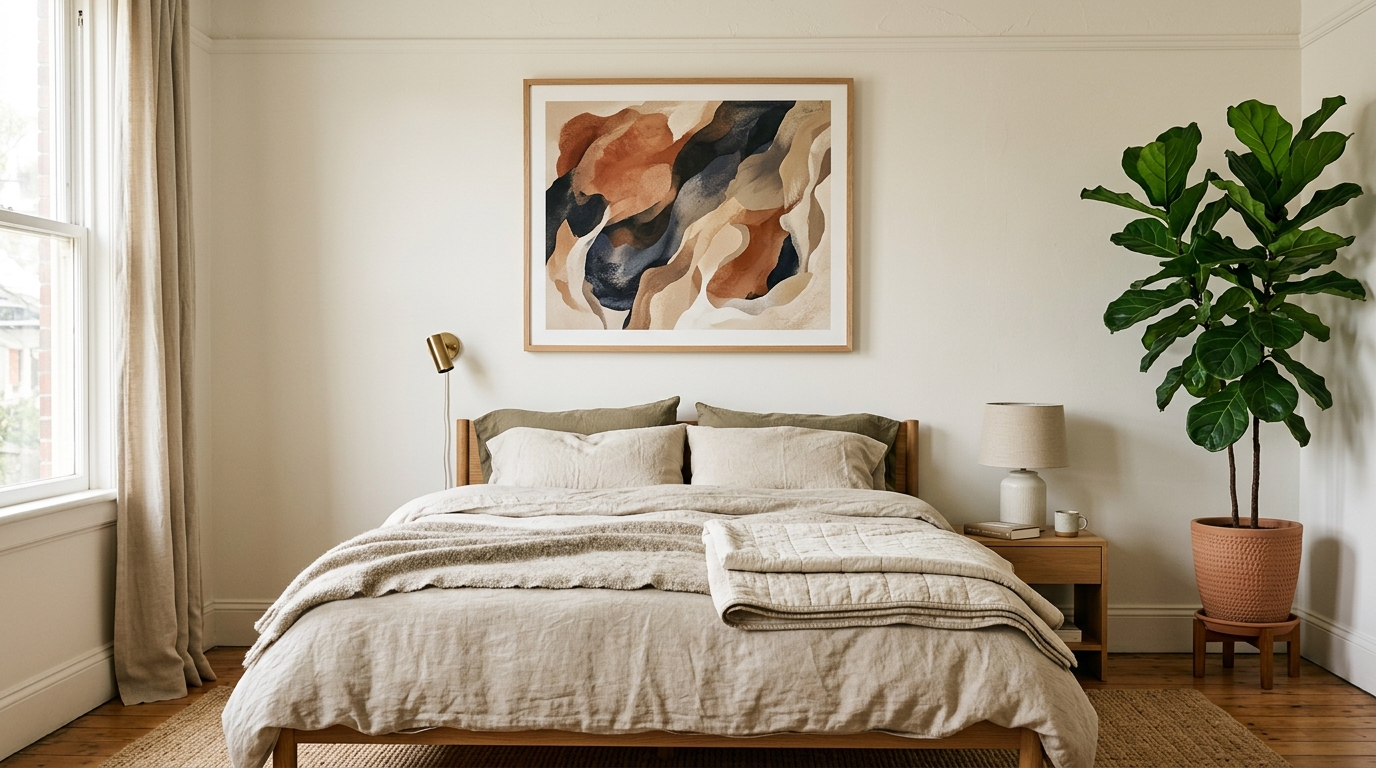
A small bedroom can absolutely have personality — it just can’t absorb visual clutter the way a bigger room can. One generously sized piece of art, hung properly at eye level, does more for the room than a gallery wall of small frames, which tends to read as busy in a tight space.
The same logic applies to plants and objects: one plant sized to feel like an intentional addition — not a small afterthought — beats several scattered around. Treat editing as an ongoing habit rather than a one-time task; small rooms show clutter fast, so revisiting what’s on display every so often keeps the room feeling curated instead of just full.
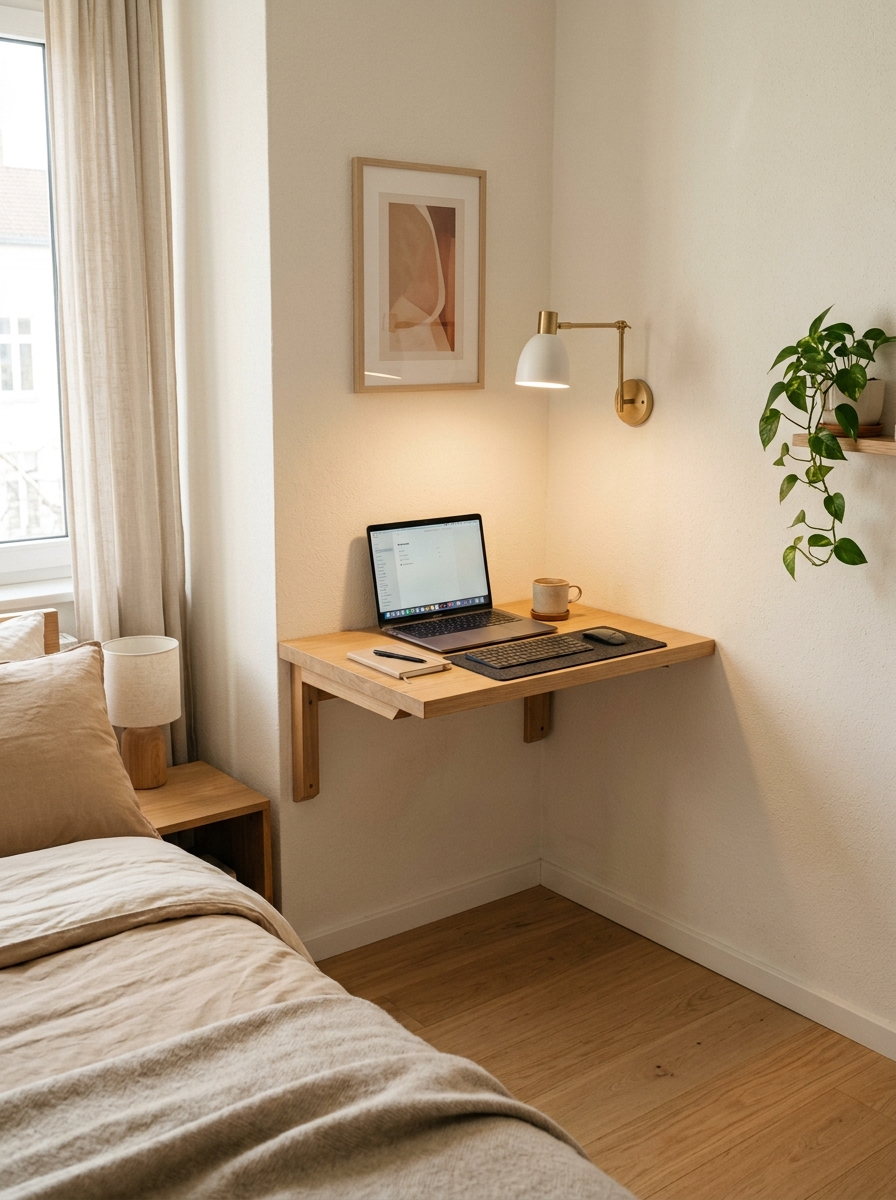
18. Choose a Desk or Workspace That Doesn’t Compete for Floor Space
If the room needs to double as a home office, a fixed floor-standing desk is usually the wrong call in a genuinely small space. A slim floating desk mounted along one wall, or a drop-leaf desk that folds flat when not in use, gives you a workspace without permanently sacrificing floor area. Pair it with a wall-mounted task lamp instead of a desk lamp to keep the surface — and the floor beneath it — as clear as possible.
Putting It Together
None of these eighteen changes require knocking down a wall. Most are decisions: where the bed sits, how high the shelves go, whether the ceiling gets painted, whether the rug is one size too small. Pick two or three that fit your budget and your lease terms, start there, and layer in the rest over time. Small rooms respond disproportionately well to a few well-chosen changes — you don’t need to do all eighteen at once to feel the difference.