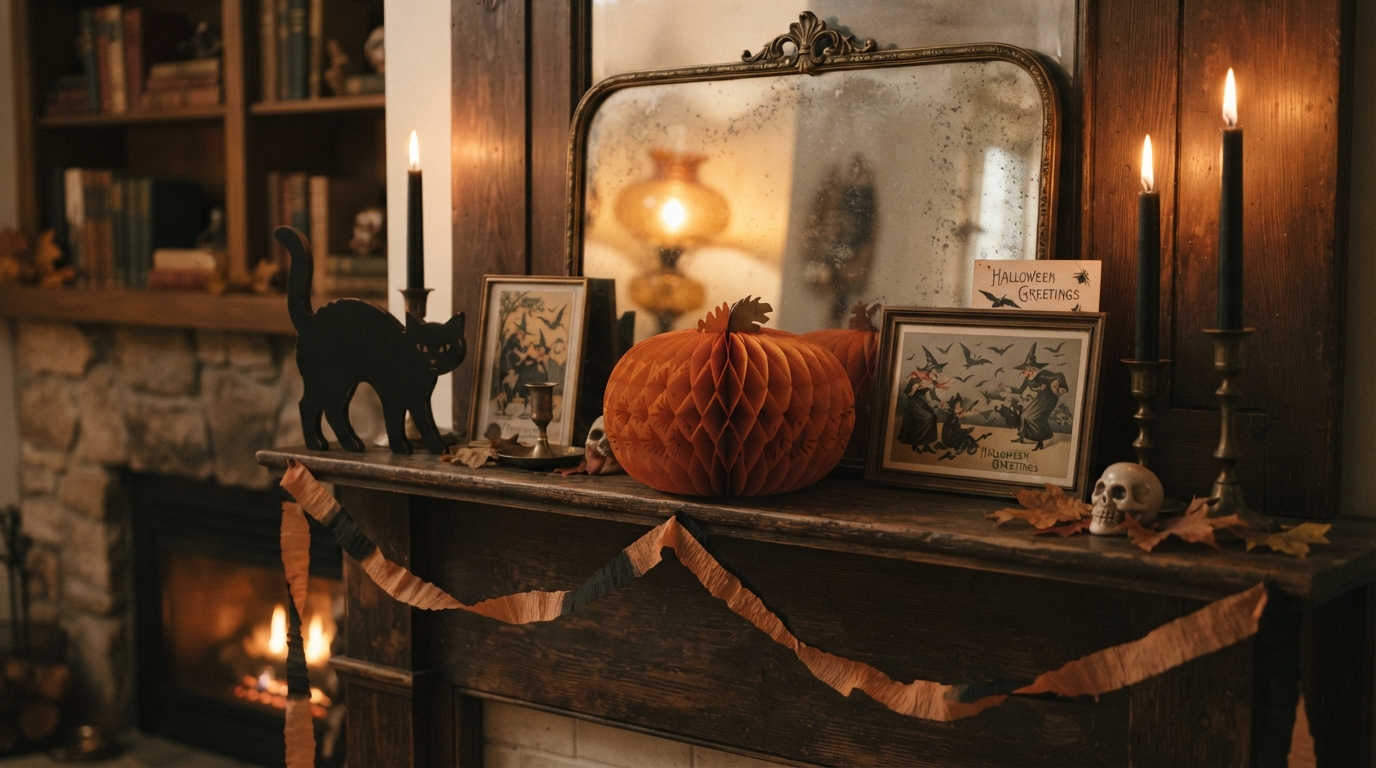
Modern Halloween decor is loud, glossy, and mostly plastic. Vintage Halloween is quieter and stranger. It leans on printed paper, faded orange, and the flicker of a bulb behind a paper lantern. The appeal is partly nostalgia, but mostly craft. These pieces were designed to be folded, hung, and handled, and they look like it.
This guide covers where the look came from, what makes a room read as vintage, how to buy and verify real pieces, how to make convincing stand-ins for less, and how to style and protect it all.
Where the Vintage Halloween Look Comes From
The old spelling, Hallowe’en, is a contraction of “All Hallows’ Even,” the evening before All Saints’ Day. That apostrophe shows up on early cards and party goods. Three developments shaped the imagery we now call vintage.
Paper Was the Original Medium
In the early 1900s, Halloween decorating meant paper. Companies like the Pennsylvania-based Beistle Company, which has printed party goods since 1900, produced die-cut cats, witches, and pumpkins with flat, graphic designs. Dennison, a Massachusetts manufacturer, sold crepe paper and published party guides from around 1909 that taught hosts to build whole Halloween rooms from it. Many of the best early novelties, especially pulp and composition lanterns and candy containers, were made in Germany and imported to the US.
The Postcard Boom
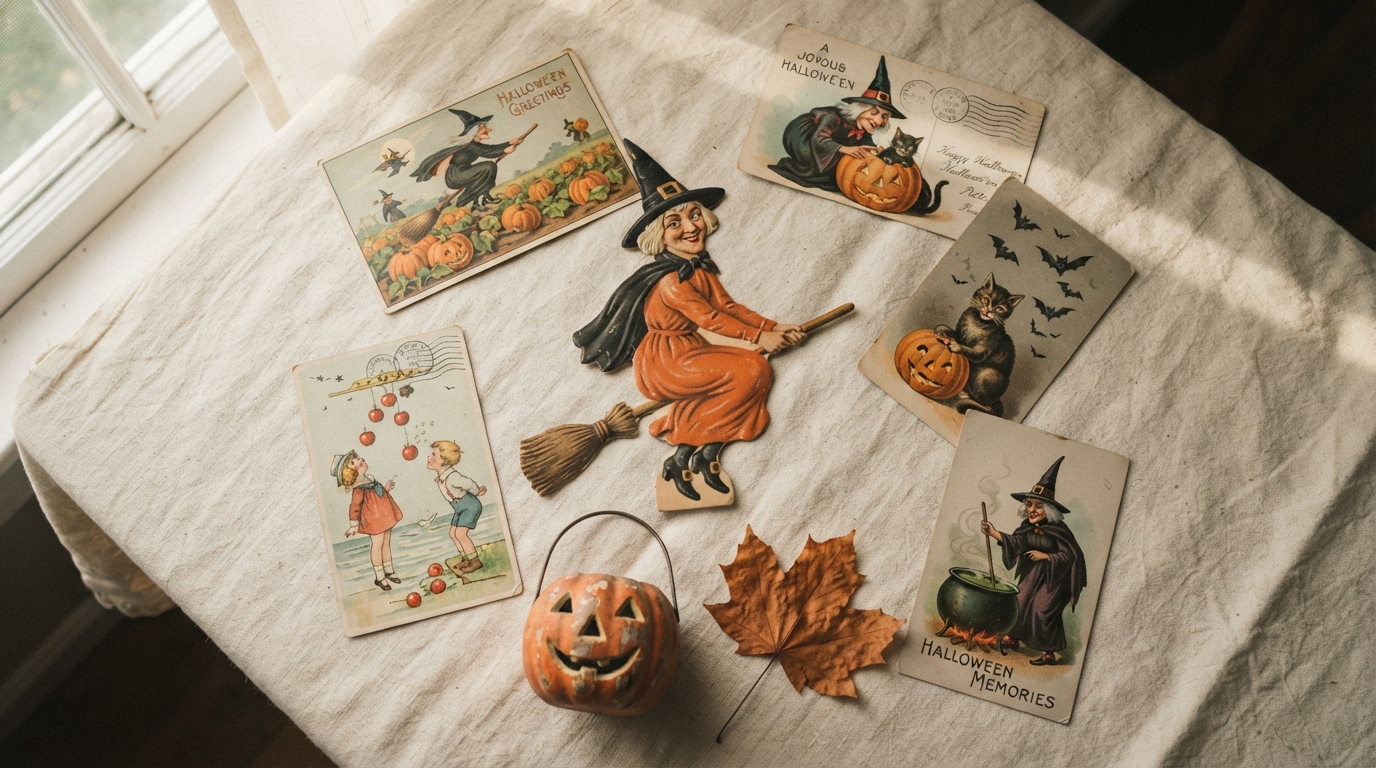
Postcards had their golden age in the first decades of the twentieth century. Halloween cards from artists such as Ellen H. Clapsaddle mixed folk-tale imagery with romance and fortune-telling, so you’ll see witches, cats, and apples alongside couples and love charms. These cards are still the easiest way to bring authentic period artwork into a home.
Plastic and the Glow of the Mid-Century Porch
After the war, molded plastic changed the look. Companies such as Empire and Union Products made hollow blow-mold pumpkins, cats, and ghosts, lit by a bulb and cord inside. The colors were bolder and the shapes rounder, and the glow through thin plastic is still hard to fake. By the 1970s, Halloween was a full commercial season, and the “vintage” label began stretching toward the 1980s.
Four Design Rules That Make a Room Read as Vintage
You can mix eras freely, as long as a few principles hold.
1. Keep the Palette Tight
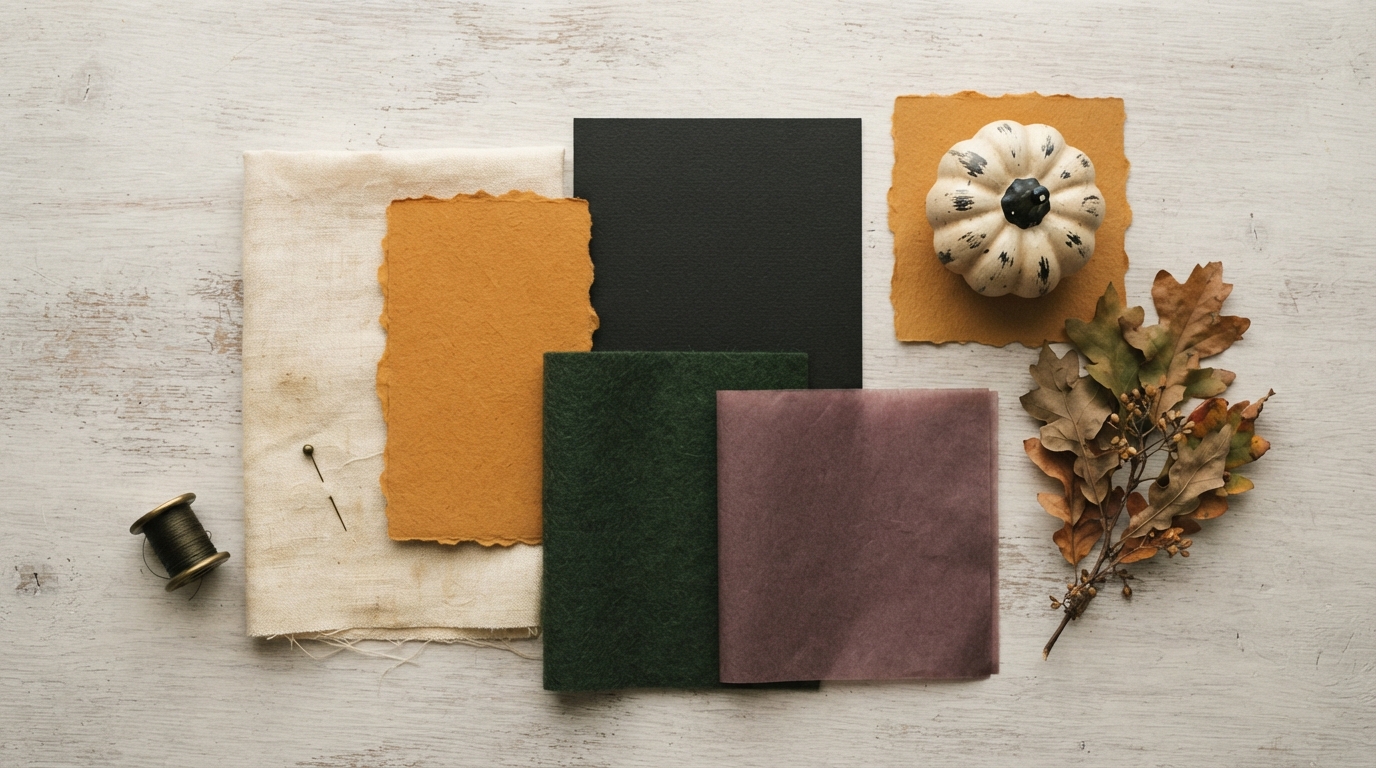
Stay with orange, black, and cream, plus a single accent: deep green or dusty plum. Choose orange that leans toward amber or pumpkin rather than neon, and cream instead of bright white. Restraint does most of the work. Six competing colors look like a party store, while three look like a collection.
2. Choose Flat and Graphic Over Realistic
Vintage Halloween art is simplified: a black cat as a silhouette, a pumpkin with a triangle nose and a toothy grin. When you shop for modern pieces, skip sculpted, hyper-detailed skeletons and pick anything that looks like it came from a printing press.
3. Let Materials Show Their Age
Matte finishes, paper, tissue, tin, wood, and linen all belong. Glossy plastic and shiny synthetic fabric don’t. A little foxing, fading, or softened color adds authenticity, so don’t sand off the patina.
4. Light It Like It’s Before LEDs
Warm light matters more than any object. Use bulbs rated around 2200–2700K, amber glass, and flicker-effect candles. Turn off cool white overheads. A room with mediocre decor and beautiful light will beat the reverse every time.
How to Buy, Date, and Verify Authentic Pieces
Read the Marks
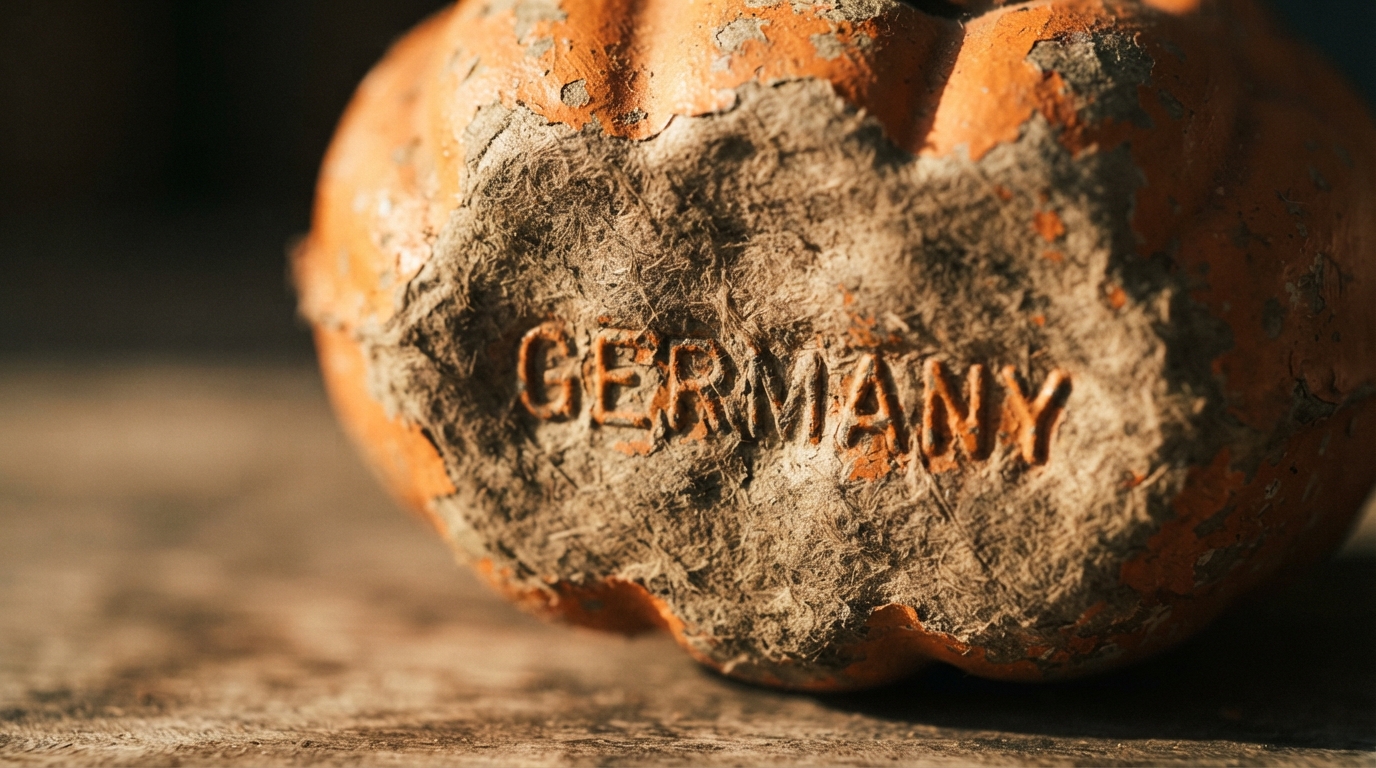
Check the back and base for stamps. “Germany” or “Made in Germany” often signals early pieces, though it can also appear on later goods. Look for maker names such as Beistle, small copyright lines on paper items, and manufacturer molding marks on plastic. Missing marks don’t mean a piece is fake, but marks help you date it.
Know Your Materials
Pulp or papier-mâché with hand-painted detail usually points to early pieces. Thin, layered tissue that folds flat is typical of honeycomb decorations. Hollow, seamed plastic with an electrical cord opening is blow-mold territory, usually mid-century or later. Knowing the material narrows the era quickly.
Judge Condition Honestly
Paper is fragile, so expect some wear and weigh it against price. Minor edge wear and gentle fading are normal. Water staining, insect damage, and heavy tears deserve a discount. For blow molds, check for cracks, warping, and missing or brittle cords.
Spot Reproductions
Reproductions are legitimate and often worth buying, but you shouldn’t pay antique prices for them. Watch for crisp modern print quality, “Made in China” stickers, bright white paper, and suspiciously uniform aging. Real age is uneven.
Where the Good Finds Hide
Estate sales and family attics come first, since older households often kept their decorations. Auction sites and ephemera shows suit paper collectors. Antique malls and local marketplace listings can hold underpriced pieces, particularly when sellers use vague titles. Search variations like “Halloween die-cut,” “Halloween pulp,” and “old Halloween postcard” rather than only “vintage Halloween.”
Vintage-Look Projects on a Budget
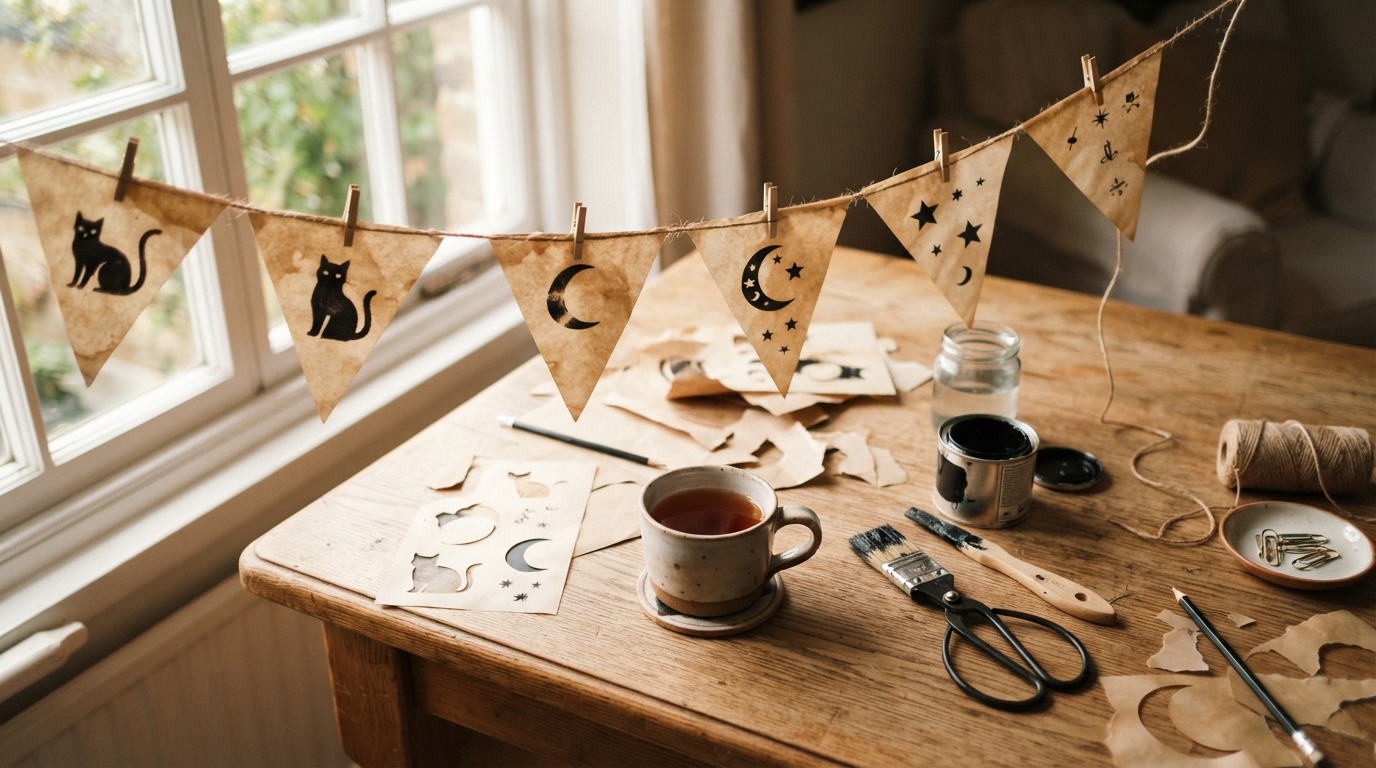
- Tea-stained pennant banner: Brush strong black tea over cardstock, let it dry, cut into triangles, and stencil simple black shapes. Hang them on twine for an instantly aged look.
- Public-domain print gallery: The Library of Congress, NYPL Digital Collections, and Internet Archive host historic Halloween imagery, but always check each item’s rights statement. Print on matte paper and frame in plain black or brass frames.
- Crepe paper fringe garland: Fold a crepe strip, snip a fringe, and twist it into a streamer. It’s the same material Dennison-era hosts used.
- Papier-mâché pumpkins: Wrap a balloon in paper strips and paste, dry it, paint it matte orange, and add a simple black grin. Rub in a little brown glaze for age.
- Apothecary jar labels: Print old-style labels such as “Bat Wing” or “Witch’s Salt” and stick them on thrifted glass jars for shelves and side tables.
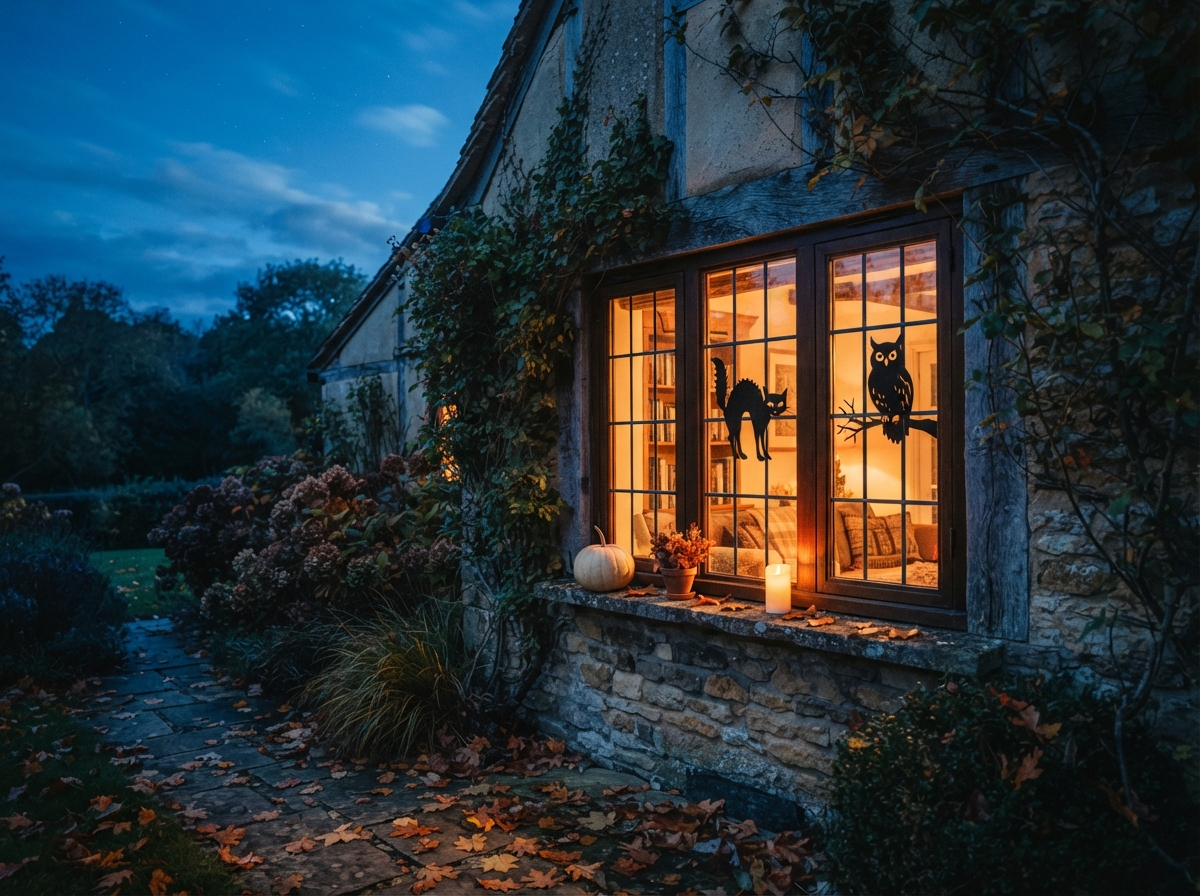
- Window cat silhouettes: Cut black cats and owls from matte black paper and tape them inside window panes so they’re lit from behind at dusk.
Styling Your Home, Space by Space
Windows and Doorways
Windows do the most work from the street. Silhouettes in the glass, a single amber bulb in a lamp behind them, and a paper garland across the door frame set the tone before anyone comes inside.
The Staircase and Hallway
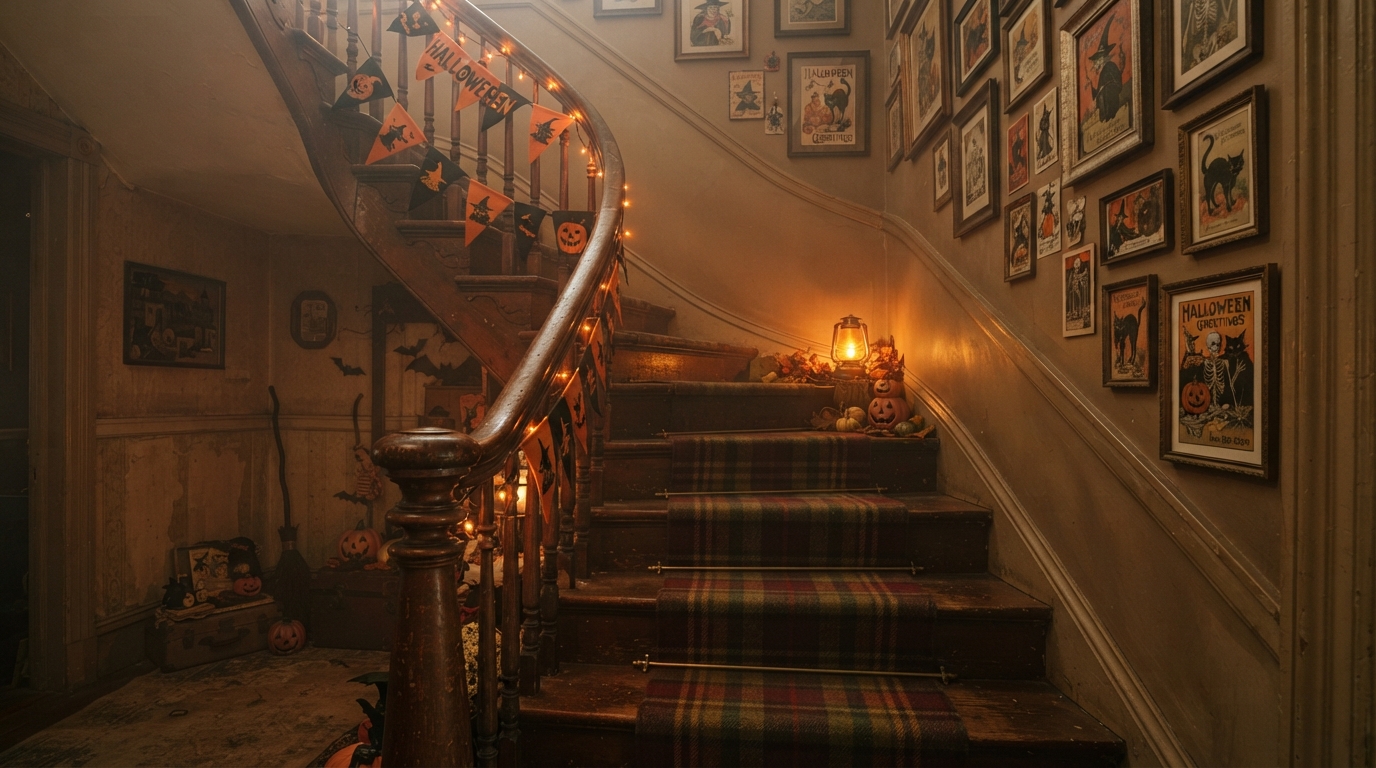
Hallways suit repetition. Hang a row of pennants along the banister, or clip postcards to twine along the wall. Layer small lights, and let the space feel a little crowded, since collected rooms always look fuller than designed ones.
The Tabletop
Build the centerpiece around one focal object, such as a honeycomb pumpkin or a blow-mold cluster, and add brass candlesticks with black tapers. Scatter a few die-cuts down the table and use amber glass for drinks. Cream linen or a crepe paper runner keeps the palette grounded.
The Kitchen or Pantry Shelf
A shelf of labeled jars, dried botanicals, a few pumpkins in cream and amber, and one framed print reads as an apothecary. It’s also the lowest-effort way to decorate a room people use daily.
A Hallowe’en Evening in the Old Style
Old Halloween parties were less about scares and more about fortune-telling and games, so a vintage gathering can be an evening of parlor traditions.
Games and Divination
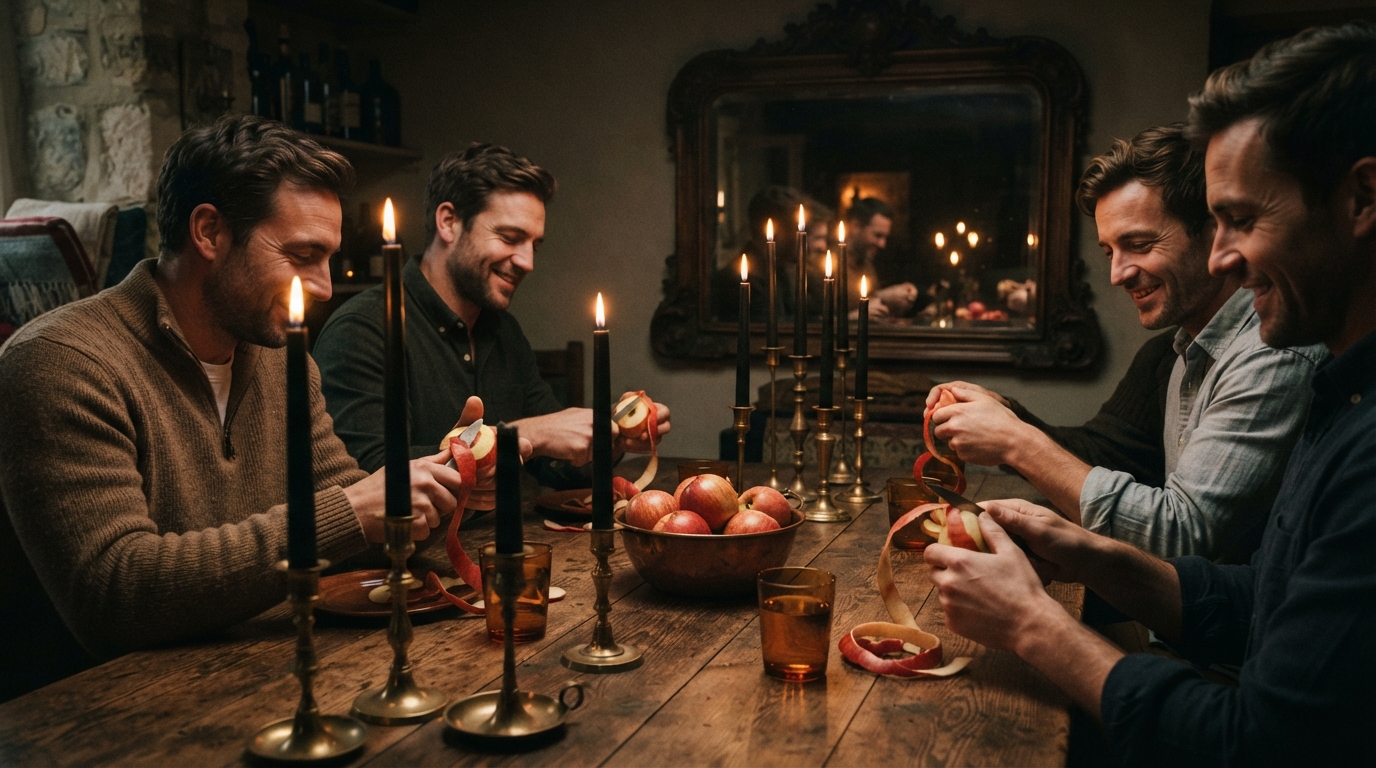
Try apple-paring: peel an apple in one long ribbon, toss it over your shoulder, and read the letter it forms. Set up a small fortune corner with a candle, a mirror, and a deck of cards. Bobbing for apples still works if you set up a tin tub with floating candles.
Food and Drink
Serve what people served then: caramel apples, popcorn balls, spiced cider in a large pot, and barmbrack, the Irish fruit bread traditionally baked with charms inside. A dark punch in a proper bowl anchors the table.
Sound
Warm crackly recordings suit the mood. Try 1950s novelty records, jazz and swing, and mid-century sound-effect albums, or add a cult classic such as Screamin’ Jay Hawkins’ “I Put a Spell on You” (1956). Keep the volume low so guests can talk.
Keeping Vintage Pieces Safe
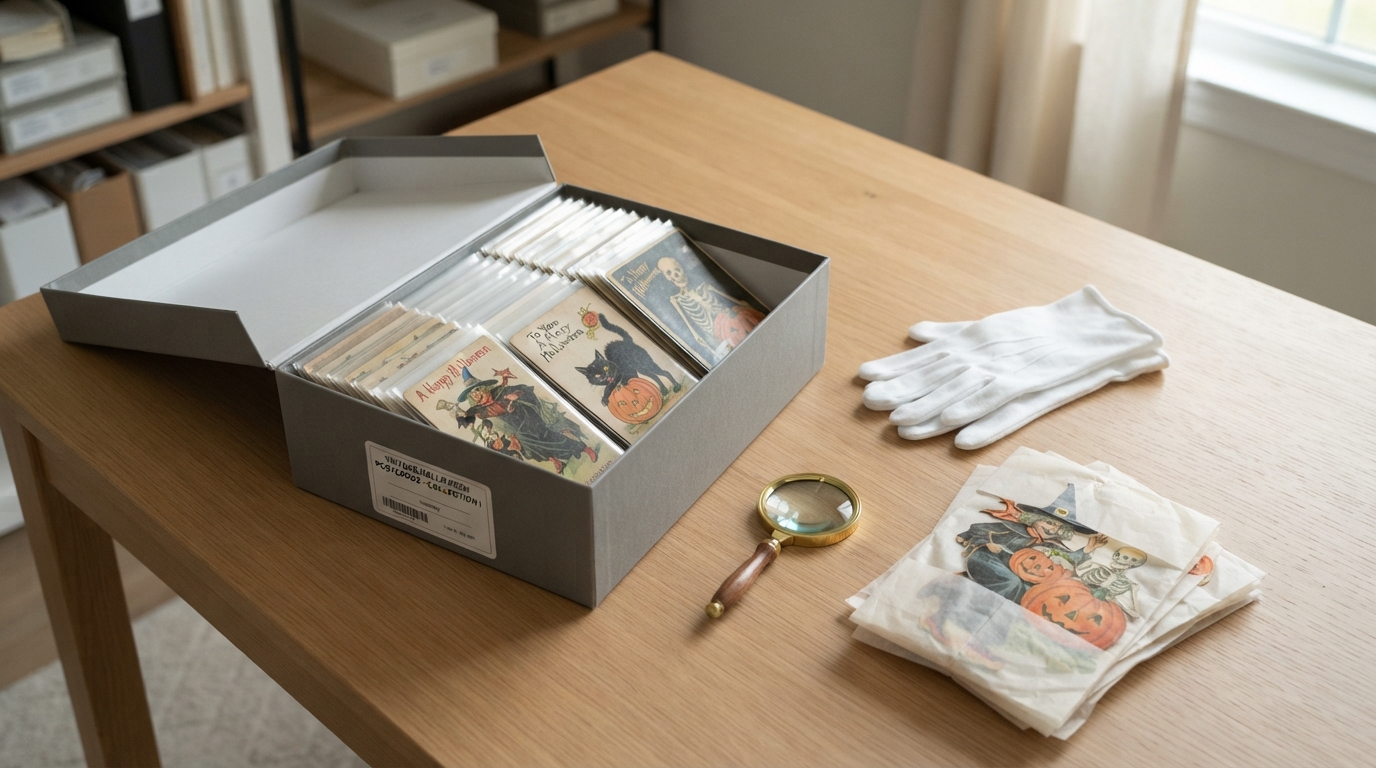
Paper and flame don’t mix. Use flicker LEDs near paper, and never put a real candle near honeycomb tissue or crepe. Check the cords on old blow molds before plugging them in, since brittle insulation is a real hazard. Keep ephemera out of direct sun, which fades ink quickly, and store cards flat in acid-free sleeves in a dry space.
Frequently Asked Questions
How old does something need to be to count as vintage? The usual rule is at least 20 years old, and “antique” generally means 100 or more.
Are reproductions cheating? No. They’re a good way to get the look and protect fragile originals, as long as you know what you’re buying.
What’s the easiest first step? Fix the lighting, then add one framed vintage print and one honeycomb or crepe paper piece.
Can I mix vintage and modern? Yes. Apply the palette and matte-finish rules to the modern pieces and they’ll blend in.
Final Thoughts
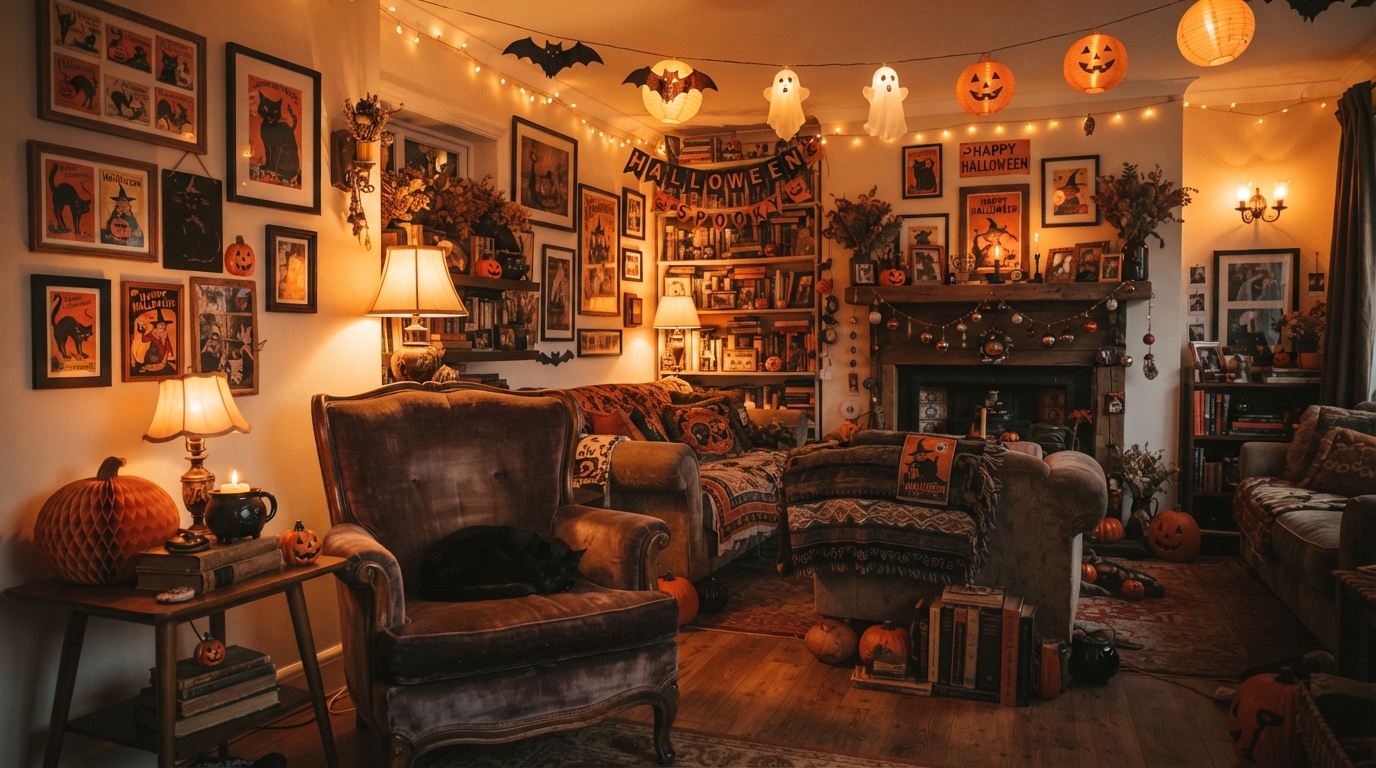
The best vintage Halloween rooms are built slowly. A postcard here, a lantern there, one good lamp, and a bit of restraint add up to something that feels like it has a history. That’s the appeal: a home that looks as though Halloween has been celebrated in it for generations.