For years I assumed a corner sofa only made sense in a big, square living room. My own place proved me wrong. I spent an afternoon dragging a standard three-seater into every possible position, and the one spot that actually worked was the corner I’d been ignoring the whole time.
That’s the real appeal of a good corner sofa design: it turns a dead, unused corner into the most functional seating in the room. Depending on the shape you pick, that same corner can become a movie-night hub, a reading nook, a laptop spot, or simply extra room for guests without adding another chair.
I’ve also learned the hard way that “biggest sectional that technically fits” isn’t the same as “smartest choice.” Door widths, radiator placement, walking paths, seat depth, and whether the chaise can be flipped to the other side all matter far more than how impressive the sofa looked on the showroom floor.
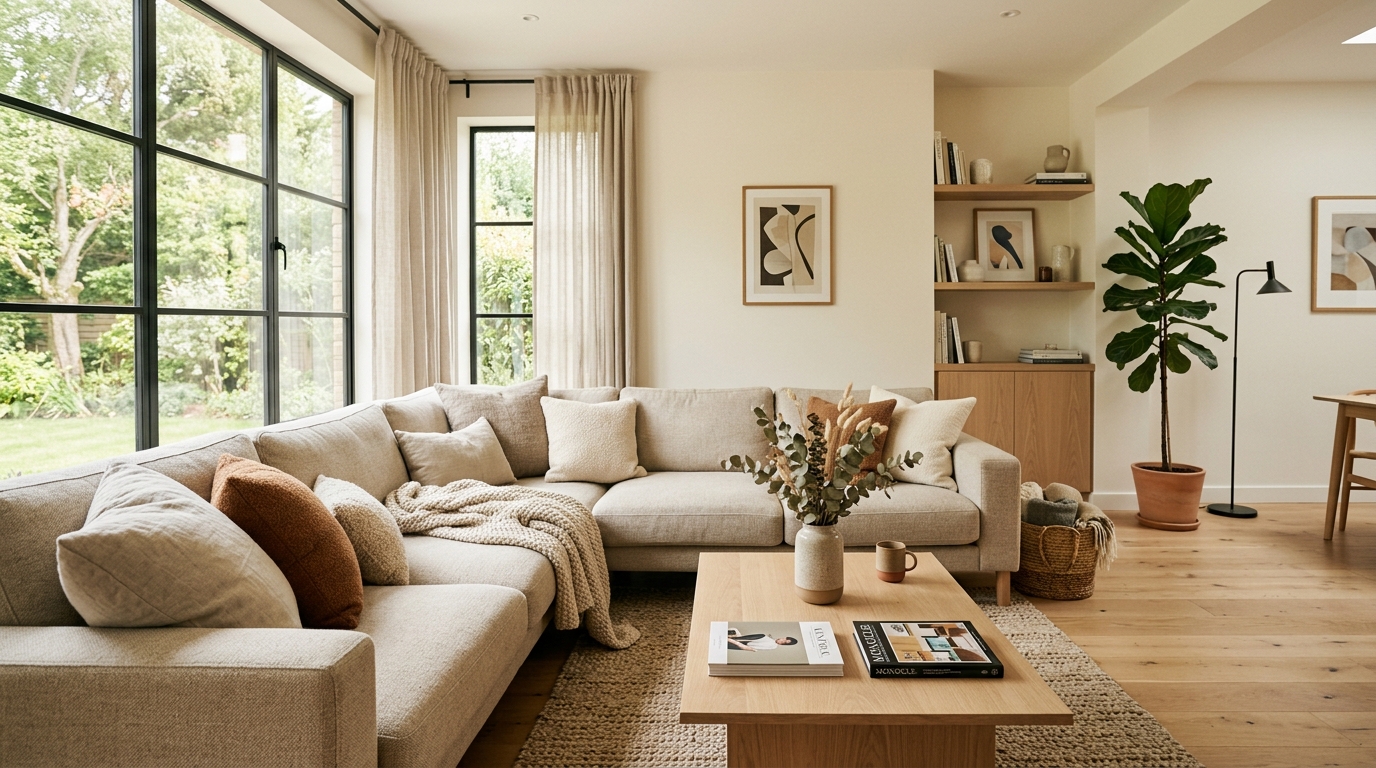
Below are 20 corner sofa layouts and styles worth considering, ranging from apartment-friendly picks to deep, sprawling lounge sectionals — plus where I’d spend extra money and where I’d happily cut corners.
1. The Classic L-Shaped Sectional
An L-shaped sofa is the safest starting point if you want function without turning your living room into a design statement.
Two sections meet at a 90-degree angle, giving you a real corner seat while keeping the middle of the room open. It reads well in both modern and traditional spaces, and it pairs easily with a standard rectangular coffee table.
Measure your full wall lengths, not just the open floor. I once measured only the empty floor space and ended up with a sofa arm that nearly blocked a doorway.
My tip: Wherever your layout allows, keep at least 30–36 inches of clear walking space around the sofa’s main traffic paths.
Pro tip: Always confirm whether a listing is “left-facing” or “right-facing” using the manufacturer’s diagram — different retailers describe the chaise position from different viewpoints, so the label alone can be misleading.
2. A Compact Corner Sofa for Small Apartments
Living in a smaller space doesn’t mean a corner sofa is off the table. It just means looking for a model with narrower arms and a shallower seat.
A compact sectional can make a tiny living room feel more organized, because one piece of furniture covers two walls instead of scattering a loveseat and an armchair across the floor.
Raised legs are worth prioritizing here — seeing floor space underneath the sofa keeps a small room from feeling visually heavy.
The compromise is depth. Compact sofas usually skip the deep, sink-in cushioning of larger sectionals, so check the seat depth before you commit.
Pro tip: Mark out the sofa’s exact footprint on your floor with painter’s tape and live with it for a day. You’ll immediately know whether your coffee table, rug, and walking path still make sense.

3. The U-Shaped Sectional for Big Family Rooms
A U-shaped sectional is my pick when a large family room needs to prioritize seating above almost everything else.
Rather than stopping at one corner, the sofa wraps three sides of the seating area, creating a natural conversation pit. It’s excellent for movie nights, since nobody ends up isolated on a separate chair.
I wouldn’t use one in a small room — a U-shaped layout can swallow the space fast once you add a coffee table and side tables.
In a large open-plan home, though, this shape does double duty: it visually separates the living zone without needing an actual wall.
Pro tip: Anchor the whole seating group with one oversized rug rather than a small rug centered under the coffee table — it stops the sectional from looking randomly placed.
4. Corner Sofa With a Chaise Lounge
This is one of my favorite configurations, because it combines the practicality of a sectional with one dedicated lounging spot.
A chaise is ideal if you like propping your feet up while watching TV, and it doubles nicely as a reading or napping corner. A floor lamp beside it, with the surrounding area kept relatively clear, makes the spot feel intentional.
The biggest decision is chaise orientation — left or right. Base that choice on how you’ll actually use the room, not on which photo looks best online. If the TV sits opposite the sofa, make sure the chaise doesn’t block the primary sightline.
Pro tip: If you rearrange your living room often, look specifically for a reversible chaise. It’s a small spec that pays off later.
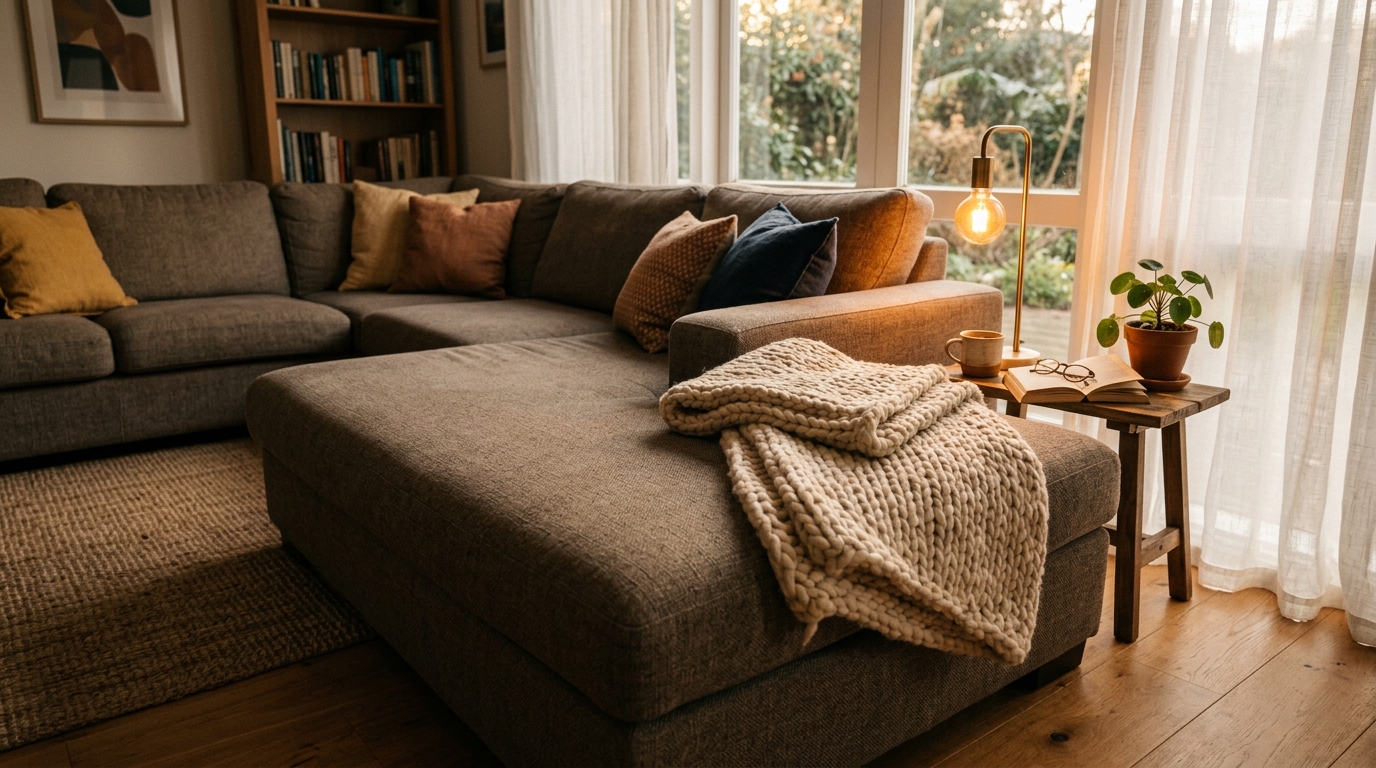
5. Modern Low-Profile Corner Sofa
A low-slung sectional instantly makes a living room feel more contemporary.
I like pairing this look with plain walls, one large neutral rug, and a handful of oversized cushions instead of many small decorative pillows. The horizontal, low silhouette works especially well under large windows.
The practical downside: getting up from a very low seat isn’t effortless for everyone. If older relatives visit often, prioritize seat height over the aesthetic.
Proportion matters too — a very low sofa can look out of place next to tall, traditional furniture, so keep the rest of the room streamlined to match.
Pro tip: “Low-profile” doesn’t automatically mean “small.” Some of these sofas are unusually deep, so check both the external footprint and usable seat depth.
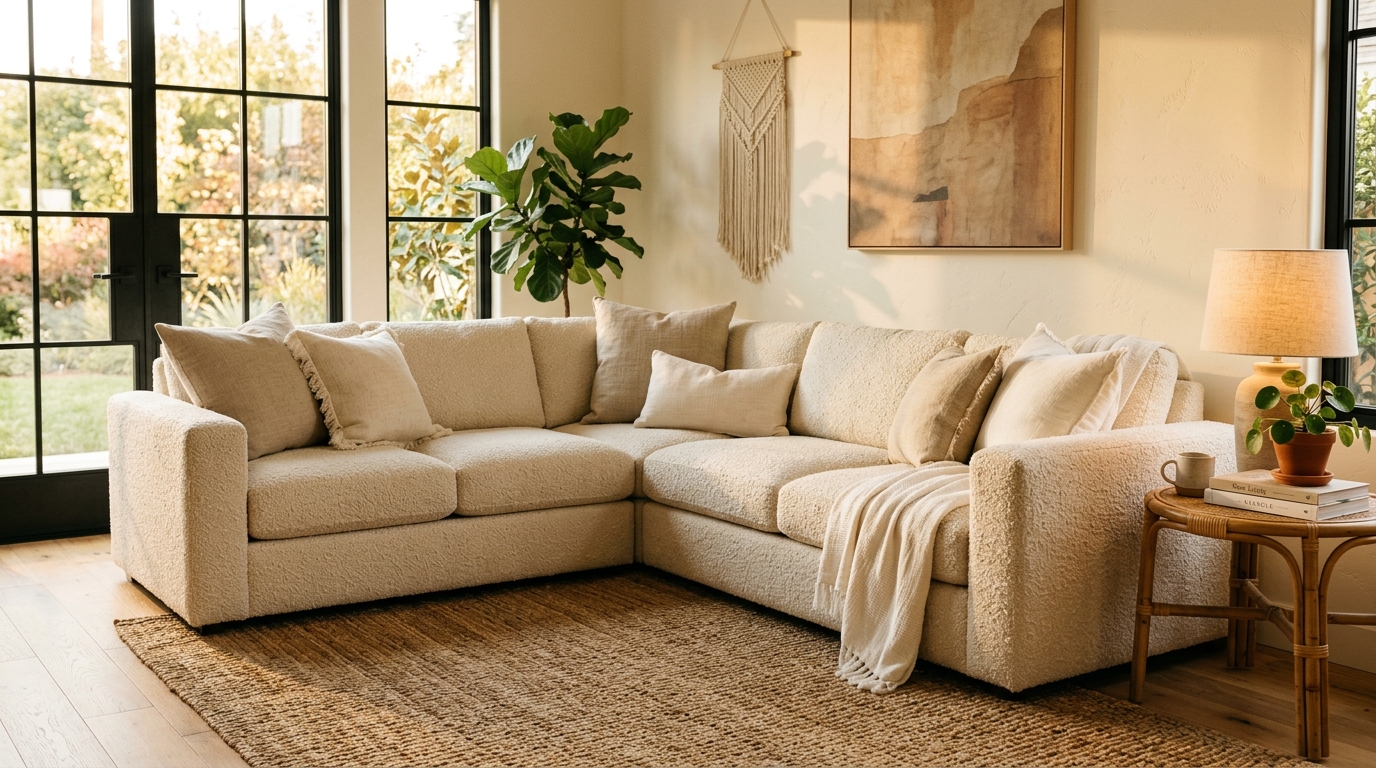
6. Cream Bouclé Corner Sofa
For a softer, cozier living room, a cream or ivory bouclé sectional is hard to beat.
The texture adds visual interest on its own, which means the walls, rug, and curtains can stay simple while the sofa becomes the tactile centerpiece.
That said, pale bouclé isn’t for every household. If you have kids, pets, or a habit of eating on the sofa, think through maintenance before you commit.
A removable, washable cover is a genuine advantage here. If covers aren’t removable, ask the manufacturer exactly how the upholstery should be cleaned before buying.
Pro tip: Bring a fabric swatch home before ordering. Cream upholstery that looks warm in a showroom can read gray or yellow under your own lighting.
7. Dark Gray Corner Sofa
Charcoal or dark-gray upholstery is one of the most forgiving, versatile choices you can make for a corner sofa.
It hides everyday wear better than pale fabric and works with wood tones, black metal accents, white walls, and colorful accessories alike.
The risk is a room that tips into feeling too dark. Balance a charcoal sofa with a lighter rug, warm wood furniture, cream cushions, or brighter curtains.
A dark sectional also works well as a long-term anchor piece — you can swap decorative colors seasonally without replacing the sofa itself.
Pro tip: View the fabric in both daylight and artificial light. Some gray upholstery carries blue or green undertones that only show up after dark.
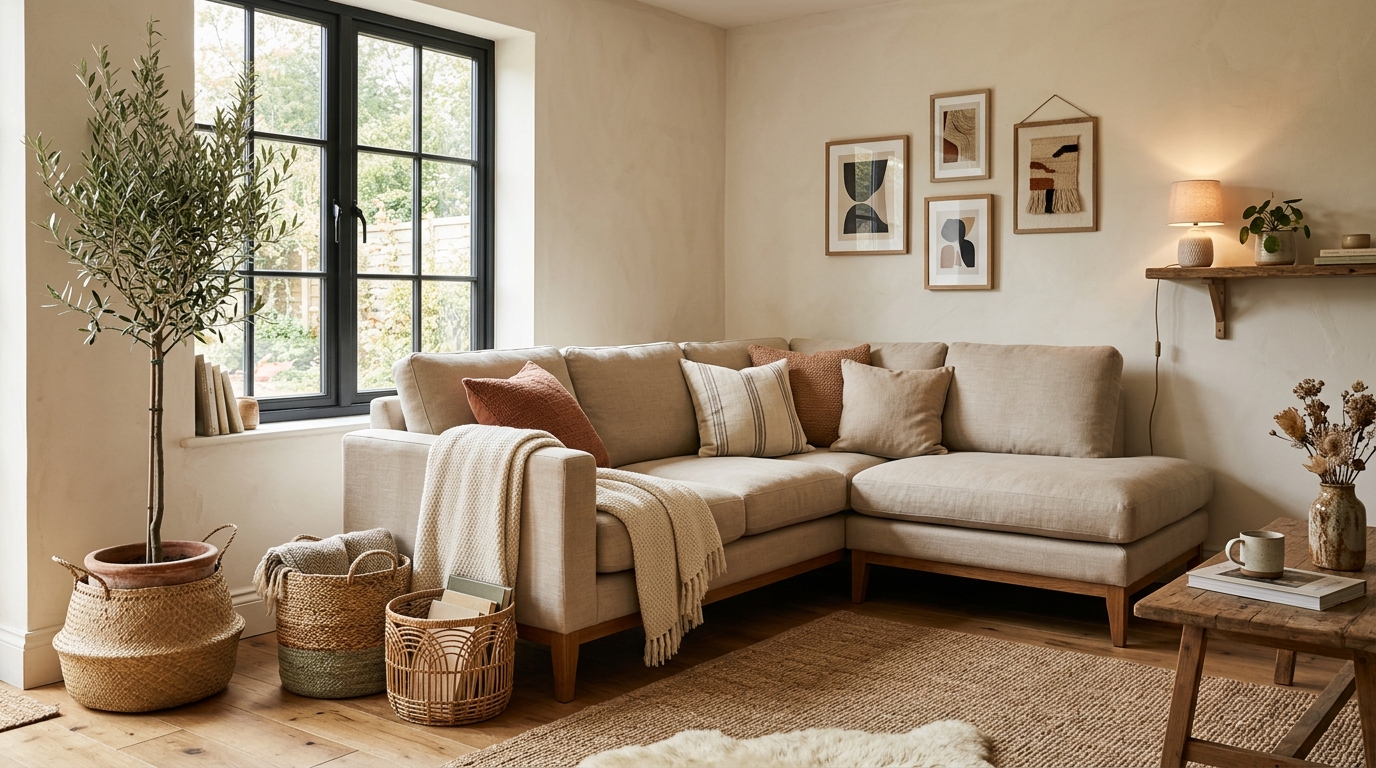
8. Beige Corner Sofa With Wooden Legs
For a warm, relaxed feel, a beige sectional with exposed wooden legs is a strong choice.
It reads lighter than a fully upholstered base and pairs naturally with rattan, oak, linen, jute, and woven textures.
Beige is also a smart pick if you like changing your décor often, since it transitions easily between earthy browns and greens or blue and terracotta accents without ever becoming the limiting factor.
The obvious downside is staining, so choose a performance fabric or a washable cover if the sofa is going into a busy family space.
Pro tip: Medium-toned wood legs tend to offer more styling flexibility than very orange or reddish wood finishes.
9. Velvet Corner Sofa
Velvet upholstery instantly gives a sectional a more decorative, glamorous edge.
Deep green, navy, or rust velvet can carry an entire room on its own — you won’t need much else to make the space feel finished.
Velvet does show pressure marks and shifts in appearance as the fibers move; that’s normal, but if you prefer upholstery that always looks perfectly uniform, another fabric may suit you better.
Let the sofa be the statement piece and keep the coffee table and accessories simpler around it.
Pro tip: Order a physical swatch before buying colored velvet online — screens are notoriously unreliable for saturated, deep tones.
10. Modular Corner Sofa
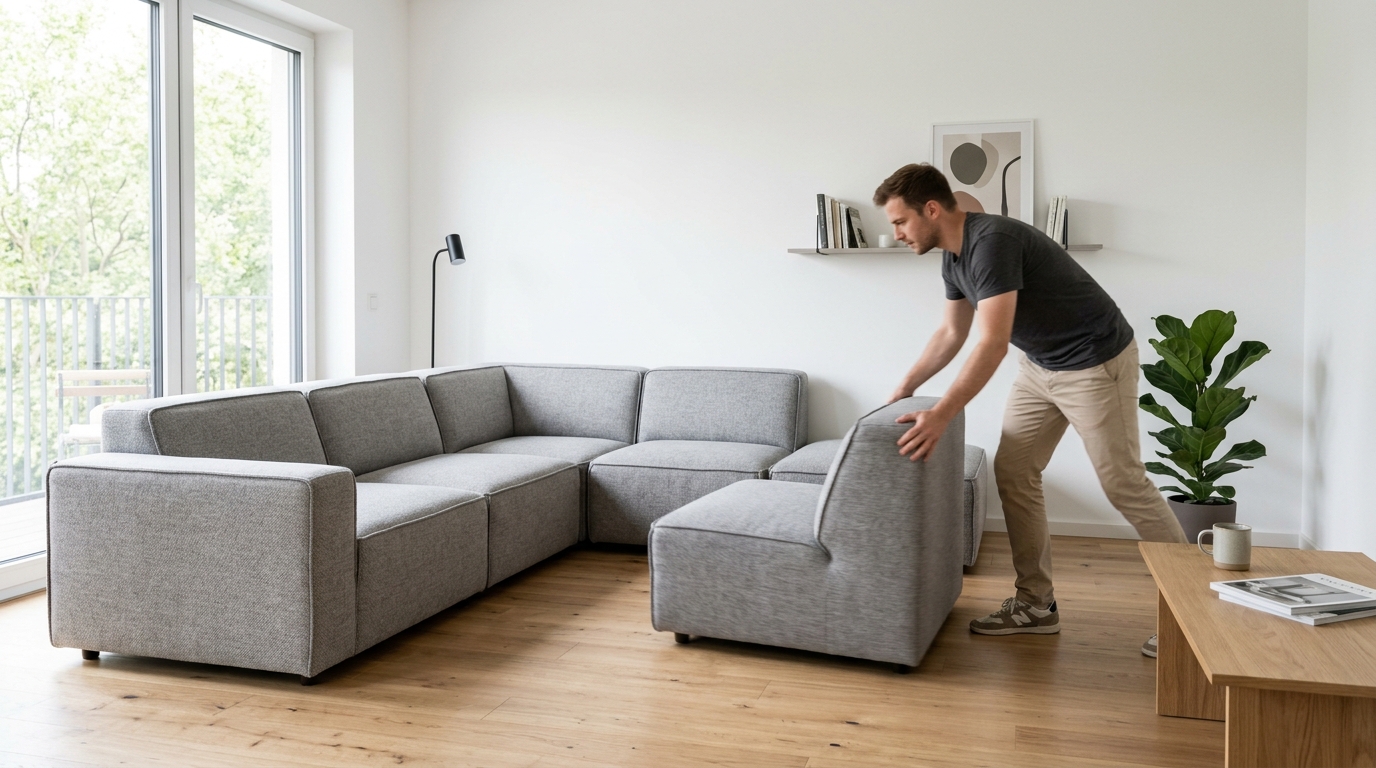
A modular system is the right pick for anyone who doesn’t want to commit to one permanent layout.
Individual sections can be rearranged into an L shape, split into separate seats, or extended into a longer run depending on the room. That flexibility is especially useful if you’re renting, planning to move soon, or simply enjoy rearranging your space.
Smaller individual modules are also far easier to move through narrow hallways or apartment elevators than one giant fixed sectional.
The catch: modular systems get expensive quickly once you start adding pieces.
Pro tip: Price out the full configuration you actually want, including connectors and extra modules — a low “starting at” price rarely reflects the sofa you’ll end up needing.
11. Corner Sofa With Built-In Storage
If your living room doubles as a playroom or general family space, hidden storage inside the sofa is genuinely useful.
Some corner sofas include a lift-up chaise or built-in compartments where you can stash blankets, spare cushions, or toys — a much better use of space than adding another bulky cabinet.
Just make sure the storage mechanism is easy to open one-handed. If lifting the chaise is a struggle every time, you simply won’t bother using it.
Pro tip: Measure the actual storage compartment before assuming bulky items will fit — most are better suited to folded throws than to spare bedding.
12. Scandinavian-Style Corner Sofa
For a lighter, less cluttered living room, Scandinavian-inspired design is hard to top.
Look for simple upholstery, tapered wooden legs, clean lines, and a moderate seat depth — the result feels comfortable without visually crowding the room.
This style suits apartments particularly well because the furniture tends to look lighter overall. Pair it with a simple rug, a pale wood coffee table, and a couple of textured cushions.
Don’t overdo the minimalism, though — a room can quickly feel like a showroom if every surface is left completely bare.
Pro tip: Add texture instead of more objects. One knitted throw and a textured rug can warm up a simple sectional instantly.

13. Leather Corner Sofa
A leather sectional is the practical choice if durability matters more to you than upfront cost.
Good leather ages with character, and spills are often easier to wipe away than on absorbent fabric. A medium-brown leather sofa looks especially good against warm wood and neutral walls.
The trade-offs are price and upkeep. Genuine leather costs significantly more, and cheaper faux-leather alternatives can wear very differently over time.
When comparing listings, don’t stop at the word “leather” — confirm exactly what material is being used.
Pro tip: Keep leather sofas away from prolonged direct sunlight, which can contribute to fading and drying out over time.
14. Corner Sofa With Built-In Recliners
If your living room exists mainly for watching television, a reclining sectional may be a smarter investment than a beautiful but rigid sofa.
You still get the corner configuration, plus dedicated reclining seats — often a better use of budget than buying a decorative sofa and a separate recliner chair.
The main drawback is space. Reclining mechanisms need clearance in front of or behind the seat, so measure the sofa in both its closed and fully-reclined positions.
Pro tip: Never rely on the sofa’s static footprint alone — request the manufacturer’s clearance specs and measure those too.

15. Curved Corner Sofa
A curved sectional softens the traditional hard-angle L shape.
This style needs room to breathe, so it works best in a larger living room, particularly when paired with a round or oval coffee table.
I wouldn’t choose curved furniture for a narrow, rectangular apartment — the rounded shape uses floor space less efficiently. But in a generous open-plan room, it becomes an attractive focal point that naturally encourages conversation instead of forcing everyone to face the television.
Pro tip: Pair a curved sofa with a round or oval coffee table — a sharp rectangular table nearby can create an awkward visual clash.
16. Corner Sofa With Removable Covers
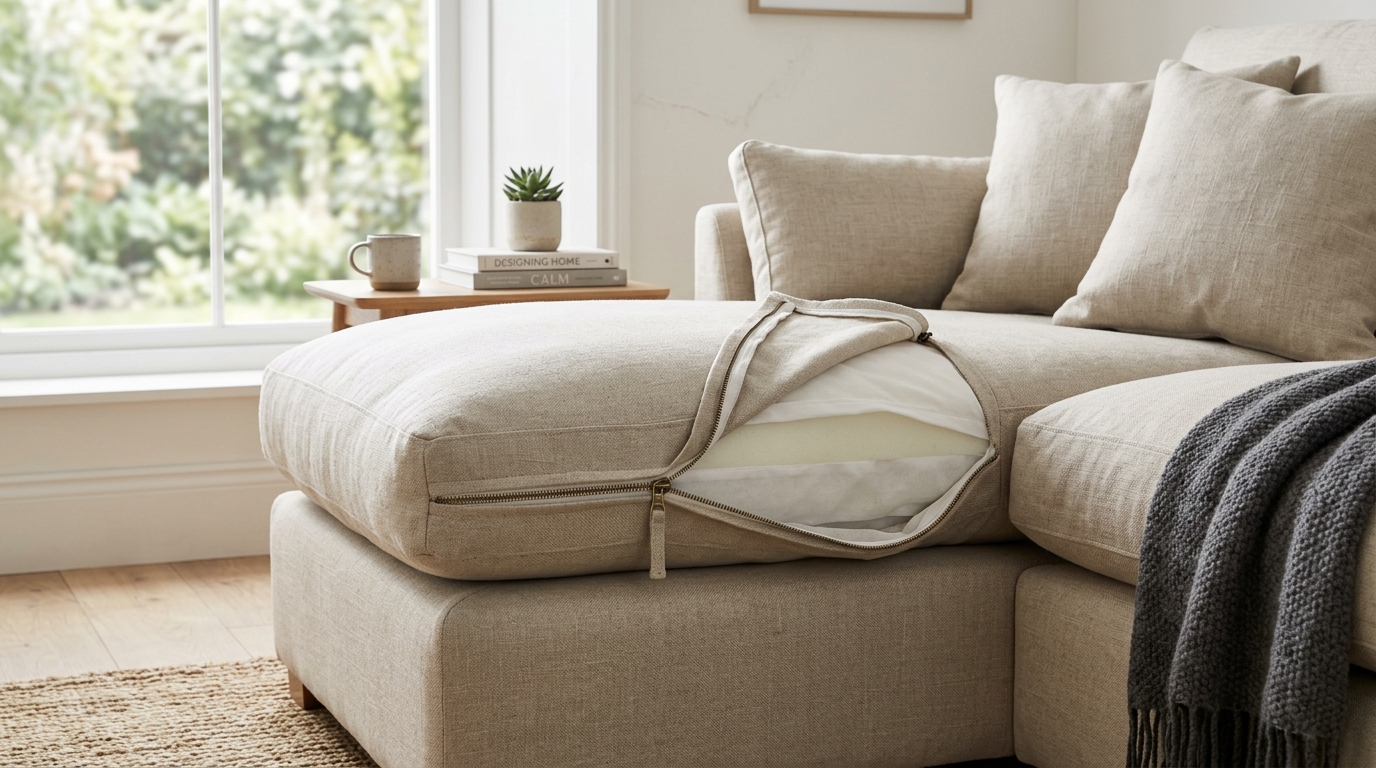
Removable upholstery covers aren’t the flashiest feature on a spec sheet, but they matter enormously if children, pets, or frequent entertaining are part of your daily life.
Being able to pull a cover off for washing or professional cleaning gives you far more room to handle everyday wear without stressing over every spill.
Read the washing instructions carefully — “removable” doesn’t automatically mean “machine washable.”
Pro tip: Buy a few spare cushion covers if the manufacturer offers them. Having replacements on hand years later is far easier than trying to source a discontinued pattern.
17. Two-Tone Corner Sofa
A two-tone sectional adds personality without requiring a complicated color scheme.
You might combine a neutral main body with darker arms, contrasting cushions, or a different material on the chaise — enough visual interest without committing to a bold pattern.
Keep the rest of the room fairly restrained once the sofa itself carries multiple colors or materials, so the space doesn’t start to feel busy.
Pro tip: Repeat one of the sofa’s secondary colors in a small accessory elsewhere in the room — it makes the palette feel deliberate rather than accidental.
18. Corner Sofa in a Warm Earth Tone
Rust, terracotta, camel, olive, and warm brown upholstery can make a corner sofa feel far more inviting than standard gray.
Earth-toned sectionals look especially good in rooms with cream walls and natural wood, where the palette works together rather than competing.
If you’re nervous about a colored sofa, choose a muted shade rather than the boldest version available — you still get personality without risking early decorating fatigue.
Remember that a large sectional is a huge block of color: a shade that looks subtle on a small swatch can feel much stronger spread across an eight-foot sofa.
Pro tip: Hold the fabric swatch up against your actual wall and flooring before ordering — surrounding colors dramatically change how upholstery reads in person.

19. Apartment Corner Sofa With a Pull-Out Bed
If overnight guests are a regular occurrence but a spare bedroom isn’t, a sleeper sectional solves two problems with one piece of furniture.
By day, it functions as a normal corner sofa. By night, part of it converts into a sleeping surface — particularly useful in studio apartments and one-bedroom homes where every square foot needs to earn its keep.
Be realistic about how often the bed function will actually get used. Sleeper mechanisms add weight and can affect everyday comfort, so it’s not worth paying extra if guests are rare.
Pro tip: Test the mattress thickness and sleeping surface in person before buying — “sleeper sofa” covers everything from a genuinely comfortable guest bed to something bearable for one night only.
20. Deep-Seated Family Corner Sofa
For households built around lounging rather than sitting upright, a deep-seated family sectional is the natural finish to this list.
This is the sofa for stretching out, piling on cushions, and fitting several people comfortably at once without competing for the best spot.
Deep seating isn’t universally better, though — shorter people may find their feet don’t reach the floor comfortably, which becomes annoying faster than expected.
Sit all the way back in the showroom and check where your knees and feet land — that tells you far more than any product photo.
Pro tip: If household members vary a lot in height, look for medium-depth cushions or a modular system that lets you customize each section.
Corner Sofa Designs: Which One Should You Choose?
When comparing corner sofa styles, I don’t start with color — I start with how the room actually needs to function.
| Corner Sofa Type | Best For | Space Needed | Maintenance | Verdict |
|---|---|---|---|---|
| Compact L-shape | Apartments | Small–Medium | Easy–Moderate | Best all-around choice |
| Chaise sectional | Lounging | Medium | Moderate | Great for TV-focused rooms |
| U-shaped sectional | Large families | Large | Moderate | Excellent if space allows |
| Modular sofa | Flexible layouts | Small–Large | Depends on fabric | Worth it for renters |
| Leather sectional | Durability | Medium–Large | Moderate | Higher upfront cost |
| Sleeper sectional | Overnight guests | Medium–Large | Moderate | Smart for small homes |
| Reclining sectional | Media rooms | Medium–Large | Moderate | Measure clearance carefully |
| Curved sectional | Open-plan rooms | Large | Moderate | Stylish but less space-efficient |
How Much Does a Corner Sofa Cost?
Pricing for corner sofas varies enormously, and the cheapest listing shouldn’t be your benchmark.
A basic compact model can be quite affordable, while a large modular sectional with premium upholstery, reclining mechanisms, a sleeper function, or genuine leather can cost several times more.
The real question is what you’re actually paying for. I’d spend more on:
- A strong, well-built frame
- High-quality seat cushions
- Durable upholstery
- Washable or replaceable covers
- A configuration that genuinely fits your room
- A reputable, clearly-worded warranty
I’d spend less on trendy decorative details that don’t change how the sofa is actually used day to day. If you’re furnishing an apartment on a temporary basis, a sensible mid-range sectional almost always makes more sense than sinking most of your budget into one statement piece.
How to Measure for a Corner Sofa
This is the least exciting part of the process, but skipping it is how expensive mistakes happen. Before ordering, measure:
- The full available wall length
- The sofa’s total depth
- Door and hallway widths along the delivery route
- Ceiling height and any stairway clearance
- Window and radiator positions
- Walking paths through the room
- Coffee table clearance
- The chaise or corner projection
- Reclining clearance, if applicable
- Elevator dimensions, if you’re in an apartment building
Measure your home’s entrance too — a sofa can fit the floor plan perfectly and still refuse to pass through the front door.
My Corner Sofa Buying Checklist
Before clicking “order,” I ask myself:
Can it actually get into the house? Measure the delivery route, not just the room.
Is the orientation correct? Confirm the chaise or corner position against the manufacturer’s diagram.
Is the seat depth right for me? Deeper isn’t automatically better.
Can I clean the upholstery? Know the fabric’s requirements before you’re dealing with a stain.
Can cushions or covers be replaced? Replaceable parts extend a sofa’s usable life significantly.
Is there a warranty? Focus on what it actually covers, not just how many years it lasts.
Will I still like the shape in five years? A classic silhouette is often the safer expensive purchase.
The Best Corner Sofa Ideas for Small Spaces
For a small apartment, I’d narrow this list down considerably.
A compact L-shaped sofa with slim arms and raised legs is my first choice — useful seating without the sofa visually dominating the room. A reversible chaise adds flexibility if you rearrange the space down the line, and built-in storage can substitute for closet space you don’t have.
Don’t automatically default to the smallest sofa available just because the room is small — a well-proportioned corner sofa often looks cleaner than several undersized pieces scattered around.
What I Would Avoid When Buying a Corner Sofa
A few mistakes come up often enough to be worth flagging directly.
Don’t judge scale from photographs alone — perspective can make a huge sectional look surprisingly compact online. Don’t ignore seat height, since a sofa can look beautiful and still be uncomfortable for your specific body. Don’t choose white or very pale upholstery purely because it looks good in a staged photo unless you’re genuinely prepared for the upkeep. And don’t fill every inch of the room just because the floor space exists — a corner sofa needs breathing room, and that empty space is part of what makes a living room feel comfortable rather than crowded.
Final Thoughts on Corner Sofa Designs
If I were furnishing a living room from scratch, I’d choose based on how I actually spend my evenings, not on which style photographs best.
For a small apartment, a compact L-shaped sofa. For a family movie room, a deeper sectional or a reclining corner sofa. If flexibility matters most, a modular system is worth the extra planning.
The best corner sofa design was never the biggest, softest, or most expensive option — it’s the one that fits your room, your body, your routine, and your budget without asking you to rearrange your whole life around it.