Open the cabinets of a well-loved kitchen in Rotterdam, Turin, or Copenhagen and you’ll notice what’s missing: the clutter of a dozen single-use plastic gadgets, each with its own charging cable and expiration date. In their place sit two or three substantial, mechanical objects — the kind built to be repaired rather than replaced, and eventually handed down instead of thrown out.

This isn’t nostalgia for its own sake. Manufacturing standards across the EU tend to push toward durability and repairability over disposability, which shows up in the small details — a motor engineered to handle real resistance, a housing built from steel and glass instead of thin plastic, a design meant to sit out on the counter rather than hide in a drawer.
What follows is a tour of appliances that treat the kitchen as a room worth designing, not just a space to get through breakfast. You’ll find the meticulous Dutch approach to drip coffee, the cheerful mid-century color sense of Danish design, and the confident curves of Italian espresso engineering. If vintage objects are your thing beyond the kitchen too, it’s worth also looking at broader collections of European vintage kitchen finds and European-inspired living room pieces — the same philosophy of “built to last, designed to be seen” runs through both.
1. A Fabric House’s Take on the Slow Cooker (United Kingdom)
Modern kitchen electronics often look like flight-deck instrumentation — blinking displays, chirping alerts, a manual thicker than it needs to be. A slow cooker resists that trend almost by definition: it asks you to walk away.
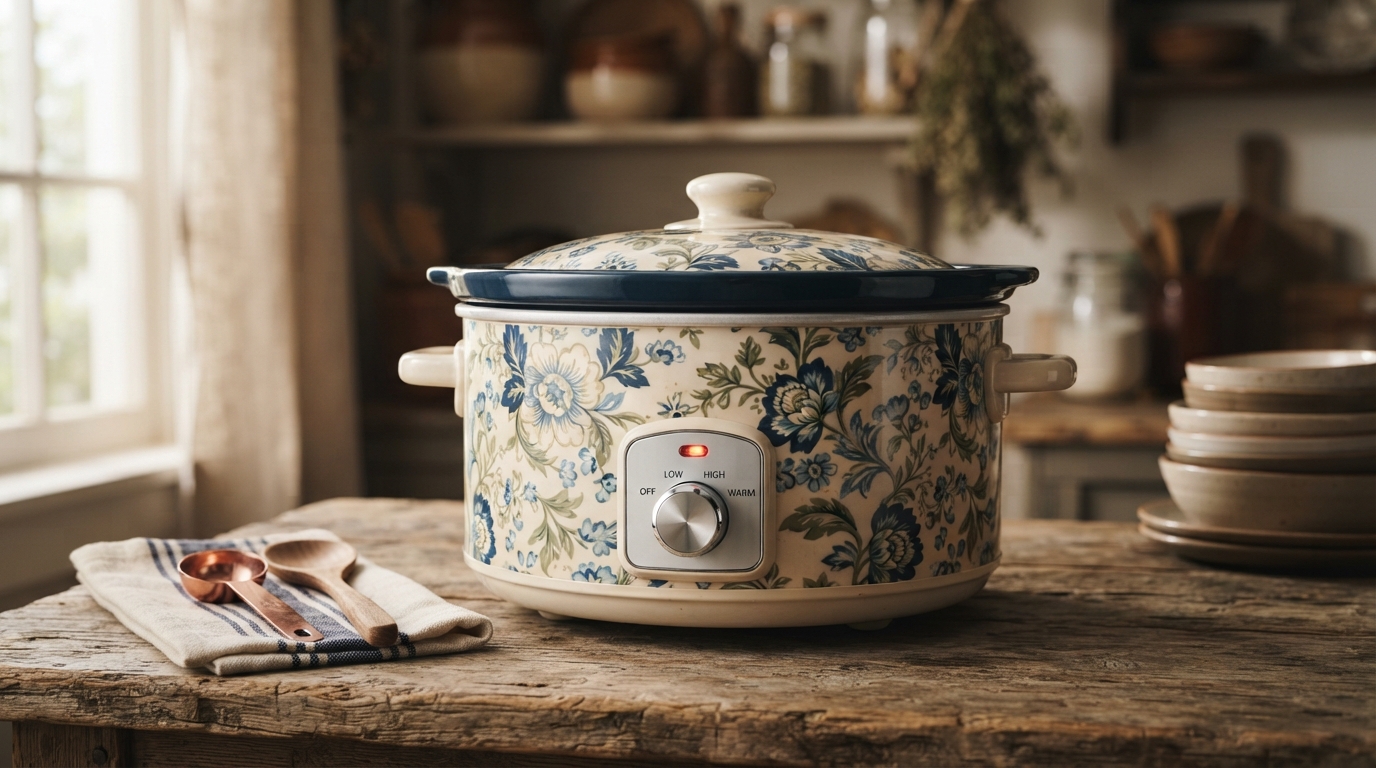
The appeal of a heritage-patterned slow cooker from a storied British textile house is exactly that simplicity. A single dial, a heavy lid, and hours of unattended low heat while dinner takes care of itself. The floral, deep-toned patterns wrapped around the housing turn a purely functional object into something you’d happily leave out rather than tuck away, echoing a design lineage that traces back to a small fabric-printing operation in 1950s London and has since become shorthand for a certain kind of romantic, country-house Englishness.
2. The Dutch Standard for Drip Coffee
Few coffee makers are discussed with the reverence given to the classic Dutch drip machine — a handmade, pump-free design out of the Netherlands that has changed remarkably little since the late 1960s. Its entire reason for existing is water temperature: it’s engineered to hit and hold the specific range that coffee professionals consider correct for extraction, using a simple boiling element rather than layers of digital control.
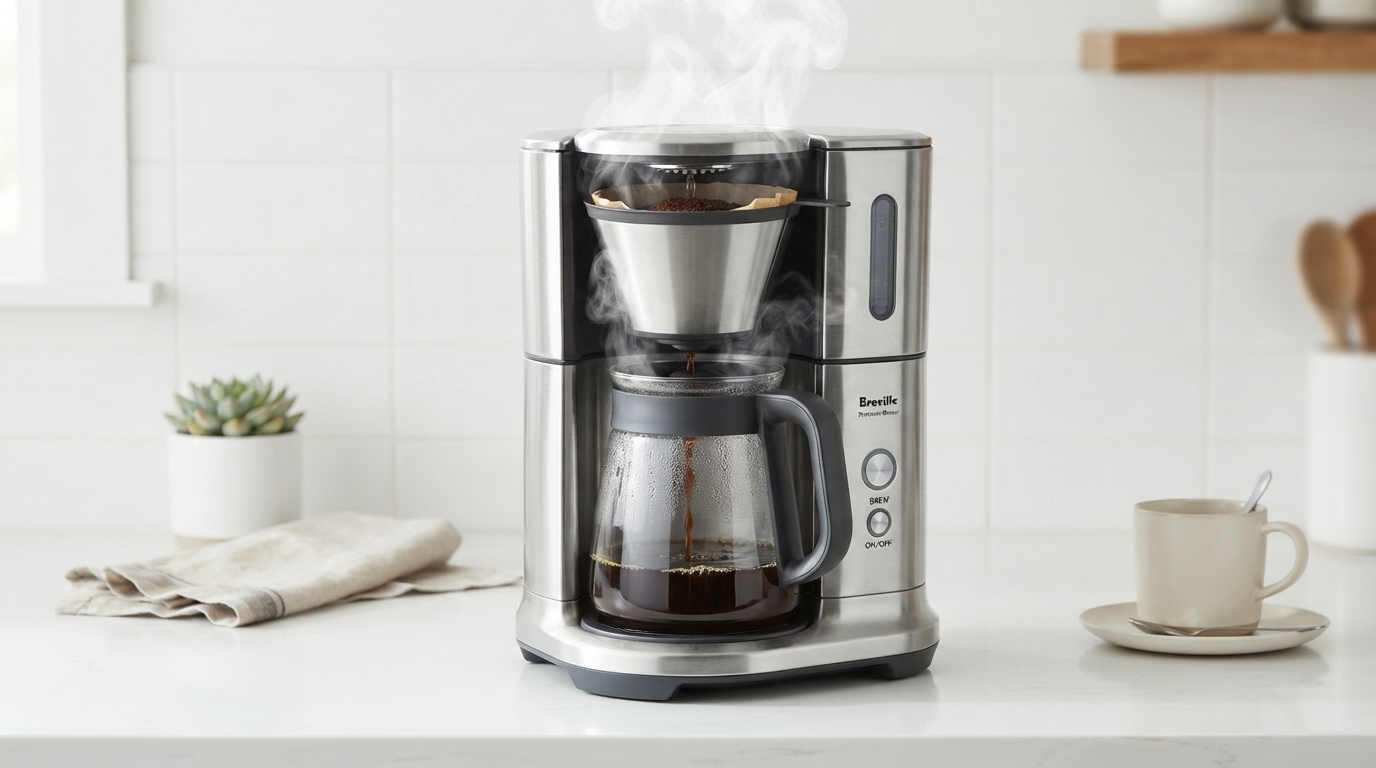
There’s a switch for a half or full carafe and essentially nothing else to learn. That restraint is the point — this is a machine assembled by hand in Amerongen and built with the expectation that it will still be brewing coffee for a second generation of owners.
3. An Italian Two-Slice Toaster With Real Presence
An Italian appliance maker’s rounded, chrome-accented toaster looks less like a kitchen tool and more like a small piece of 1950s industrial sculpture — which is precisely the point of its retro-revival design language.
Six browning settings and a dedicated bagel mode cover the practical bases, anti-slip feet keep it steady during use, and a pop-out crumb tray makes cleanup close to effortless. The brand’s story starts with metal enameling work in Guastalla in the late 1940s, and its appliances have become popular enough that some buyers reportedly plan their whole kitchen color scheme around this one small object.
4. A Matching Kettle-and-Toaster Set for Cottage-Core Mornings
For anyone chasing a countryside aesthetic from within a city apartment, a matching floral kettle and toaster set does a lot of visual heavy lifting. The dome-shaped kettle includes a built-in temperature gauge, and the toaster offers adjustable browning — practical features wrapped in the same heritage-print fabric house’s signature pattern language that started at a London kitchen table decades ago.
5. A Scandinavian Coffee Grinder in Cheerful Red
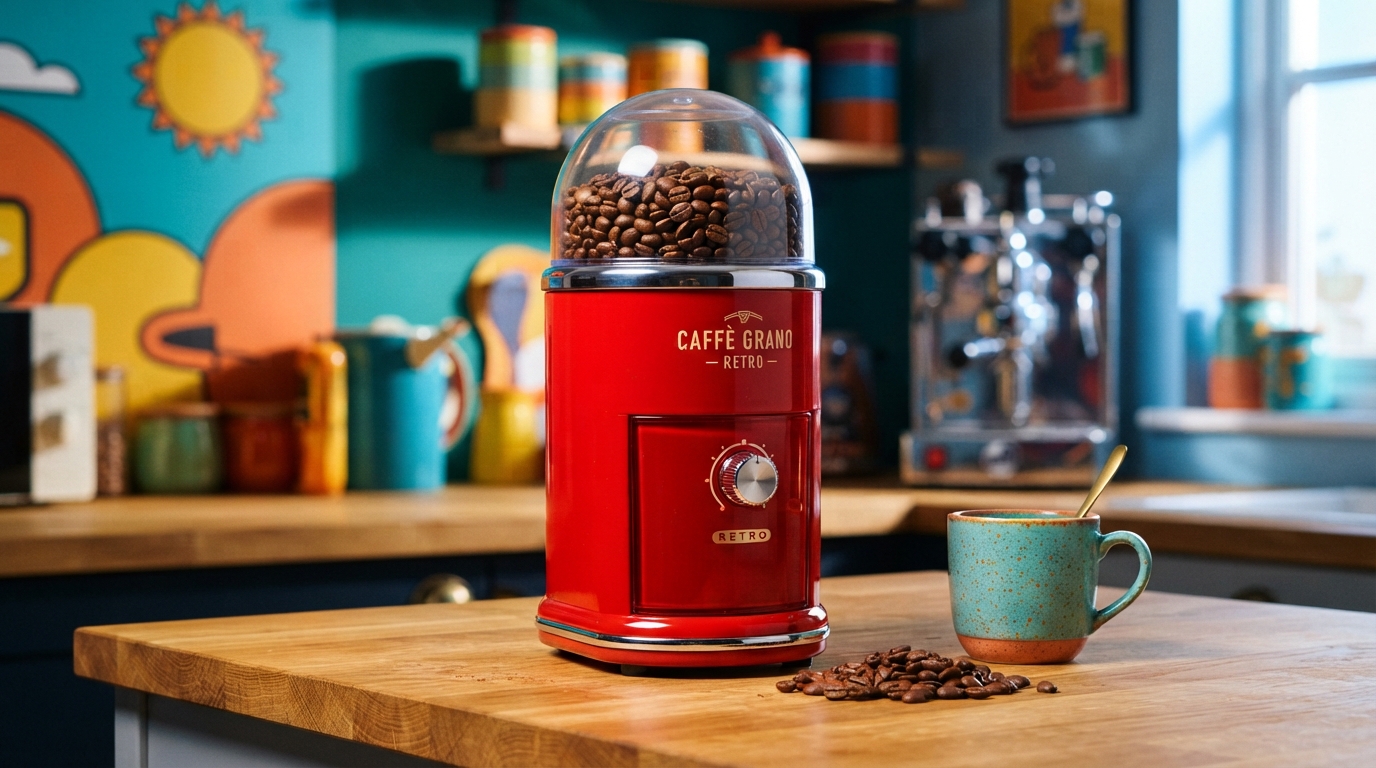
Where a lot of grinders default to matte black, a Danish design house’s bright red electric blade grinder leans hard into color. A precise stainless-steel blade spins at a controlled speed for consistently fine or coarse grounds, and a transparent lid lets you track progress and grind size by eye. The company behind it was founded in Copenhagen in the 1940s on the idea that good, thoughtful design shouldn’t carry a premium price tag — an ethos that still shows in this small, unmistakably cheerful machine, whose color story borrows more from pop art than from anything overtly “Scandinavian.”
6. An Italian Espresso Machine That Also Does Cold Brew
Cold brew has an obvious appeal — smoother, less acidic coffee, since hot water never gets the chance to pull out the harsher oils — but the traditional method demands almost a full day of patience.
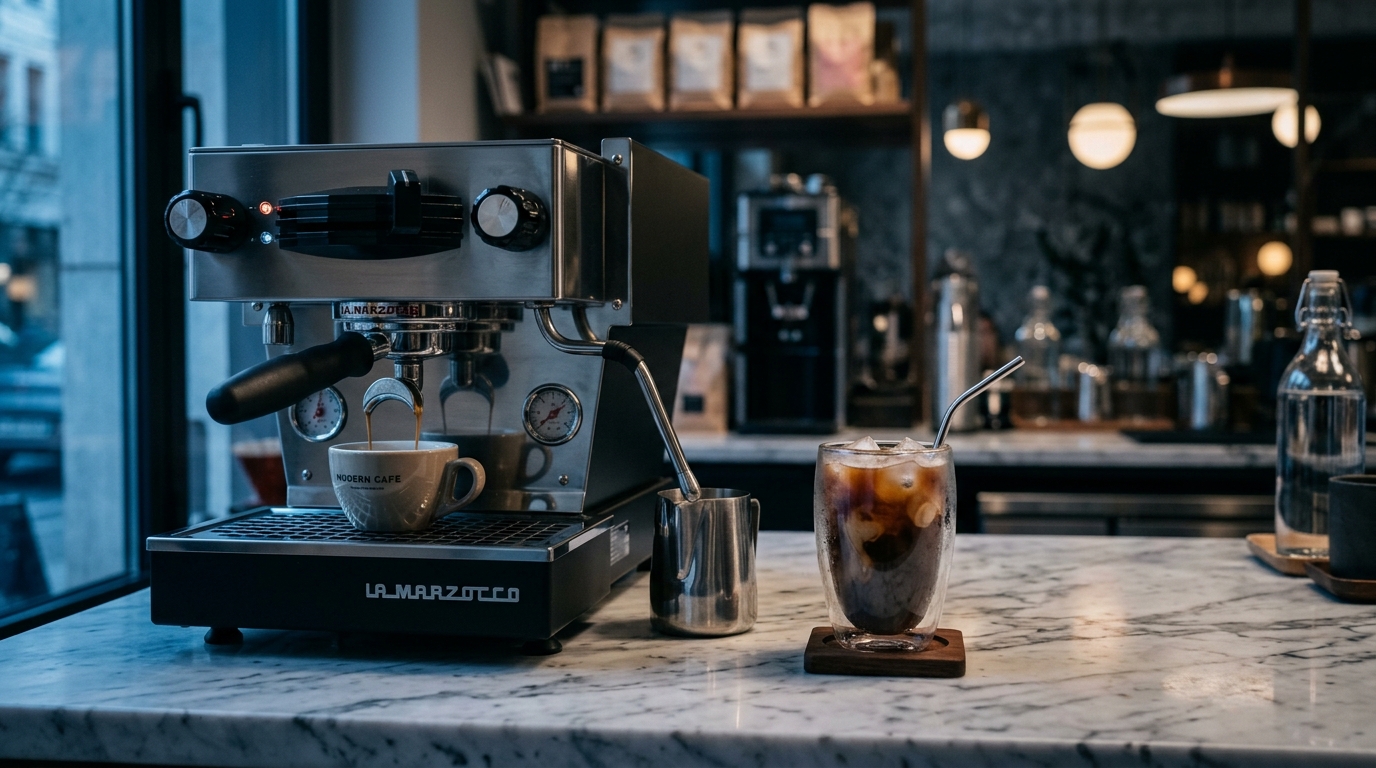
An Italian manufacturer’s newer espresso machine solves that specific problem with a dedicated cold brew function that uses pressure rather than time to extract flavor, delivering a cold coffee drink in a few minutes instead of a day, in either single or double-shot strength. It hasn’t given up its core identity as an espresso machine, either — a traditional steam wand handles milk frothing for standard warm drinks, and a generously sized water tank cuts down on refill frequency. The company’s roots go back to 1948 in the small town of Guastalla, where it began in enamel and metalwork before shifting into the rounded, retro-styled home appliances it’s known for today.
7. A French Infrared Air Fryer
Sold as “Tefal” everywhere except the United States — where a certain chemical company’s trademark concerns forced a name tweak to “T-fal” — this French air fryer relies on infrared heating rather than a purely convection-driven fan system, which the brand markets as a faster, more energy-efficient way to crisp food.
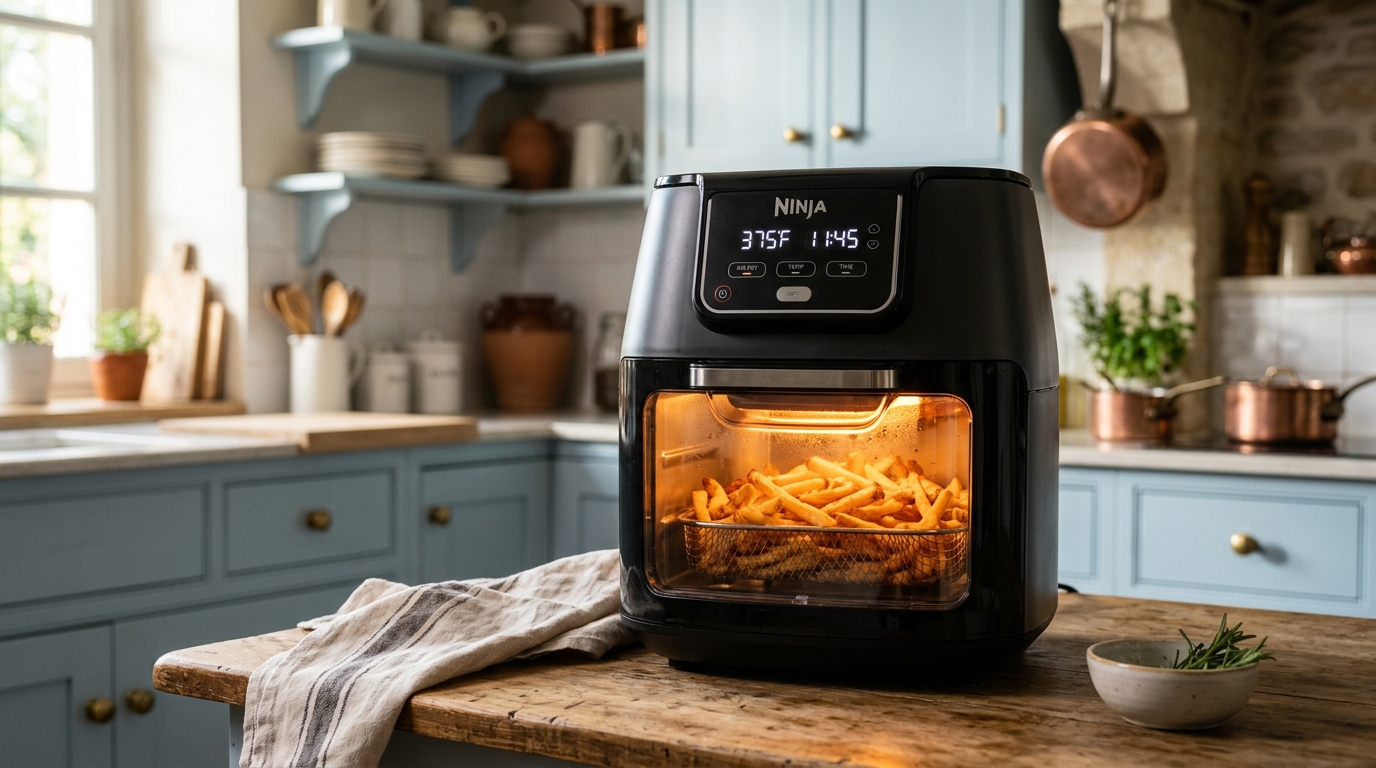
A front-facing window lets you monitor food without opening the basket and losing heat. The brand name itself is a blend of “Teflon” and “aluminium,” a nod to its origins inventing the non-stick pan in the 1950s — an invention that arguably did more to change home cooking than any air fryer since.
8. A German Gooseneck Kettle for Precision Pour-Over
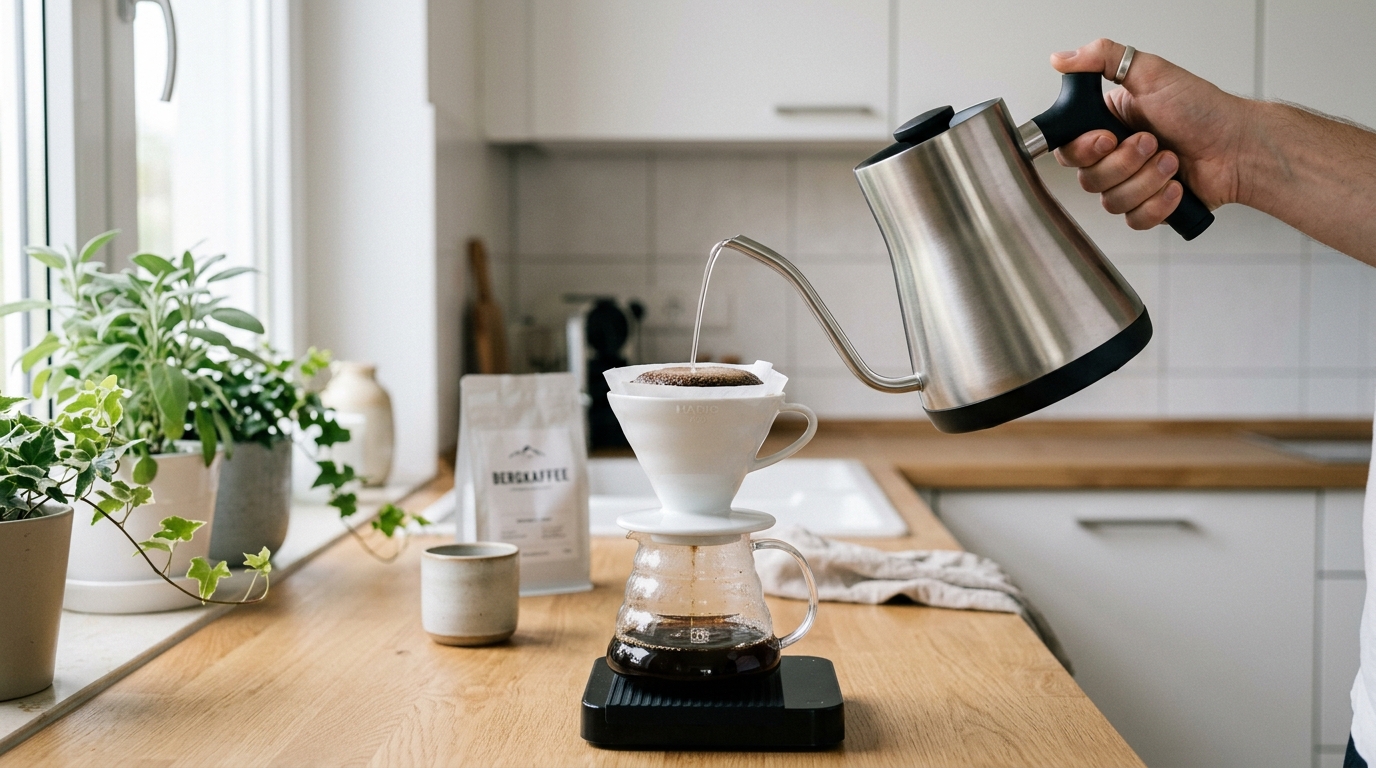
Pour-over coffee lives and dies by control, and a German gooseneck electric kettle is built entirely around that idea — a thin, curved spout for a steady, targeted stream, and nothing else competing for attention. No companion app, no Bluetooth pairing, just a kettle that heats water and pours it exactly where it’s aimed. The brand’s founder, working in Dresden in 1908, invented the modern pour-over filter almost by accident, tired of bitter, grounds-filled coffee and improvising with a punctured brass pot and her sons’ blotting paper — a small kitchen-table fix that quietly created an entire coffee category.
9. A British Steel-and-Copper Retro Toaster
Built with tea-drinkers in mind, a British toaster maker’s steel-and-copper four-slot model favors wide slots for thick bread and a self-centering mechanism that keeps slices from leaning against the heating element and scorching unevenly.
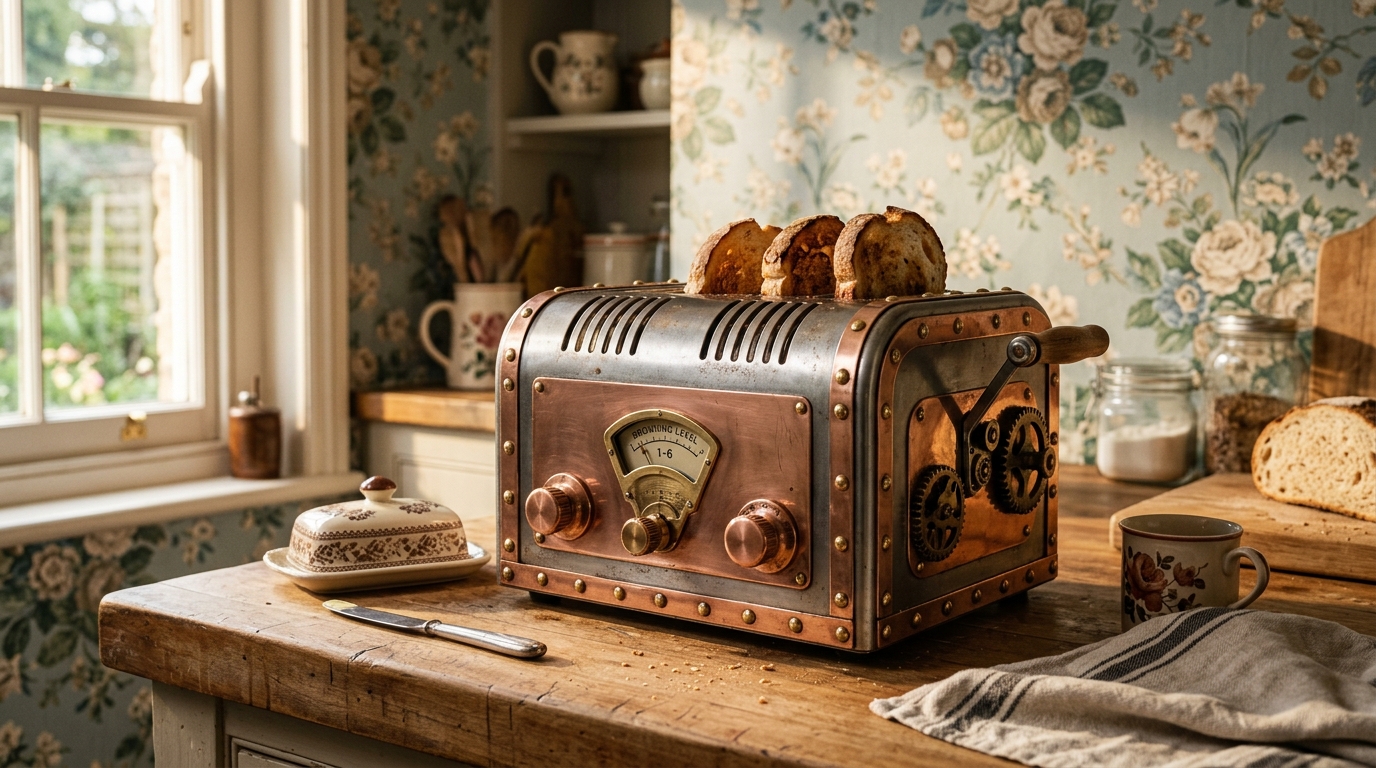
The steel-and-copper finish leans distinctly steampunk — arguably more ornate than a toaster strictly needs to be — but it’s a sturdy, stable object that doesn’t wobble during use. The company, founded in England in 1958, was among the first to bring color into kettle design, and continues to build appliances that look backward while working like something current.
10. An Italian Espresso Machine With Commercial-Grade Bones
An Italian brand’s Classic Evo Pro espresso machine, often finished in a muted vintage blue, brings genuine commercial-style hardware into a home kitchen: a solid steel housing, mechanical rocker switches with real tactile feedback, and a 58mm portafilter borrowed straight from café equipment for stable heat retention during extraction.
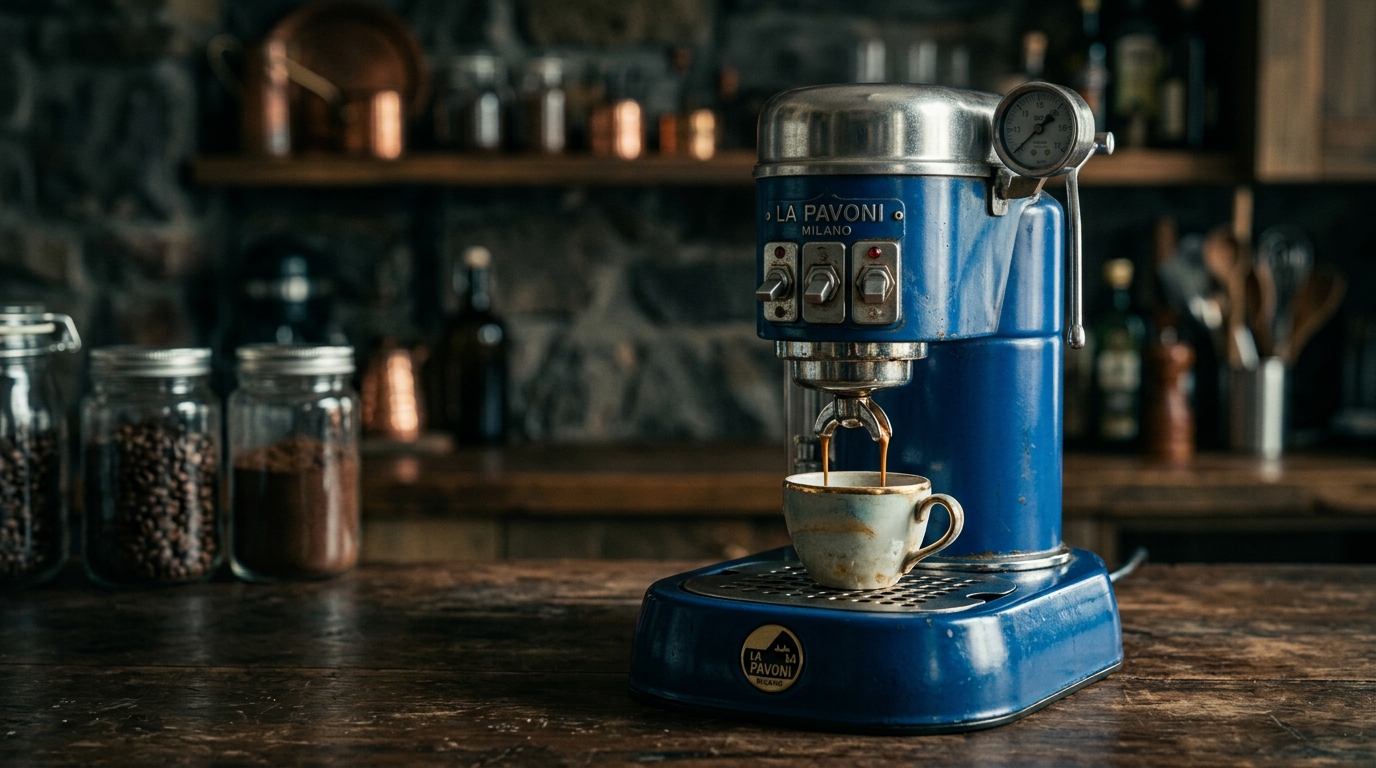
That portafilter size matters because it gives you far more control over espresso quality than a pod-based machine ever could. The company was founded in Milan in 1947 by an inventor credited with the steamless espresso machine — the design breakthrough that introduced crema to espresso and, by extension, reshaped how much of the world drinks its morning coffee.
11. A Retro Digital Radio for the Kitchen Counter
A British audio brand’s Classic Mini radio splits the difference between old and new: a wood-finished cabinet and tactile, turnable dials on the outside, but DAB+, FM, and Bluetooth 5.3 on the inside, with a rechargeable battery rated for roughly 15 hours of playback. The company started as one of the earlier adopters of digital radio technology in the UK, back when the format was still an open question, and that early bet has aged well.
12. A Swiss Milk Frother Built for Speed
A Swiss-designed milk frother from a well-known coffee capsule brand solves a narrow but real problem: turning milk into hot or cold foam without a steam wand, a cleaning routine, or noise loud enough to wake the household. A single button starts the process, and a ceramic-coated interior keeps milk from sticking or scorching. The parent company’s roots trace back to 1860s baby formula production, a strange but real historical footnote for a product now entirely focused on adult caffeine rituals.
13. An Italian Retro Electric Kettle in Steel and Glass
An Italian kettle brand’s retro-styled electric kettle is built from stainless steel and heat-resistant glass, deliberately avoiding plastic anywhere near the water path. Its silhouette borrows from vintage stovetop kettles, paired with a sturdy handle for practical daily handling. The brand itself dates only to the mid-1980s, but it’s worth remembering the electric kettle as a category goes back to 1891 — when the very first version reportedly took about ten minutes just to bring water to a boil.
14. An Italian-Swiss Capsule Coffee System
A joint effort between Italian appliance engineering and Swiss coffee-capsule technology, this Vertuo-style machine automatically adjusts brewing parameters — temperature, flow rate, extraction time — based on the specific capsule inserted, letting one machine produce both coffee and espresso-style drinks at several sizes. The split is fairly clean: the Swiss side manages coffee quality and capsule recycling infrastructure, while the Italian side handles the physical hardware and machine design.
15. An Italian Espresso Maker for the “Modern Heritage” Look
Closing out the list is another Italian entry, this one aimed squarely at the modern-heritage aesthetic — appliances that look like they belong in a decades-old kitchen but come with entirely current conveniences. This ECF02-style espresso maker delivers a genuine 15-bar pressure pump alongside a steam wand for milk texturing, with a control layout kept deliberately simple. The brand’s history runs back to 1948 in Guastalla, starting in blacksmithing and enamel work before evolving into the glossy, curved retro objects it’s associated with today.
Whichever of these you bring home, the common thread is intent: appliances designed to be looked at, used daily, and kept for a very long time — the opposite of the disposable kitchen gadget cycle most of us have gotten used to.