Few furniture styles have aged as gracefully as mid-century modern design, and the queen bed is one of its most enduring expressions. Rooted in a design philosophy that prized honest materials and understated geometry over ornament, the mid-century modern queen bed continues to anchor bedrooms that want warmth without visual noise. Its lineage traces back to Scandinavian and American designers of the 1950s and 60s who believed furniture should work hard and look effortless doing it.

If you’re shopping for one — or trying to understand why this style keeps showing up on every design mood board — this guide breaks down what defines the look, which materials and finishes matter, how to place the bed for maximum impact, and how to keep it looking sharp for years.
What Defines the Mid-Century Modern Aesthetic
The signature of a mid-century modern queen bed is restraint. Clean, uninterrupted lines replace carved detailing. A low-profile headboard stretches horizontally rather than climbing tall, which visually widens a room and keeps sightlines open. Legs are typically slim and angled outward rather than sitting flush beneath the frame — a small detail that gives the whole piece a sense of lift, almost as if it’s hovering rather than resting on the floor.
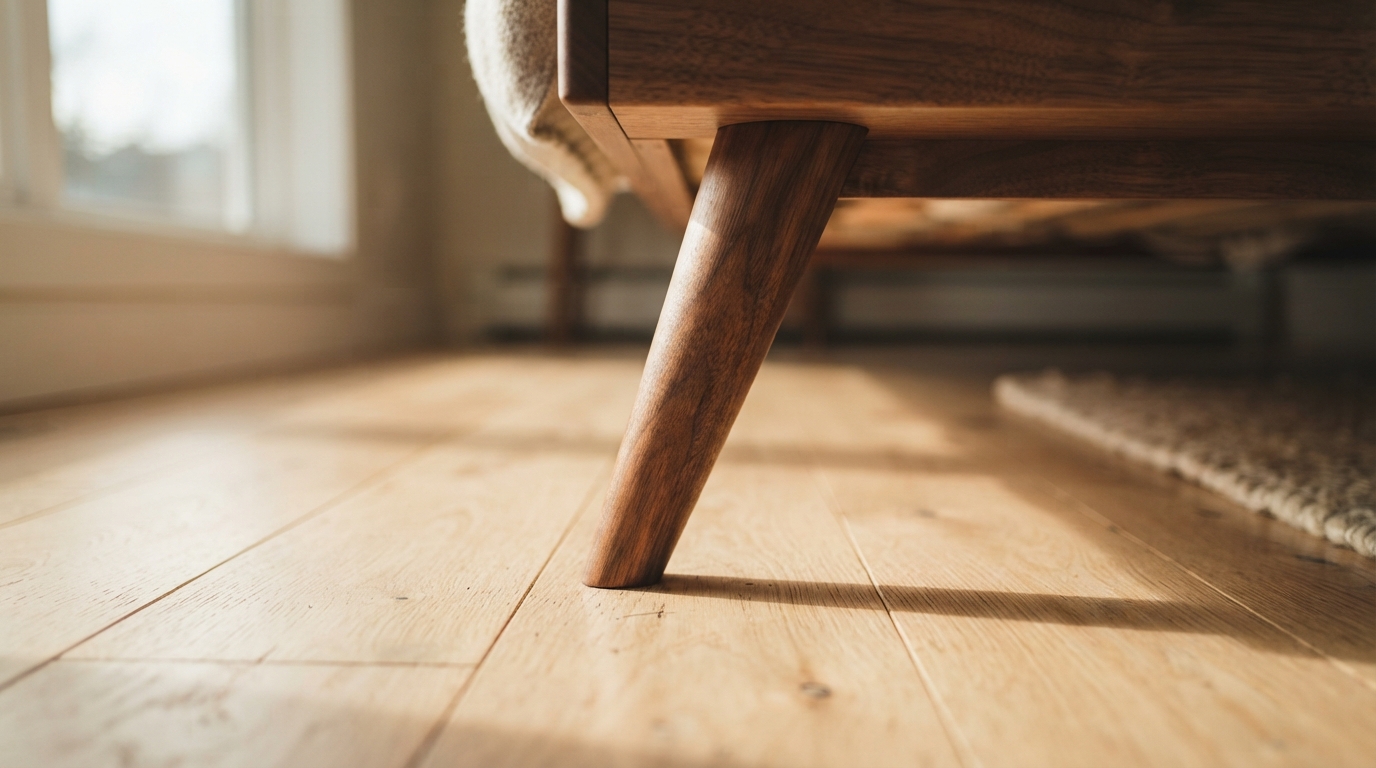
This isn’t decoration for decoration’s sake. Every design choice in this style traces back to a functional idea: furniture should feel light, adaptable, and unobtrusive. That’s part of why the look pairs so easily with everything from Japandi to modern farmhouse interiors — it never competes for attention.
Choosing the Right Wood
Material selection is where a mid-century modern bed either succeeds or falls flat. The category’s reputation rests almost entirely on solid hardwoods, and three species dominate the market.
Teak is the workhorse of the style — dense, naturally resistant to moisture and insects, and prized for the amber tone it develops as it ages. Walnut brings a deeper, chocolate-toned richness that reads as more formal and pairs beautifully with brass or black metal hardware. Oak sits in between: lighter, with a visible grain pattern that leans slightly more rustic while still holding the clean-lined silhouette.

Budget-conscious buyers will also encounter engineered wood or veneer options. These can replicate the look convincingly at a lower price point, though they typically won’t match solid wood for longevity or the ability to be refinished down the line.
Finish Options and What They Mean for Upkeep
The finish applied to the wood shapes both its appearance and how much maintenance it demands.
| Finish Type | Look | Upkeep |
|---|---|---|
| Natural oil | Warm, matte, highlights grain | Moderate — needs periodic reapplication |
| Lacquer | Glossy, uniform, protective | Low — resists moisture and scuffs well |
| Wax | Soft, muted sheen | High — wears faster, needs frequent touch-ups |

Oil finishes tend to be the most popular for the mid-century look because they let the wood’s natural character show through, but if you have kids, pets, or simply want a lower-maintenance piece, a lacquered finish will hold up with far less attention.
Where to Place It in the Room
Positioning matters more than most people expect. The general rule is to anchor the bed against the longest unbroken wall in the room — this gives the low headboard enough visual weight to feel intentional rather than lost.

A few practical guidelines to keep in mind:
- Leave at least two feet of clearance on each side for walking room
- Avoid placing the bed directly beneath a window, where drafts and glare can disrupt sleep
- Position it so you wake up facing a pleasant view — a wall of art, a window, anything but a closet door
- Keep the bed clear of doorways and traffic paths so the room still feels open

Symmetry reinforces the calm the style is going for, so matching nightstands on either side of the bed is almost always the right call.
What to Check Before You Buy
Not every bed marketed as “mid-century modern” actually holds up to the style’s standards. Before purchasing, run through this checklist:
- Material: Confirm whether the frame is solid wood or veneer over engineered wood — both are legitimate, but the price should reflect which one you’re getting
- Dimensions: Measure your room, not just the bed. A queen frame with a wide headboard can overwhelm a smaller space
- Leg and line details: Tapered, angled legs and a low headboard are non-negotiable hallmarks — without them, it’s not really mid-century modern
- Headboard style: Decide between a fully minimalist slab headboard or a tufted version for added texture
- Weight capacity and frame construction: Ask about slat count and center support, especially for larger mattresses

Testing the frame in person, if possible, is worth the effort — a wobbly demo unit is a warning sign no amount of styling will fix.
Keeping It Looking Its Best
Solid wood furniture rewards a little routine care with decades of use. Dust the frame weekly with a soft, dry cloth to prevent grime from settling into the grain. For a deeper clean, use a barely damp cloth with mild soap and dry it immediately — standing moisture is the enemy of any wood finish.

Every few months, check for loose screws or joints and tighten as needed; wood frames shift slightly with humidity changes, and a quick check prevents squeaks later. If your finish is oil-based, plan on reapplying a quality wood polish roughly twice a year. Keep the piece out of direct sunlight, since UV exposure fades and unevenly ages wood over time. And don’t forget the mattress — rotating it every three to six months keeps wear even and extends its life.
Building the Rest of the Room Around It
A mid-century modern queen bed sets the tone, but the surrounding pieces determine whether the room feels cohesive or disjointed.
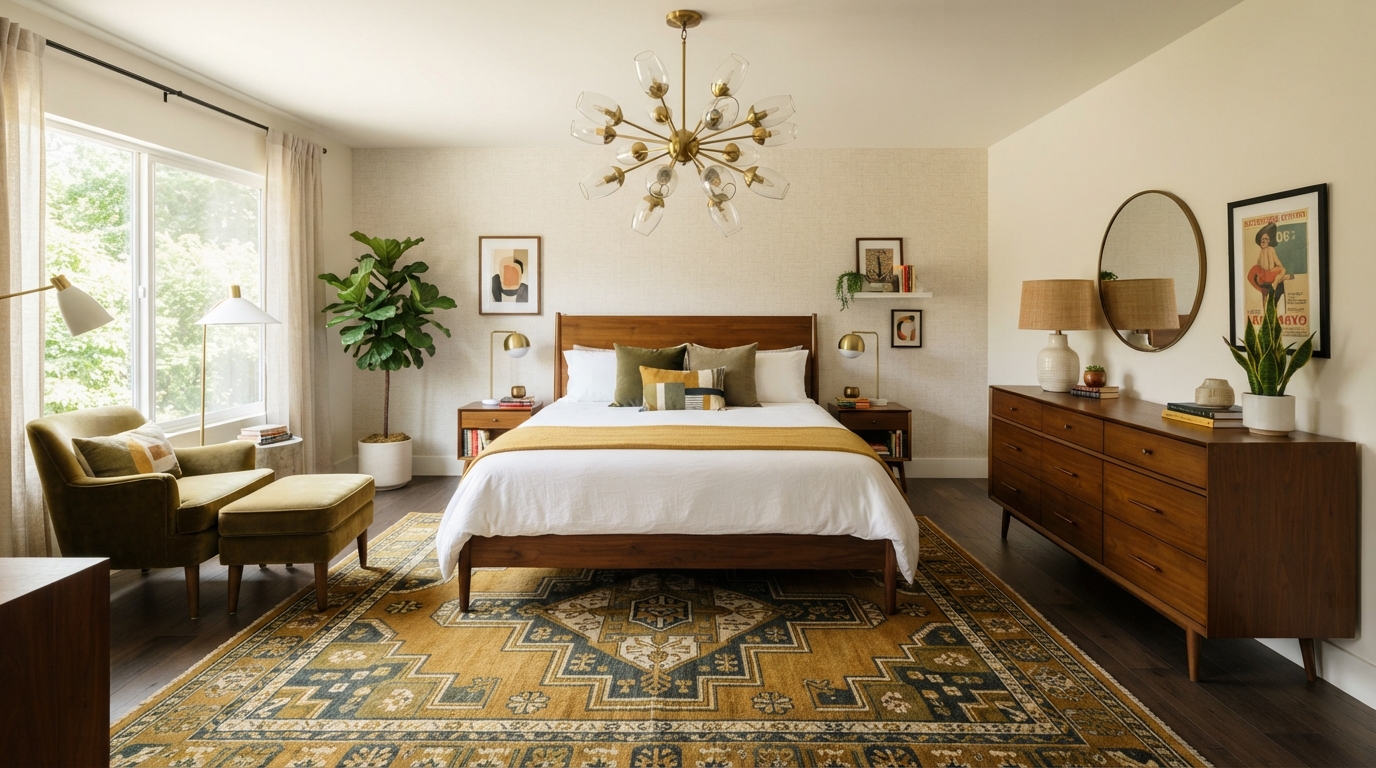
Look for nightstands with the same tapered-leg language as the bed. A sculptural lighting choice — a Sputnik-style chandelier or an arc floor lamp — reinforces the era without feeling like a costume. A low, wide dresser in a matching or complementary wood tone keeps the room’s horizontal lines consistent.
For texture, layer in a geometric-patterned rug and a couple of muted-tone throw pillows — mid-century palettes lean toward mustard, olive, burnt orange, and warm neutrals rather than anything too saturated. Finish the room with one or two abstract art pieces featuring bold, simple shapes; it’s a small detail that ties the whole look together without adding clutter.
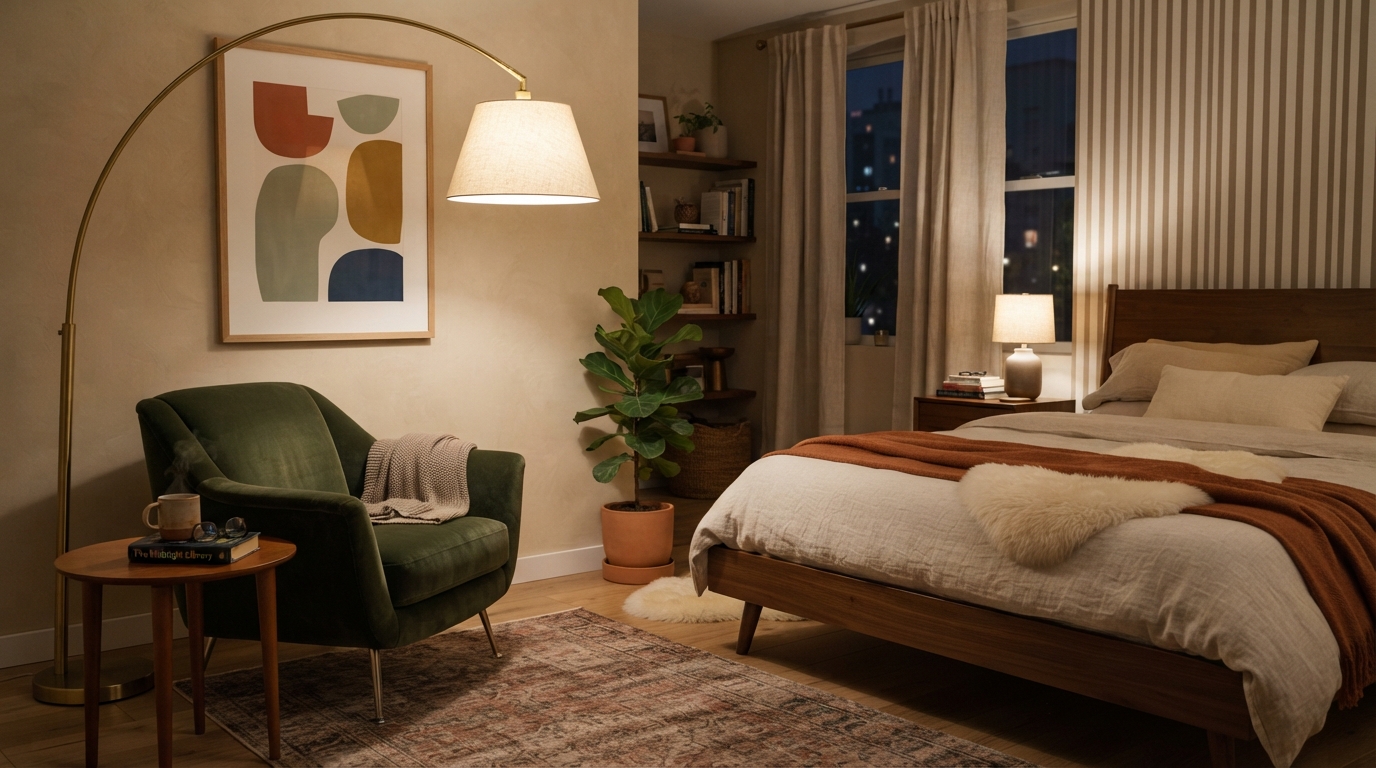
Done well, a mid-century modern queen bed doesn’t just fill a room — it sets a mood: unhurried, uncluttered, and built to last.